

Phimosis means the foreskin is too tight to retract comfortably over the head of the penis. In adults, it may cause hygiene problems, painful erections, recurrent inflammation, urinary symptoms, or sexual discomfort. This guide explains what to check, which treatments may be considered, and when circumcision is appropriate.
Phimosis is a tight or non-retractable foreskin. In children, a tight foreskin is often part of normal development and may improve over time. In adults, phimosis is more likely to be related to inflammation, infection, scarring, diabetes, or skin conditions such as lichen sclerosus. Treatment may include hygiene guidance, topical medication, treatment of infection, gentle stretching under medical advice, or surgery such as circumcision in selected cases.
What Is Phimosis?
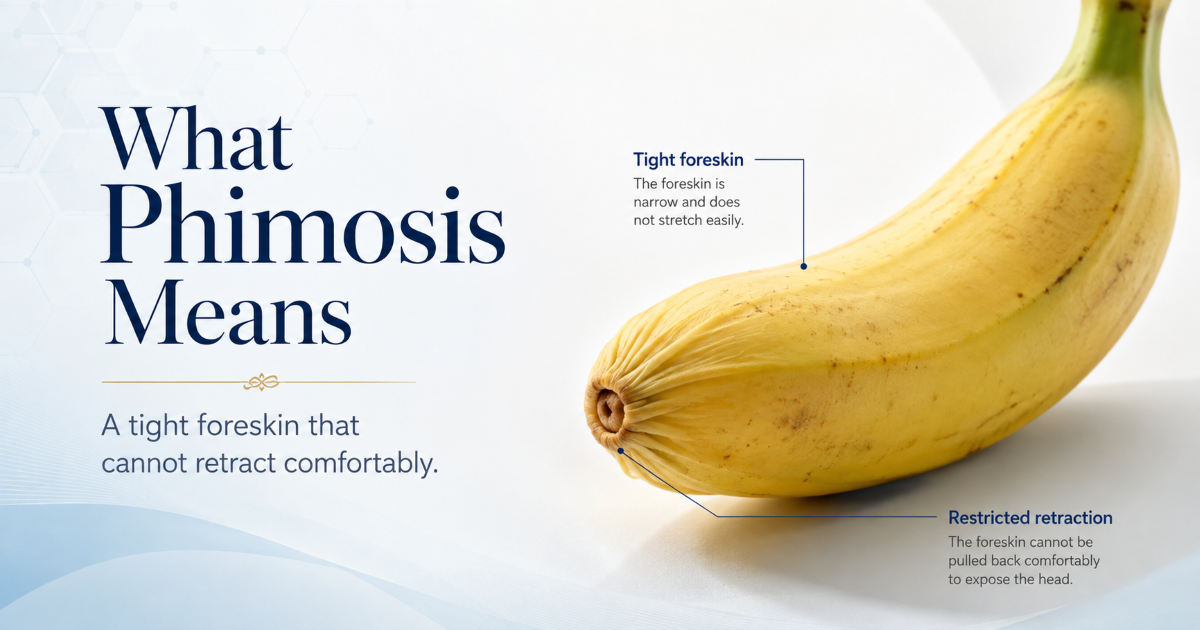
Phimosis occurs when the foreskin cannot be pulled back over the head of the penis, or can only be retracted with discomfort. The tight area may be at the foreskin opening, and in some patients the skin may look pale, thickened, cracked, scarred, or inflamed.
The key clinical question is whether the tight foreskin is simply a developmental issue, a mild tightness that can be managed conservatively, or a pathologic condition caused by scarring, recurrent inflammation, infection, diabetes, or a skin disorder.
Symptoms That Suggest Phimosis Needs Medical Review
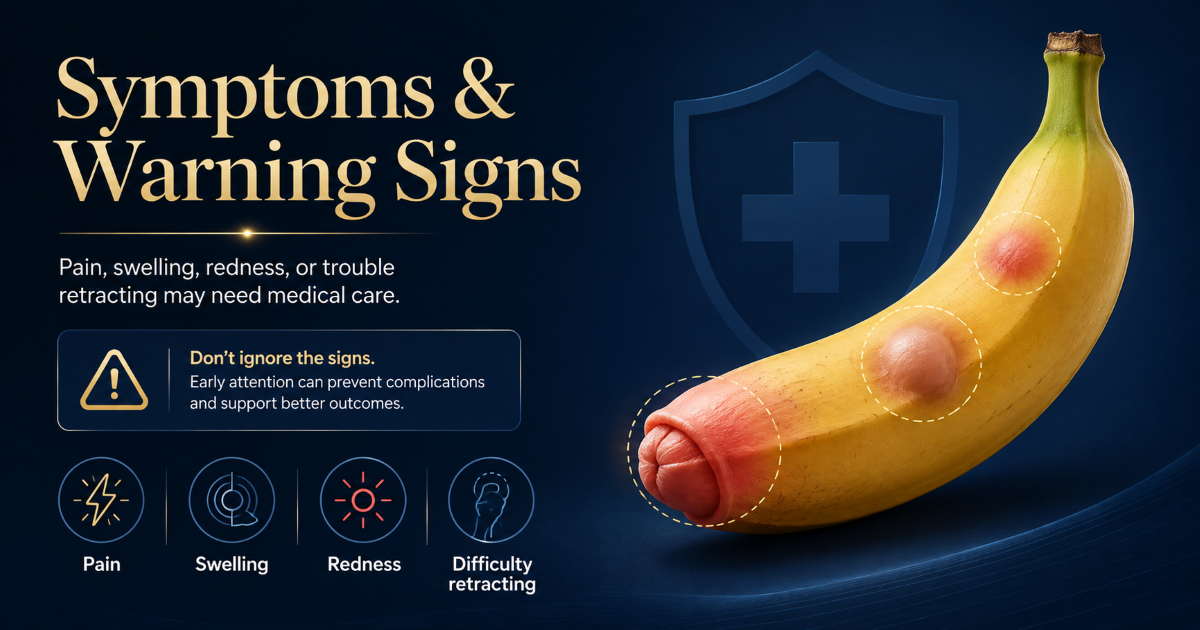
Some men notice tightness only during cleaning. Others experience pain during erections, recurrent redness, swelling, urine trapping, small cuts, bleeding, unpleasant odor, or difficulty with sex. A doctor should evaluate symptoms that are recurrent, painful, worsening, or associated with infection.
| Symptom | What it may suggest | Suggested next step |
|---|---|---|
| Cannot retract the foreskin for cleaning | Hygiene difficulty and possible inflammation risk | Book assessment if persistent or bothersome. |
| Pain during erection or sex | Skin tightness, micro-tears, scarring, or frenulum involvement | Avoid forcing retraction and see a doctor. |
| Redness, swelling, discharge, odor | Possible balanitis or infection | Medical treatment may be needed before any procedure. |
| Ballooning during urination or weak flow | Urine trapping or severe narrowing | Assessment is recommended, especially if worsening. |
| Foreskin stuck behind the glans | Possible paraphimosis | Seek urgent medical care. |
Common Causes of Phimosis in Adults
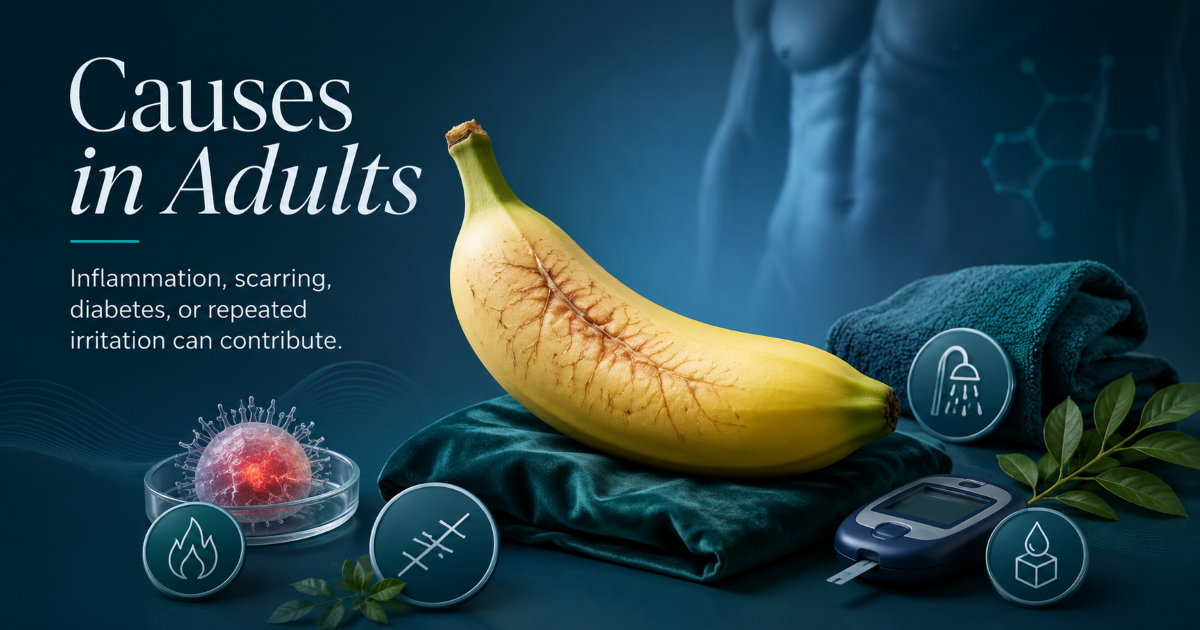
Adult phimosis is often pathologic rather than simply developmental. The cause can affect treatment choice, so the consultation should look beyond the visible tightness.
Inflammation and infection
Recurrent balanitis or irritation can make the foreskin tighter over time and may need treatment before surgery is considered.
Scarring and skin disease
Lichen sclerosus and repeated micro-tears can reduce skin elasticity and make conservative treatment less predictable.
Diabetes and hygiene difficulty
Diabetes can increase infection risk, while a tight foreskin can make cleaning difficult, creating a cycle of irritation.
How a Doctor Assesses Phimosis
A useful assessment is not only about whether the foreskin retracts. The doctor should review symptoms, skin quality, infections, urinary function, sexual pain, diabetes risk, previous treatments, and whether the frenulum is also tight.
History and symptoms
The consultation reviews duration, pain, infections, hygiene difficulty, urinary symptoms, sexual discomfort, and whether symptoms are worsening.
Physical examination
The doctor checks the tight ring, glans, foreskin skin quality, fissures, scarring, discharge, inflammation, and possible frenulum breve.
Rule out contributing conditions
Diabetes, recurrent balanitis, sexually transmitted infections, eczema, psoriasis, and lichen sclerosus may need consideration.
Choose the safest treatment path
Treatment may be conservative, medical, or surgical depending on symptoms, anatomy, skin changes, infection status, and patient preference.
Phimosis Treatment Options
Treatment depends on age, cause, severity, symptoms, infection status, scarring, and patient preference. Mild cases may not need surgery. Adult cases with scarring or recurrent inflammation may need a more definitive plan.

| Option | When it may be discussed | Limitations and cautions |
|---|---|---|
| Hygiene guidance | Mild tightness without scarring, infection, or pain | Cleaning should be gentle. Do not force retraction. |
| Topical steroid therapy | Selected cases where the skin may respond to conservative treatment | Requires correct use and follow-up. Results vary, especially in scarred adult phimosis. |
| Antifungal or antibiotic treatment | When infection or balanitis is present | Treating infection may not fully correct a scarred tight foreskin. |
| Foreskin-preserving procedures | Selected patients who want to preserve foreskin and have suitable anatomy | May not be suitable for severe scarring or recurrent disease. |
| Circumcision | Severe, recurrent, scarred, painful, or treatment-resistant phimosis | It is surgery. Risks, healing time, sensation changes, bleeding, infection, and cosmetic expectations must be discussed. |
Can Circumcision Treat Phimosis?
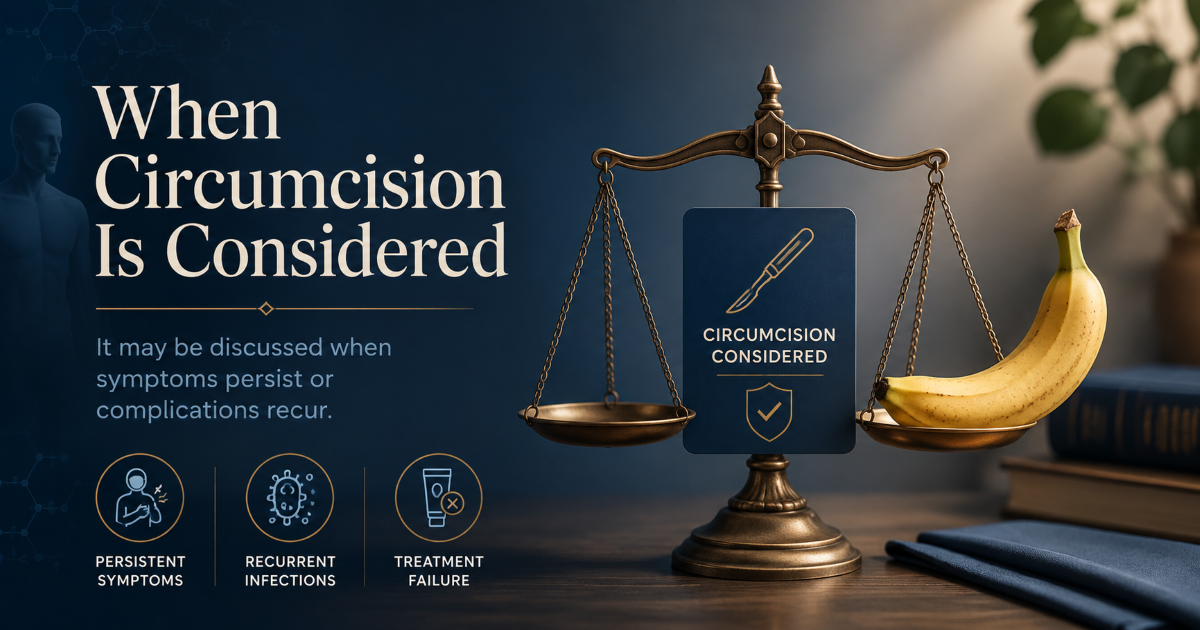
Circumcision can be an effective option for selected phimosis cases, particularly when the foreskin is scarred, symptoms are recurrent, conservative treatment has failed, or cleaning and sexual activity remain difficult. It removes the foreskin, so the tight ring cannot keep trapping the glans in the same way.
Potential benefits
May reduce recurrent tightness, make hygiene easier, and reduce recurrent foreskin inflammation in suitable patients.
Trade-offs
It permanently removes foreskin tissue and may change sensation, appearance, healing experience, and personal preference.
Not automatic
Some patients may be candidates for medication or foreskin-preserving approaches depending on cause and anatomy.
Hygiene, Recovery, and Prevention
Good hygiene can reduce irritation, but it must be gentle. Forcing the foreskin back can cause injury. If you can retract comfortably, clean with water, avoid harsh soaps, rinse well, dry the area, and return the foreskin to its normal position afterward.

Do
- Clean gently with water if retraction is comfortable.
- Dry the area after washing.
- Seek care for recurrent redness, pain, discharge, or cracking.
- Follow medication and wound-care instructions exactly.
Do not
- Force the foreskin backward.
- Leave a retracted foreskin stuck behind the glans.
- Use harsh disinfectants or perfumed products on irritated skin.
- Resume sex after surgery or active infection until cleared.
FAQ About Phimosis Treatment
What is phimosis?
Phimosis means the foreskin is too tight to retract comfortably over the head of the penis. It may be developmental in children, but in adults it may be related to inflammation, infection, scarring, diabetes, or skin conditions.
Can phimosis go away without surgery?
Some cases may improve with medical guidance, topical steroid therapy, treatment of infection, and gentle stretching. Adult scarring, recurrent inflammation, or severe narrowing may be less likely to respond and may need surgery.
Is circumcision the only treatment for adult phimosis?
No. Circumcision is one option and may be appropriate for severe or recurrent cases. Other options may be discussed depending on skin quality, scarring, infection, symptoms, and whether the patient wants to preserve the foreskin.
Can I stretch a tight foreskin at home?
Gentle stretching may be recommended for selected patients, but it should not be painful and should not be forced. Forceful retraction can tear the skin, worsen scarring, or cause paraphimosis.
When is phimosis urgent?
Seek urgent care if the foreskin is stuck behind the glans and cannot be returned, the glans becomes swollen or discolored, urination is difficult, pain is severe, fever develops, or there is pus or rapidly worsening swelling.
Medical References
This page is written for patient education and medical SEO clarity. It does not replace diagnosis, individualized treatment planning, or consultation with a qualified doctor.
- NHS: Tight foreskin (phimosis)
- Cleveland Clinic: Phimosis causes, symptoms, diagnosis, and treatment
- BAUS: Tight foreskin (phimosis)
- NCBI Bookshelf: Phimosis clinical overview
- European Association of Urology Patient Information: Phimosis patient information

Doctor Review and Medical Safety
Phimosis treatment should begin with examination, cause assessment, and realistic expectations. Conservative treatment may help selected patients, but scarred, recurrent, painful, or infection-related phimosis may need a different plan. The safest decision should include risks, aftercare, sexual activity restrictions, and what symptoms require urgent care.
Reviewed by: Dr. Beer, Eternity Clinic
Last content update: 30 June 2026

Latest Articles
Hormone Therapy Without Surgical Gender Transition
Hormone therapy can help some transgender and gender-diverse people align physical characteristics with personal goals
What Are the Symptoms of Cystitis? This Article Has the Answers.
Cystitis is inflammation of the bladder. It is often caused by a bacterial bladder infection,
How to Care for Your Manhood to Keep It Strong and Disease-Free
Penis health is not only about sexual performance. It includes daily hygiene, foreskin care, safer
Permanent Solution for Premature Ejaculation with Surgery
Premature ejaculation can be distressing, but it should not be reduced to a single promise
Delayed Ejaculation: Is It Really Good? What to Do If You’re Facing This Issue
Delayed ejaculation may sound positive to some men, but when climax takes much longer than
How to Measure Condom Size Properly: Understanding Sizes 49, 52, 54, and 56
Condom size is not judged by length alone. For most men, the most useful measurement
Penile Enlargement With “Your Own Tissue” or “Your Own Fat”: Why It May Not Be Worth the Pain
Using your own tissue or your own fat can sound more natural than synthetic material,
Circumcision at a Clinic vs Hospital: How to Choose the Right Medical Setting
Adult circumcision can be planned in different medical settings. The safest choice depends on your