

Delayed ejaculation may sound positive to some men, but when climax takes much longer than wanted, becomes stressful, or affects intimacy, it can be a real sexual health concern. The safest next step is to look for the cause rather than forcing performance or self-treating.
Delayed ejaculation is not simply being good in bed. It means ejaculation or orgasm is delayed, difficult, infrequent, or absent in a way that causes distress or interferes with sexual satisfaction. Possible causes include medications, alcohol, diabetes, nerve problems, hormone issues, prostate or pelvic surgery, anxiety, low arousal, relationship stress, and learned sexual habits.
What Delayed Ejaculation Means
Delayed ejaculation means a man has difficulty reaching ejaculation or orgasm even when arousal, stimulation, and desire are present. Some men can ejaculate only after a very long time. Others can climax during masturbation but not during intercourse. Some cannot ejaculate at all in certain situations.
The issue is not defined only by minutes. It becomes clinically relevant when the delay is persistent, unwanted, causes frustration, reduces pleasure, affects a partner, or creates anxiety around intimacy.
What Causes Delayed Ejaculation?

Delayed ejaculation can have physical, psychological, relationship, medication-related, or mixed causes. The same symptom can come from very different mechanisms, so treatment should start with a careful history rather than a one-size-fits-all plan.
Medical factors
Diabetes, nerve conditions, spinal cord injury, prostate surgery, pelvic surgery, hormone issues, and cardiovascular or neurological disease can affect ejaculation pathways.
Medication and substances
Antidepressants, some blood pressure medicines, alcohol, and nonprescription drug use may contribute. Do not stop prescribed medicine without medical advice.
Psychological and relationship factors
Anxiety, depression, low arousal, performance pressure, relationship conflict, guilt, stress, or a mismatch between stimulation style and partnered sex can play a role.
| Pattern | Possible interpretation | Next step |
|---|---|---|
| New problem after medication change | Medication side effect may be involved. | Ask the prescribing doctor before changing dose or stopping. |
| Occurs with erectile dysfunction | Arousal, blood flow, hormones, anxiety, or medication may overlap. | Medical evaluation is appropriate. |
| Can climax alone but not with a partner | Stimulation pattern, anxiety, relationship context, or arousal mismatch may contribute. | Consider sexual history, communication, and counselling when needed. |
| No ejaculation after prostate or pelvic surgery | Nerve, anatomy, or retrograde ejaculation issues may need assessment. | Consult a urologist or men’s health doctor. |
How Long Is Too Long?
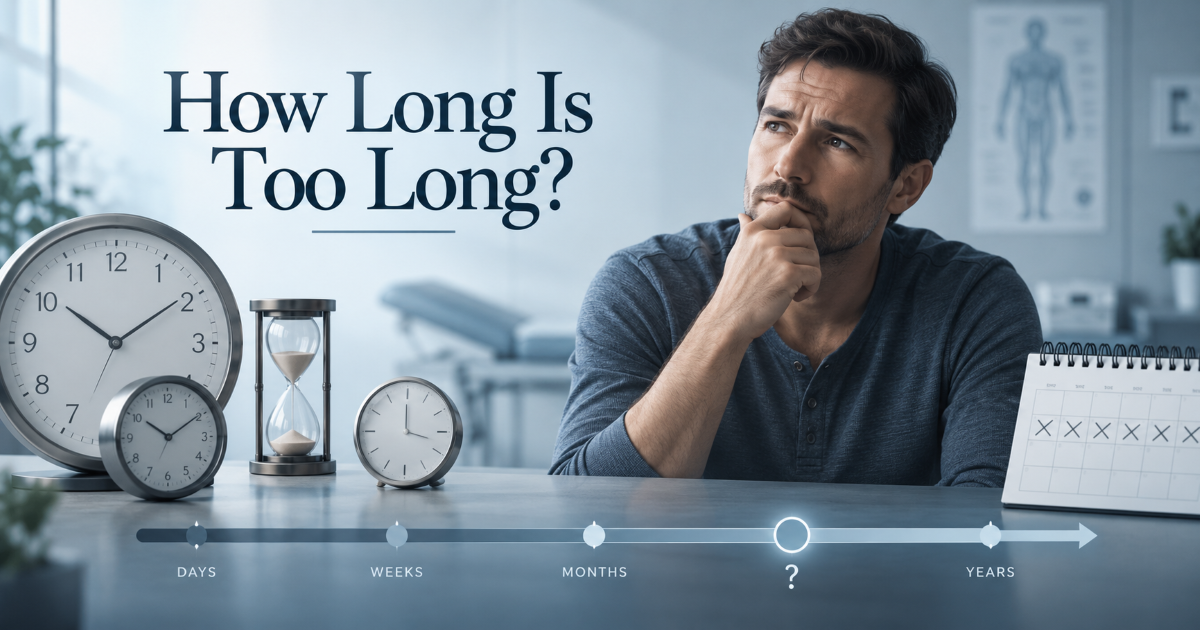
There is no universal number of minutes that diagnoses delayed ejaculation for every man. A rigid stopwatch approach can create more pressure. Instead, focus on whether ejaculation is consistently difficult, much longer than wanted, or absent despite adequate stimulation.
Not automatically abnormal
Different couples and situations have different timing. Longer duration can be normal when both partners are comfortable and satisfied.
More concerning
Persistent inability to climax, repeated distress, avoidance of intimacy, pain, or relationship tension suggests the issue should be assessed.
Medical context matters
New onset after medication, surgery, illness, alcohol use, or erectile dysfunction deserves a more structured review.
Treatment and Prevention of Delayed Ejaculation

Treatment depends on the cause. A man whose delayed ejaculation is linked to a medication side effect needs a different plan from someone whose main issue is anxiety, alcohol use, diabetes, nerve injury, or relationship stress.
Review medications safely
If symptoms began after antidepressants, blood pressure medicine, pain medicine, or other prescriptions, discuss options with the prescribing doctor. Do not stop medication suddenly.
Screen for health conditions
Blood sugar, hormones, neurological history, prostate treatment history, and erectile function may be relevant depending on symptoms.
Address arousal and stimulation patterns
Some men need to adjust stimulation style, reduce performance pressure, improve foreplay, or align partnered sex with what actually helps arousal.
Consider counselling or sex therapy
Psychosexual counselling can be useful when anxiety, relationship tension, guilt, depression, or learned patterns are part of the problem.
What a Doctor May Check
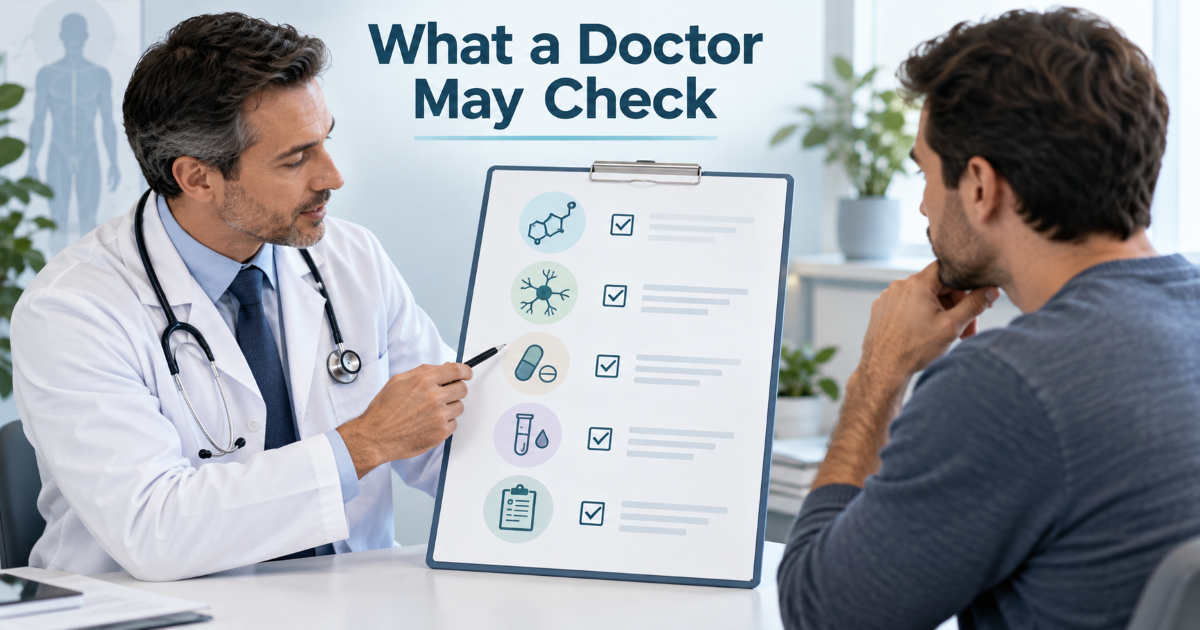
A consultation for delayed ejaculation usually starts with medical history, sexual history, medication review, and the pattern of symptoms. The doctor may ask whether the issue happens during all sexual activity or only with a partner, whether orgasm occurs without ejaculation, and whether erections, libido, or urination have changed.
| Assessment area | Why it matters | Possible follow-up |
|---|---|---|
| Medication review | Some medications can delay orgasm or ejaculation. | Coordinate dose or medication changes only with the prescribing clinician. |
| Metabolic and hormone health | Diabetes, low testosterone, thyroid issues, or other conditions may affect sexual function. | Blood tests may be considered when clinically appropriate. |
| Nerve and surgery history | Spinal injury, prostate surgery, pelvic surgery, and nerve disease can affect ejaculation. | Urology or specialist assessment may be needed. |
| Relationship and mental health | Anxiety, depression, stress, or relationship conflict can change arousal and orgasm. | Counselling, sex therapy, or mental health support may help selected patients. |
Communication, Lifestyle, and Partner Support

Delayed ejaculation can create pressure for both partners. The man may feel embarrassed, while the partner may worry about attraction, performance, or relationship meaning. Clear communication reduces guessing and helps both people work with the problem instead of blaming each other.
Use neutral language
Frame the issue as a health and arousal pattern, not as failure or rejection.
Reduce pressure
Goal-focused sex can make ejaculation harder. Comfort, arousal, and pacing often matter more than forcing a finish.
Improve baseline health
Sleep, alcohol reduction, smoking cessation, exercise, stress management, and chronic disease control can support sexual function.
Bangkok Consultation Checklist for Delayed Ejaculation

If you are considering a men’s health clinic in Bangkok, prepare a concise history so the consultation can focus on the right causes and next steps.
Bring a medication list
Include antidepressants, blood pressure medication, pain medication, sleep medication, supplements, and recreational substances.
Describe the pattern
Explain whether ejaculation is delayed during intercourse, oral sex, masturbation, every situation, or only with certain partners.
Note related symptoms
Mention erectile dysfunction, low libido, painful ejaculation, urinary symptoms, numbness, pelvic surgery, fertility concerns, or mood changes.
Ask realistic questions
Ask what tests are needed, which causes are most likely, what treatment options fit your case, and what outcomes are realistic.
FAQ About Delayed Ejaculation
Is delayed ejaculation always a problem?
No. A longer time to climax is not automatically a disorder. It becomes a medical concern when the delay is persistent, unwanted, causes distress, affects a relationship, or prevents ejaculation despite adequate stimulation and desire.
What causes delayed ejaculation in men?
Possible causes include medication side effects, antidepressants, alcohol or substance use, diabetes, nerve problems, hormonal issues, prostate or pelvic surgery, low arousal, stress, anxiety, relationship factors, and individual sexual habits.
How long is too long before ejaculation?
There is no single time limit that diagnoses delayed ejaculation for every man. The more important points are persistence, distress, inability to climax when desired, and whether the pattern is new or worsening.
Can delayed ejaculation be treated?
Treatment depends on the cause. A doctor may review medications, screen for health conditions, discuss hormones or nerve history, recommend psychosexual counselling, address alcohol or drug use, or coordinate treatment with a mental health professional when needed.
When should I see a doctor?
Seek medical advice if delayed ejaculation is new, persistent, stressful, linked with erectile dysfunction, painful ejaculation, urinary symptoms, fertility concerns, low libido, medication changes, or a history of diabetes, nerve disease, prostate treatment, or pelvic surgery.
Medical References
This page is written for patient education and medical SEO clarity. It does not replace diagnosis, individualized treatment, medication review, emergency care, or counselling by a qualified healthcare professional.
- Mayo Clinic: Delayed ejaculation symptoms and causes
- Mayo Clinic: Delayed ejaculation diagnosis and treatment
- Cleveland Clinic: Delayed ejaculation overview
- NHS: Ejaculation problems
- EAU: Disorders of ejaculation guideline

Doctor Review and Medical Safety
Delayed ejaculation should be evaluated by pattern, cause, medication history, relationship context, and associated symptoms. A safe plan may include medical screening, medication review, psychosexual counselling, lifestyle changes, or specialist referral depending on the patient.
Reviewed by: Dr. Beer, Eternity Clinic
Last content update: 7 September 2026

Latest Articles
What Are the Symptoms of Cystitis? This Article Has the Answers.
Cystitis is inflammation of the bladder. It is often caused by a bacterial bladder infection,
How to Care for Your Manhood to Keep It Strong and Disease-Free
Penis health is not only about sexual performance. It includes daily hygiene, foreskin care, safer
Permanent Solution for Premature Ejaculation with Surgery
Premature ejaculation can be distressing, but it should not be reduced to a single promise
Delayed Ejaculation: Is It Really Good? What to Do If You’re Facing This Issue
Delayed ejaculation may sound positive to some men, but when climax takes much longer than
How to Measure Condom Size Properly: Understanding Sizes 49, 52, 54, and 56
Condom size is not judged by length alone. For most men, the most useful measurement
Penile Enlargement With “Your Own Tissue” or “Your Own Fat”: Why It May Not Be Worth the Pain
Using your own tissue or your own fat can sound more natural than synthetic material,
Circumcision at a Clinic vs Hospital: How to Choose the Right Medical Setting
Adult circumcision can be planned in different medical settings. The safest choice depends on your
Adult Circumcision Explained: Benefits, Methods, Recovery, and Safety
Adult circumcision is a procedure to remove the foreskin covering the head of the penis.