
Premature ejaculation is common and treatable, but prevention should not rely on shame, risky devices, or unregulated products. The safest approach is to identify your PE pattern, practice evidence-informed control techniques, treat erectile dysfunction or medical causes when present, and seek medical advice if symptoms persist or affect your relationship.
Some men can reduce premature ejaculation by combining arousal-control training, pause-squeeze or stop-start practice, pelvic floor training, condom or topical anesthetic strategies, stress reduction, and partner communication. If PE is persistent, distressing, associated with erectile dysfunction, pain, anxiety, medication changes, or relationship problems, a doctor should assess the cause and discuss treatment options such as topical anesthetics, SSRIs or dapoxetine where appropriate, ED treatment, counseling, or selected procedures. Surgery is not a prevention method for most men.
PE is treatable
PE is not a personal failure. Treatment can include behavioral, medical, psychological, and selected procedural options.
Timing alone is not enough
Diagnosis should consider timing, control, distress, erection quality, and whether the issue is lifelong or acquired.
Avoid risky shortcuts
Do not self-prescribe pills, overuse numbing products, or rely on restrictive devices without medical guidance.
Table of Contents
1. What is premature ejaculation?
2. What prevention means
3. Safe techniques to improve control
4. Condoms, topical anesthetics, and delay products
5. Pelvic floor training and lifestyle
6. Medical treatment options
7. Delay devices and safety concerns
8. When to see a doctor
9. FAQ
What Is Premature Ejaculation?
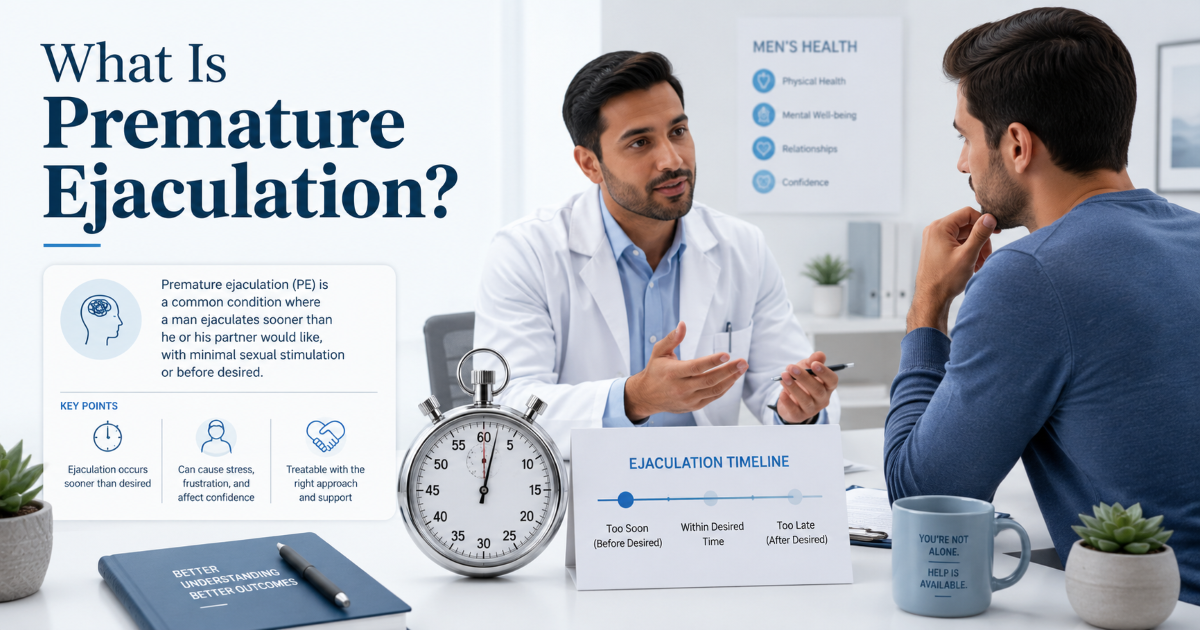
Premature ejaculation means ejaculation happens sooner than desired, is difficult to delay, and causes distress for the patient or partner. It can occur before penetration, shortly after penetration, or earlier than the person wants during sexual activity.
Many men worry about a specific minute cutoff. In clinical practice, the pattern is more important: reduced control, distress, whether symptoms are lifelong or acquired, and whether erectile dysfunction, pain, anxiety, medication, or relationship issues are present.
What Prevention Means for PE
Prevention does not always mean eliminating PE forever. A realistic goal is better ejaculation control, less distress, fewer repeated episodes, and more comfortable intimacy. The best prevention plan depends on why PE is happening.
| Pattern | Possible contributor | Prevention direction |
|---|---|---|
| Lifelong PE | May involve sensitivity, arousal pattern, or neurobiological factors. | Technique training, topical or medication discussion, and selected specialist review. |
| Acquired PE | May be linked to ED, prostatitis, anxiety, medication, or stress. | Identify and treat the new trigger. |
| Situational PE | May occur with a new partner, performance pressure, or relationship conflict. | Communication, counseling, pacing, and anxiety reduction. |
| PE with ED | Rushing because erection might be lost. | Evaluate and treat ED before considering PE procedures. |
For the full treatment pathway, see Premature Ejaculation Treatment.
Safe Techniques to Improve Ejaculation Control
Behavioral techniques can help some men recognize the point of no return and slow down earlier in the arousal cycle. They require practice and should not be presented as guaranteed cures.
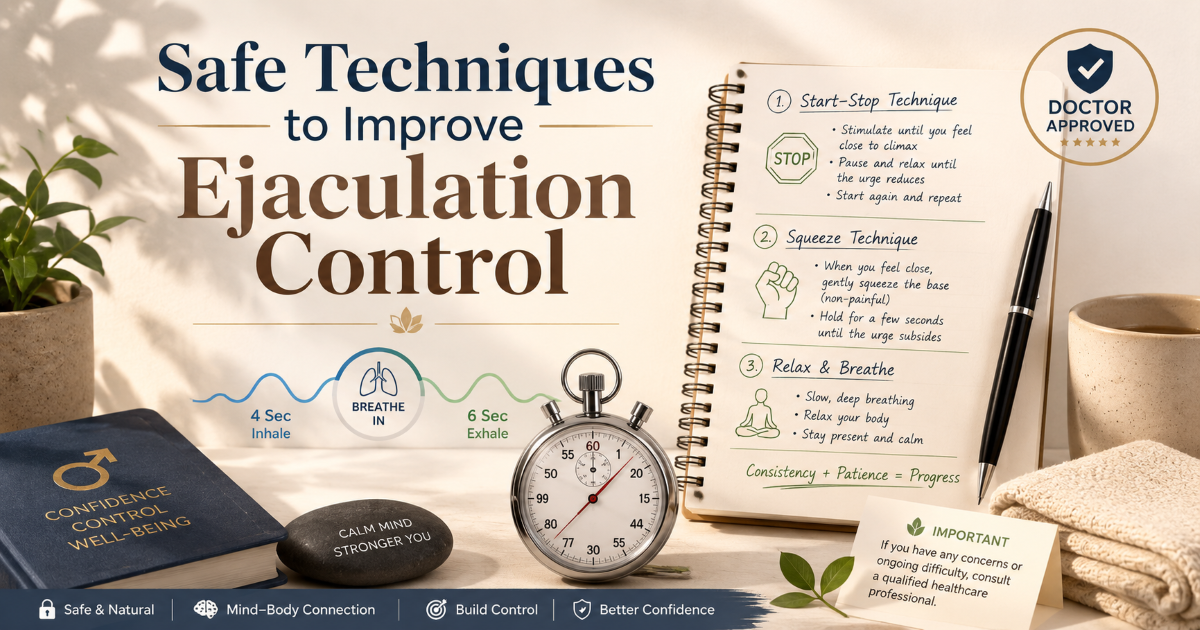
Stop-start technique
Pause stimulation when ejaculation feels close, wait until the urge decreases, then resume. Repeat during practice to improve arousal awareness.
Pause-squeeze technique
Gently squeeze near the head of the penis when ejaculation is close, then wait until the urge decreases. Pressure should not be painful.
Pacing and breathing
Slow rhythm, reduce stimulation intensity, pause, change position, and breathe normally when arousal rises too quickly.
Partner communication
Agree on pauses and pacing before sex. This reduces pressure and helps avoid panic when arousal rises.
Practice outside high-pressure moments
Learning control is harder when shame, fear, or performance pressure is high. Practice consistently and calmly.
Condoms, Topical Anesthetics, and Delay Products
Condoms and topical anesthetics may help some men reduce sensitivity and delay ejaculation. They should be used correctly because excessive numbness can reduce pleasure, affect erections, or transfer to a partner.
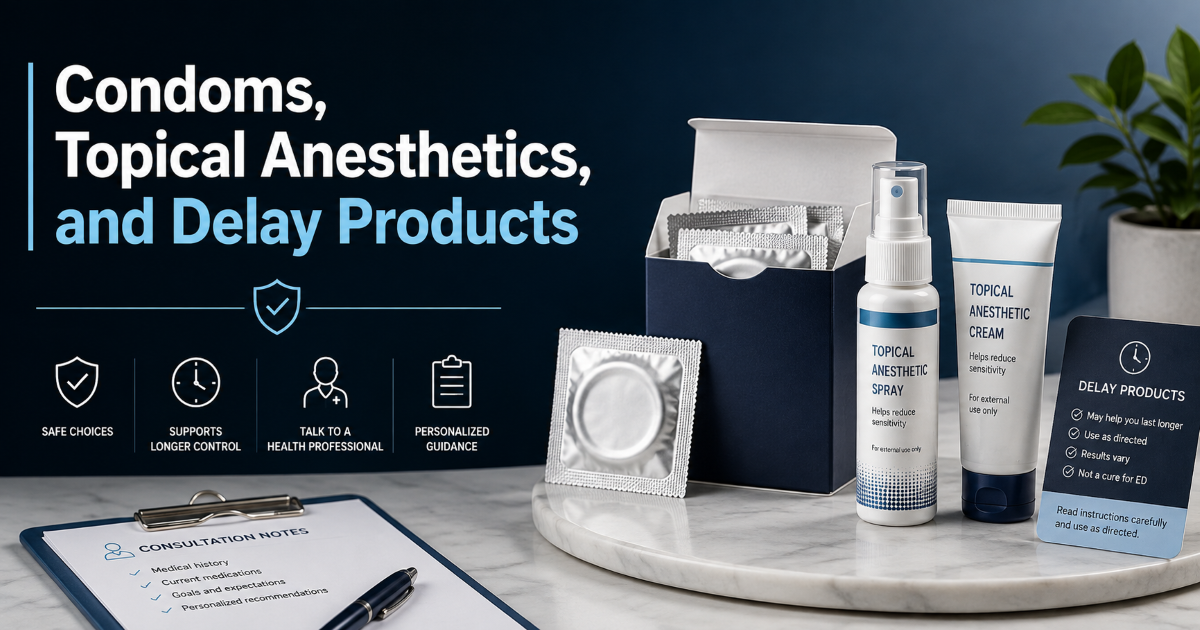
| Option | How it may help | Safety point |
|---|---|---|
| Regular condom | May slightly reduce stimulation and support safer sex. | Use correct size to avoid breakage or slipping. |
| Thicker condom | May reduce sensitivity more than a thin condom. | Too little sensation may affect erection or enjoyment. |
| Desensitizing condom | May help delay ejaculation for some men. | Check ingredients and avoid use if irritation occurs. |
| Topical anesthetic cream, gel, or spray | May reduce penile sensitivity when used as directed. | Can numb a partner if not washed or used correctly. Discuss with a doctor if unsure. |
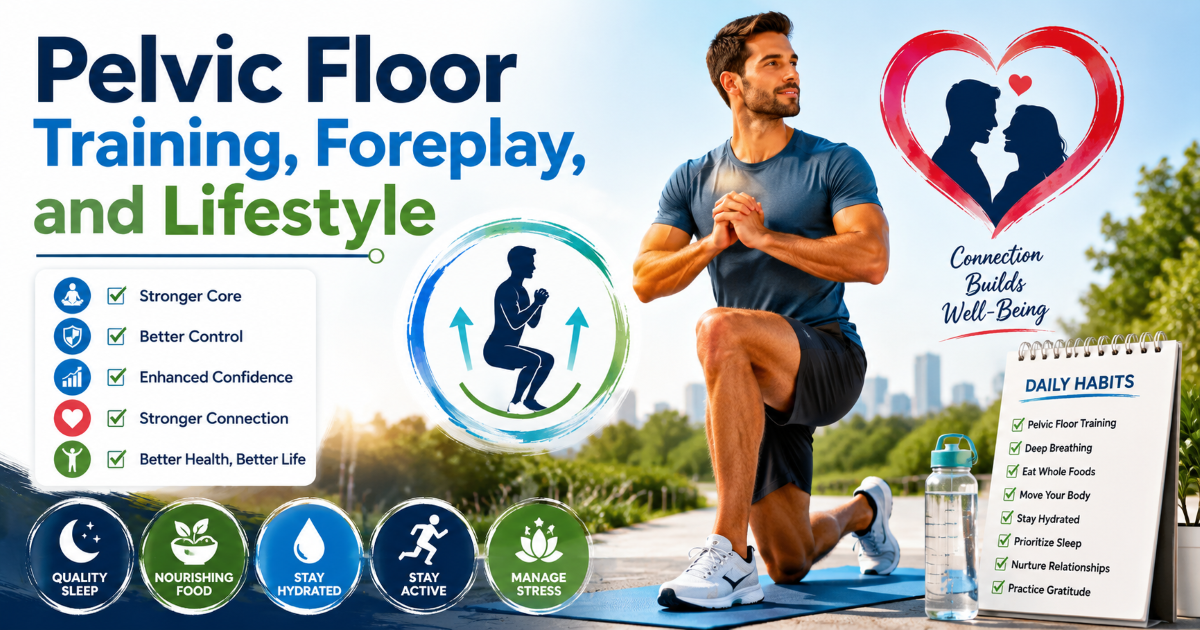
Pelvic Floor Training, Foreplay, and Lifestyle
Pelvic floor training may help selected men improve control, but it is not simply about clenching harder. Over-tensing can worsen pelvic discomfort. Foreplay and lifestyle changes may help reduce pressure and improve sexual confidence.
Helpful habits
- Practice pelvic floor contraction and relaxation, not only clenching.
- Improve sleep, exercise, and stress regulation.
- Reduce alcohol excess and avoid recreational drugs.
- Manage ED, diabetes, blood pressure, weight, and cardiovascular risk.
- Use foreplay to reduce pressure on penetration timing alone.
Common mistakes
- Expecting one exercise to cure PE permanently.
- Ignoring ED and focusing only on ejaculation time.
- Using numbing products excessively.
- Making sex feel like a stopwatch test.
- Choosing surgery before diagnosis.
Medical Treatment Options
If self-help does not work, medical options may be appropriate. A clinician may discuss topical anesthetics, SSRIs, dapoxetine where available, ED medication if erection problems are present, and counseling or sex therapy if anxiety or relationship factors contribute.
| Treatment | When it may help | Caution |
|---|---|---|
| Topical anesthetics | Penile hypersensitivity or rapid sensory response. | Can cause numbness or partner transfer if used incorrectly. |
| SSRIs or dapoxetine where appropriate | Selected men with persistent PE after assessment. | Side effects and drug interactions require medical review. |
| ED treatment | When weak or unreliable erection causes rushing. | Needs cardiovascular and medication interaction review. |
| Counseling or sex therapy | Anxiety, shame, depression, trauma, or relationship pressure. | Works best with realistic expectations and consistent participation. |
| Dorsal neurotomy | Selected persistent PE with suspected penile hypersensitivity. | Not first-line; risks and variable outcomes must be reviewed. |
For procedure-specific information in selected PE cases, see Dorsal Neurotomy.
Delay Devices and Safety Concerns
The original article mentioned delay devices such as cock rings. These should be discussed carefully. Restrictive devices can sometimes help maintain an erection, but they can also cause pain, swelling, bruising, numbness, circulation problems, or injury if used too tightly or too long.
When to See a Doctor
See a doctor if PE persists despite practice, causes significant stress, affects your relationship, occurs with ED, pain, urinary symptoms, anxiety, depression, medication changes, or starts suddenly after previously normal ejaculation control.
- How long the issue has been present.
- Whether ejaculation is lifelong, acquired, situational, or generalized.
- Approximate timing, control level, and distress level.
- Whether erection quality is reliable.
- Pain, urinary symptoms, pelvic discomfort, medications, alcohol, or drug use.
- Techniques or products already tried.
Book a Private Premature Ejaculation Consultation
Send your case for doctor review if you have persistent premature ejaculation, reduced control, relationship distress, suspected penile hypersensitivity, erectile dysfunction, anxiety-related PE, or interest in advanced treatment options. The clinic team can help explain diagnosis, prevention strategies, treatment options, risks, recovery, and realistic expectations.

Doctor Review and Medical Safety
This page is prepared as patient education for premature ejaculation prevention, behavioral techniques, topical and oral treatment options, ED screening, dorsal neurotomy consideration, and male intimate health. Suitability, method choice, risks, recovery, and expected results must be confirmed during a private doctor consultation.
Reviewed by: Dr. Beer, Eternity Clinic
Last content update: 18 June 2026
How to Prevent Premature Ejaculation FAQ
What is premature ejaculation?
Premature ejaculation means ejaculation happens sooner than desired, is difficult to delay, and causes distress for the patient or partner.
Can PE be prevented?
Some men can reduce PE recurrence with behavioral training, pelvic floor control, condom or topical strategies, ED treatment if needed, stress reduction, and partner communication.
Does the stop-start method work?
It may help selected men by improving awareness of arousal and the point of no return. It requires consistent practice and is not guaranteed for everyone.
Is the squeeze technique safe?
It can be safe when done gently. Painful squeezing, bruising, numbness, or injury means the technique is being done incorrectly or is unsuitable.
Do Kegel exercises help PE?
Pelvic floor training may help some men, but technique matters. Over-tensing can worsen pelvic discomfort, so men with pain should seek professional guidance.
Can condoms help delay ejaculation?
Thicker or desensitizing condoms may reduce sensitivity for some men. They should be used correctly and stopped if irritation or excessive numbness occurs.
Are cock rings safe for PE?
Restrictive devices can carry risks such as pain, numbness, swelling, bruising, and circulation problems. They should not replace medical evaluation.
When should I see a doctor?
See a doctor if PE is persistent, distressing, new, associated with ED, pain, urinary symptoms, medication changes, anxiety, or relationship difficulty.
Medical References
The following references were used for general medical context. They do not replace personalized diagnosis or treatment planning.

Latest Articles
Hormone Therapy Without Surgical Gender Transition
Hormone therapy can help some transgender and gender-diverse people align physical characteristics with personal goals
What Are the Symptoms of Cystitis? This Article Has the Answers.
Cystitis is inflammation of the bladder. It is often caused by a bacterial bladder infection,
How to Care for Your Manhood to Keep It Strong and Disease-Free
Penis health is not only about sexual performance. It includes daily hygiene, foreskin care, safer
Permanent Solution for Premature Ejaculation with Surgery
Premature ejaculation can be distressing, but it should not be reduced to a single promise
Delayed Ejaculation: Is It Really Good? What to Do If You’re Facing This Issue
Delayed ejaculation may sound positive to some men, but when climax takes much longer than
How to Measure Condom Size Properly: Understanding Sizes 49, 52, 54, and 56
Condom size is not judged by length alone. For most men, the most useful measurement
Penile Enlargement With “Your Own Tissue” or “Your Own Fat”: Why It May Not Be Worth the Pain
Using your own tissue or your own fat can sound more natural than synthetic material,
Circumcision at a Clinic vs Hospital: How to Choose the Right Medical Setting
Adult circumcision can be planned in different medical settings. The safest choice depends on your