

Foreskin problems can cause tightness, cracking, inflammation, hygiene difficulty, pain during sex, or repeated infection. This guide explains common foreskin conditions, when adult circumcision may be appropriate, when other treatments may be considered first, and how to plan safe care in Bangkok with a qualified doctor.
Adult circumcision may help selected men with recurring foreskin problems such as phimosis, repeated balanitis, painful tearing, hygiene difficulty, or a foreskin that cannot retract safely. It is not the only treatment for every case. Mild inflammation, infection, or early tightness may sometimes improve with hygiene changes, medication, or topical treatment. A doctor should examine the foreskin, rule out infection or skin disease, and explain risks, alternatives, recovery, and expected cosmetic outcome before surgery.
Common symptoms
Tight foreskin, pain when retracting, cracks, swelling, redness, odor, smegma buildup, discharge, painful sex, or repeated inflammation around the glans or foreskin.
Possible causes
Phimosis, balanitis, irritant reaction, fungal or bacterial infection, diabetes-related skin fragility, scarring, poor hygiene, or repeated micro-tears.
Medical priority
Do not force-retract the foreskin. Seek medical care quickly if you cannot urinate, have severe swelling, fever, pus, blackened skin, heavy bleeding, or trapped retracted foreskin.
Table of Contents
1. Common foreskin problems in adult men
2. What can happen if foreskin problems are ignored?
3. Can you have sex with foreskin problems?
4. When can circumcision help?
5. When is circumcision not the first step?
6. What happens during adult circumcision?
7. Recovery timeline and aftercare
8. Choosing a circumcision clinic in Bangkok
9. FAQ
Common Foreskin Problems in Adult Men
The foreskin is a fold of skin that covers the glans. Many men have no problems with it. Problems usually occur when the foreskin becomes too tight, inflamed, irritated, repeatedly cracked, or difficult to clean. The right treatment depends on the diagnosis, not only the symptom.
| Problem | What it may feel like | Why a doctor check matters |
|---|---|---|
| Phimosis | The foreskin is tight and cannot retract comfortably over the glans. | Severity, scarring, infection, and whether non-surgical treatment is reasonable should be assessed. |
| Balanitis or balanoposthitis | Redness, swelling, soreness, itching, odor, discharge, or tenderness around the glans and foreskin. | Inflammation may come from infection, irritants, diabetes, hygiene issues, or skin disease. |
| Foreskin cracking or tearing | Small cuts, bleeding, stinging, or repeated splitting after sex or retraction. | Repeated tearing can lead to scarring and worsening tightness if the underlying cause is not treated. |
| Smegma buildup or odor | White buildup, unpleasant smell, moisture, or difficulty cleaning under the foreskin. | Hygiene guidance may help, but persistent odor, discharge, or pain needs medical evaluation. |
| Paraphimosis warning | The foreskin gets stuck behind the glans and cannot be moved forward again. | This can reduce blood flow and may require urgent care. |
What Can Happen If Foreskin Problems Are Ignored?
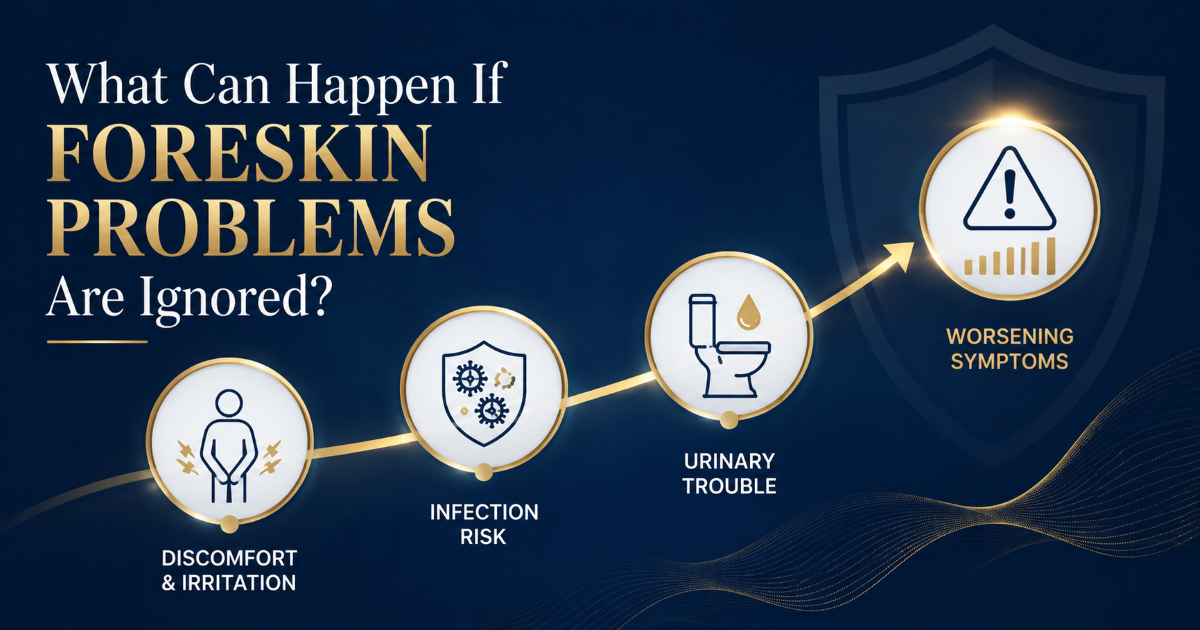
Some foreskin problems are mild and treatable. However, repeated inflammation, untreated infection, or tight foreskin can become a recurring cycle: irritation causes swelling, swelling makes retraction harder, and repeated tearing can create more scarring.
Possible day-to-day effects
- Difficulty cleaning under the foreskin
- Odor or smegma buildup
- Pain during erection or sex
- Repeated cracking or bleeding
- Fear of retraction because of pain
- Reduced confidence in intimate situations
Medical concerns to check
- Recurrent balanitis or infection
- Scarring that worsens phimosis
- Urinary discomfort or ballooning of the foreskin
- Diabetes-related infection risk
- Skin disease or persistent rash
- Unexplained lumps, ulcers, bleeding, or skin color change
Can You Have Sex with Foreskin Problems?
Some men can still have sex with mild foreskin symptoms, but it may worsen pain, tearing, bleeding, or inflammation. If sex repeatedly causes foreskin cracks, tight pulling, or soreness around the glans, the problem should be evaluated before it becomes more difficult to treat.

- Avoid sex if there is active bleeding, pus, open wound, severe pain, fever, or unexplained ulcer.
- Use condoms if there is infection risk or uncertainty about STI status.
- Do not force retraction during sex if the foreskin is tight.
- Seek medical care if cracks keep returning after intercourse.
- Discuss STI testing if there is discharge, sores, burning urination, or partner symptoms.
When Can Adult Circumcision Help with Foreskin Problems?
Adult circumcision removes the foreskin. It may be recommended for selected men when the foreskin itself is the recurring source of tightness, inflammation, tearing, or hygiene difficulty. For men with phimosis, circumcision can remove the tight foreskin ring and prevent repeated trapping or painful retraction.

| Situation | How circumcision may help | Important limitation |
|---|---|---|
| Severe or scarred phimosis | Removes the tight foreskin that cannot retract safely. | Doctor must confirm whether scarring, infection, or skin disease is present. |
| Recurrent balanitis | May reduce trapped moisture and make hygiene easier. | Infection, diabetes, irritants, and STI risk should still be evaluated. |
| Repeated foreskin tearing | May stop repeated splitting from a tight or scarred foreskin. | Frenulum breve may need separate assessment. |
| Hygiene difficulty | Can make daily cleaning simpler for selected men. | Good hygiene remains necessary after circumcision. |
| Personal preference after counseling | May meet personal, cultural, or cosmetic goals. | Circumcision is permanent, and sensation/cosmetic satisfaction varies. |
When Circumcision May Not Be the First Step
Circumcision is useful in selected cases, but not every foreskin problem should go straight to surgery. A safe clinic should first identify the cause and check whether treatment can be staged.
Other treatments may be considered when
- Inflammation appears mild and recent
- There is suspected fungal or bacterial infection
- Irritation may be caused by soap, lubricant, or condom sensitivity
- Phimosis is mild and not scarred
- The patient has uncontrolled diabetes or high surgical risk
Surgery should be planned carefully when
- There is active infection or severe swelling
- The patient uses blood-thinning medication
- There is a bleeding disorder
- There is unusual penile anatomy or previous surgery
- The patient has unclear expectations about appearance or sensation

What Happens During Adult Circumcision?
The exact technique depends on anatomy, foreskin tightness, inflammation, cosmetic preference, bleeding risk, and doctor judgment. Some clinics may use conventional surgical circumcision, device-assisted circumcision, or a bleeding-control technique. The method should be explained before consent.
Consultation and examination
The doctor checks the foreskin, glans, frenulum, infection signs, scars, medical history, medication use, and patient goals.
Diagnosis and method planning
The clinic explains whether circumcision is suitable, whether infection should be treated first, and which method is appropriate.
Anesthesia and sterile preparation
Local anesthesia is commonly used for adult circumcision. The area is cleaned and prepared under sterile protocol.
Foreskin removal and wound closure
The foreskin is removed according to the selected technique. Bleeding is controlled and the wound is closed with sutures, staples, or method-specific closure.
Dressing and aftercare
The clinic applies dressing and gives instructions for cleaning, medication, warning signs, follow-up, and when to resume sex or exercise.
Recovery Timeline and Aftercare
Adult circumcision recovery varies by method, wound tension, swelling, medical condition, smoking status, hygiene, and activity level. Do not use a fixed timeline as a guarantee. Follow the instructions from your treating doctor.

| Period | What may be normal | What to avoid |
|---|---|---|
| First 24-48 hours | Tenderness, mild bleeding spots, swelling, dressing discomfort. | Alcohol, heavy movement, friction, removing dressing too early unless instructed. |
| Days 3-7 | Bruising, swelling, sensitivity, mild tightness around the wound. | Sex, masturbation, cycling, swimming, sauna, and heavy lifting. |
| Weeks 2-3 | Wound settling, reduced swelling, stitches or staples loosening depending on method. | Pulling stitches or staples yourself, high-friction activity, unapproved sexual activity. |
| Weeks 4-6 | Most men are more comfortable, but scar firmness and sensitivity can remain. | Returning to sex or intense exercise before the doctor confirms adequate healing. |
| After 6 weeks | Scar maturation continues for months. | Ignoring persistent pain, swelling, discharge, or wound separation. |
Choosing a Circumcision Clinic in Bangkok
For international patients, a clinic should provide more than a quick procedure. Look for clear medical assessment, sterile technique, realistic communication, aftercare access, and a plan for travel timing.

| What to check | Why it matters | Question to ask |
|---|---|---|
| Diagnosis before treatment | Foreskin problems can come from different causes. | Will the doctor check whether this is phimosis, balanitis, tearing, or another condition? |
| Method explanation | Traditional, device-assisted, and bleeding-control approaches have different aftercare needs. | Why is this method suitable for my anatomy and symptoms? |
| Risk communication | No surgery is risk-free. | What are the risks of bleeding, infection, wound separation, sensitivity change, or revision? |
| Aftercare access | International patients need a clear follow-up pathway. | How can I contact the clinic after the procedure if I have swelling or bleeding? |
| Travel planning | Flying, walking, sex, swimming, and exercise should be timed safely. | How long should I stay in Bangkok before travel or strenuous activity? |
For treatment details, visit Adult Circumcision at Eternity Clinic International. If tight foreskin is your main concern, read the dedicated Phimosis and Tight Foreskin guide.
Book a Private Foreskin Problem Consultation
Send your case for doctor review if you have tight foreskin, repeated inflammation, cracking, pain during sex, odor, discharge, or difficulty cleaning under the foreskin. The clinic team can help explain whether circumcision, medication, or another treatment pathway is more appropriate.

Doctor Review and Medical Safety
This page is prepared as patient education for adult foreskin problems, phimosis, balanitis, and circumcision planning. Suitability, diagnosis, medication needs, surgical method, anesthesia, risks, and recovery must be confirmed during a private doctor consultation.
Reviewed by: Dr. Beer, Eternity Clinic
Last content update: 18 June 2026
Foreskin Problems FAQ
What are the most common foreskin problems in adult men?
Common problems include phimosis, balanitis, balanoposthitis, foreskin cracking, smegma buildup, odor, painful retraction, and recurrent tearing during sex. A doctor should check persistent or recurring symptoms.
Does tight foreskin always need circumcision?
No. Mild tightness may sometimes improve with conservative treatment, depending on cause and severity. Circumcision may be considered when phimosis is severe, scarred, recurrent, or causing repeated pain, infection, or hygiene problems.
Can balanitis be treated without circumcision?
Often, yes. Balanitis treatment may include hygiene changes, avoiding irritants, antifungal or antibiotic medication, or diabetes management. Circumcision may be discussed if inflammation keeps returning or is linked to a tight foreskin.
Can I have sex if I have foreskin cracks?
Sex can worsen cracks, bleeding, and pain. Avoid sex when there are open wounds, discharge, severe pain, or suspected infection. If cracks keep returning, seek medical evaluation before continuing.
Is adult circumcision painful?
Local anesthesia is commonly used to minimize pain during the procedure. Afterward, tenderness, swelling, bruising, and sensitivity are expected for a period of time. Pain should gradually improve.
How long does recovery take after adult circumcision?
Many adults need several weeks before the wound is comfortable and safe for normal activity, and scar maturation can continue for months. Sex, masturbation, swimming, cycling, sauna, and heavy exercise should wait until the doctor confirms adequate healing.
What symptoms need urgent medical attention?
Seek urgent care if you cannot urinate, have heavy bleeding, fever, pus, worsening redness, severe pain, blackened skin, rapidly increasing swelling, trapped retracted foreskin, or significant wound opening.
Is circumcision a guaranteed solution for all foreskin problems?
No. Circumcision can help selected foreskin-related problems, but symptoms may also involve infection, skin disease, STI, diabetes, frenulum breve, or other causes. Diagnosis comes before treatment choice.
Medical References
The following references were used for general medical context. They do not replace diagnosis or personalized treatment planning.

Latest Articles
What Are the Symptoms of Cystitis? This Article Has the Answers.
Cystitis is inflammation of the bladder. It is often caused by a bacterial bladder infection,
How to Care for Your Manhood to Keep It Strong and Disease-Free
Penis health is not only about sexual performance. It includes daily hygiene, foreskin care, safer
Permanent Solution for Premature Ejaculation with Surgery
Premature ejaculation can be distressing, but it should not be reduced to a single promise
Delayed Ejaculation: Is It Really Good? What to Do If You’re Facing This Issue
Delayed ejaculation may sound positive to some men, but when climax takes much longer than
How to Measure Condom Size Properly: Understanding Sizes 49, 52, 54, and 56
Condom size is not judged by length alone. For most men, the most useful measurement
Penile Enlargement With “Your Own Tissue” or “Your Own Fat”: Why It May Not Be Worth the Pain
Using your own tissue or your own fat can sound more natural than synthetic material,
Circumcision at a Clinic vs Hospital: How to Choose the Right Medical Setting
Adult circumcision can be planned in different medical settings. The safest choice depends on your
Adult Circumcision Explained: Benefits, Methods, Recovery, and Safety
Adult circumcision is a procedure to remove the foreskin covering the head of the penis.