
Premature ejaculation can affect confidence, intimacy, and relationship satisfaction, but the safest solution is not to rush into pills or surgery. A good plan starts by understanding whether PE is lifelong or acquired, whether erectile dysfunction or anxiety is involved, and whether the pattern is related to sensitivity, stress, inflammation, medication, or relationship pressure.
Premature ejaculation is treatable, but treatment should be cause-based. PE may involve biological factors, psychological stress, learned arousal patterns, erectile dysfunction, prostatitis or urinary symptoms, medication effects, or relationship context. Most patients should start with diagnosis, behavioral techniques, topical anesthetic discussion, oral medication when appropriate, ED treatment if present, and counseling when needed. Dorsal neurotomy may be discussed only for selected persistent cases with suspected penile hypersensitivity after assessment.
Do not self-blame
PE is a common sexual health concern and does not mean failure, weakness, or lack of masculinity.
Find the cause pattern
Lifelong PE, acquired PE, situational PE, and PE with ED may require different treatment paths.
Avoid quick-fix claims
No pill, technique, surgery, or supplement should be promised as a guaranteed cure for every patient.
Table of Contents
1. What causes premature ejaculation?
2. How PE affects relationships and mental health
3. Diagnosis pathway
4. Sustainable treatment and behavior strategies
5. When surgery may be considered
6. Realistic expectations and risks
7. When to see a doctor
8. FAQ
What Causes Premature Ejaculation?
Premature ejaculation is rarely just random bad luck. It can involve physical, neurological, psychological, behavioral, and relationship factors. Some men have PE from their first sexual experiences, while others develop it later after previously normal control.
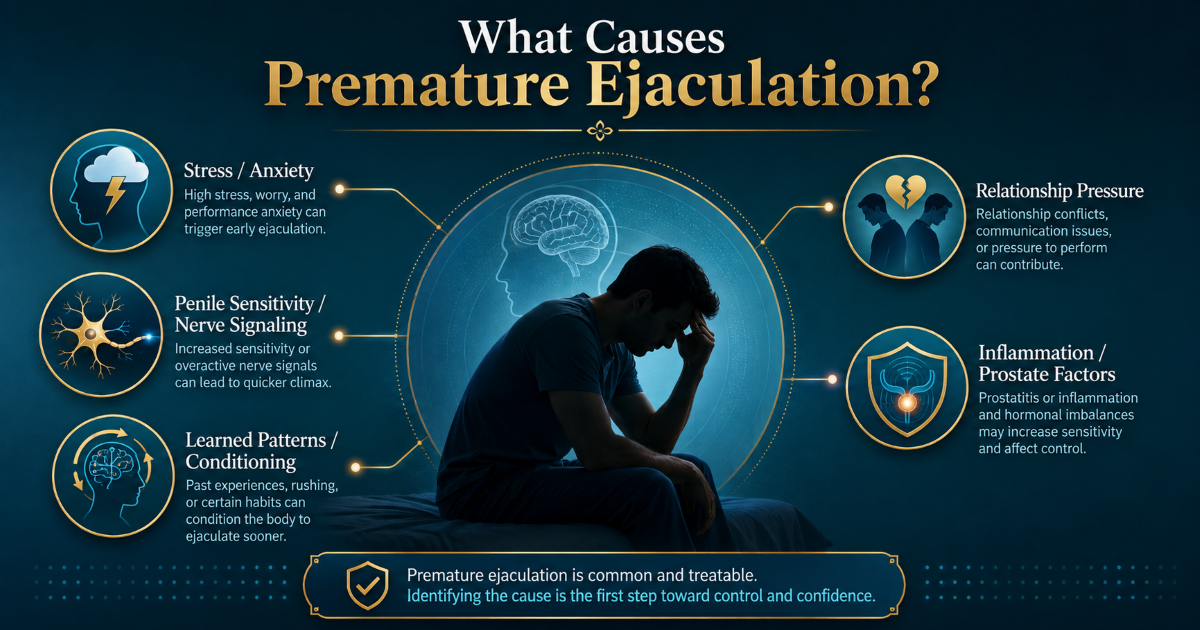
| Cause category | Examples | Why it matters |
|---|---|---|
| Biological factors | Penile hypersensitivity, serotonin pathway differences, thyroid factors, prostatitis, inflammation, or genetic tendency. | May require medical evaluation rather than simple willpower-based advice. |
| Erectile dysfunction | Rushing because erection may be lost, or rapid loss of erection after ejaculation. | ED should be screened and treated before PE surgery is considered. |
| Psychological factors | Stress, performance anxiety, depression, shame, fear of repeating PE, or relationship pressure. | Counseling, sex therapy, and communication may be central to improvement. |
| Past sexual patterns | Rushed masturbation, limited experience, anxiety-driven pacing, or lack of arousal awareness. | Behavioral techniques may help improve control in selected men. |
| Medication or substance factors | Recreational drugs, alcohol, stimulants, medication changes, or supplement use. | Self-treatment may worsen the problem; medication review may be needed. |
How PE Affects Relationships and Mental Health
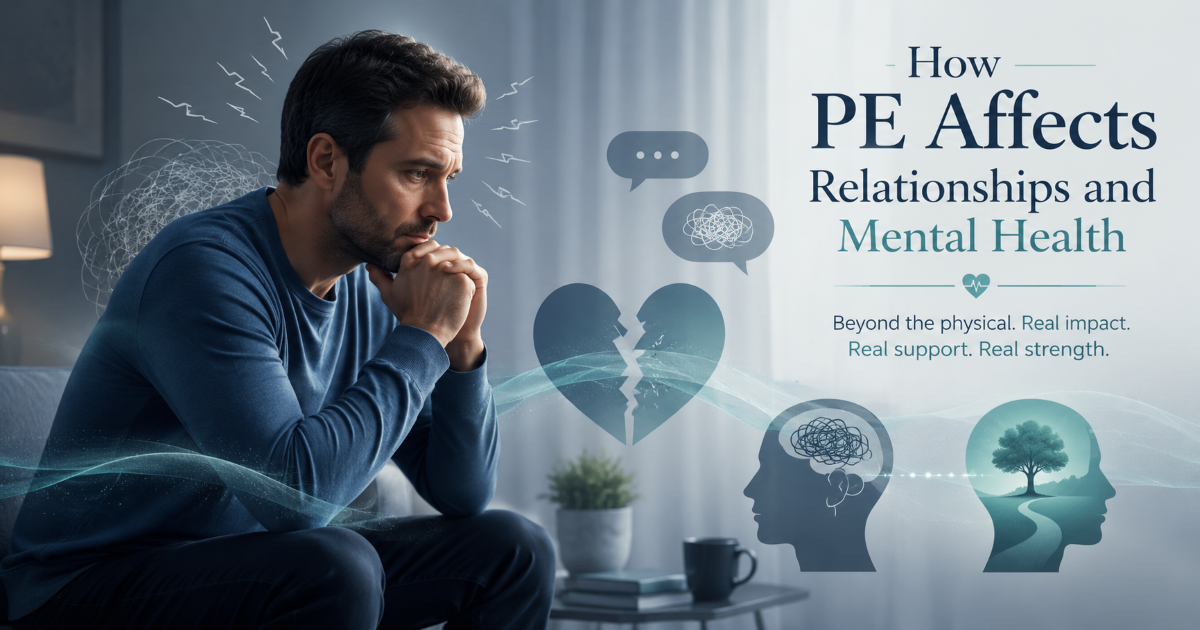
PE can create a cycle of anxiety. A man may worry about finishing too soon, this increases pressure during sex, and the pressure makes control even harder. Partners may feel confused, rejected, or dissatisfied if the issue is not discussed openly.
Common emotional effects
- Loss of confidence during intimacy
- Fear of repeated early ejaculation
- Avoidance of sex
- Shame, frustration, or low self-esteem
- Worry about partner dissatisfaction
Relationship effects
- Reduced communication about sex
- Misunderstanding about attraction or desire
- Pressure to perform
- Partner frustration or discomfort
- Less spontaneous intimacy
Diagnosis Pathway: Understand the Pattern First
A structured consultation helps separate PE from ED, delayed ejaculation, low libido, prostatitis symptoms, anxiety-driven sexual difficulty, and medication-related changes.
Classify PE
Is it lifelong, acquired, situational, or generalized? Does it happen before penetration, soon after penetration, or only under specific conditions?
Measure distress and control
Diagnosis is not only about minutes. Control, distress, repetition, and partner impact matter.
Screen for ED and medical causes
Review erection quality, urinary symptoms, pelvic pain, thyroid symptoms, prostatitis concern, medication, alcohol, and stimulant use.
Review mental health and relationship context
Performance anxiety, depression, stress, trauma, relationship conflict, and shame may require support.
Choose a treatment ladder
Start with cause-based care and escalate only when appropriate.
For the full treatment pathway, see Premature Ejaculation Treatment.
Sustainable Treatments and Behavior Change Strategies
Sustainable improvement usually comes from combining practical control skills, medical review, and expectation management. The goal is better control and lower distress, not perfection or a guaranteed number of minutes.
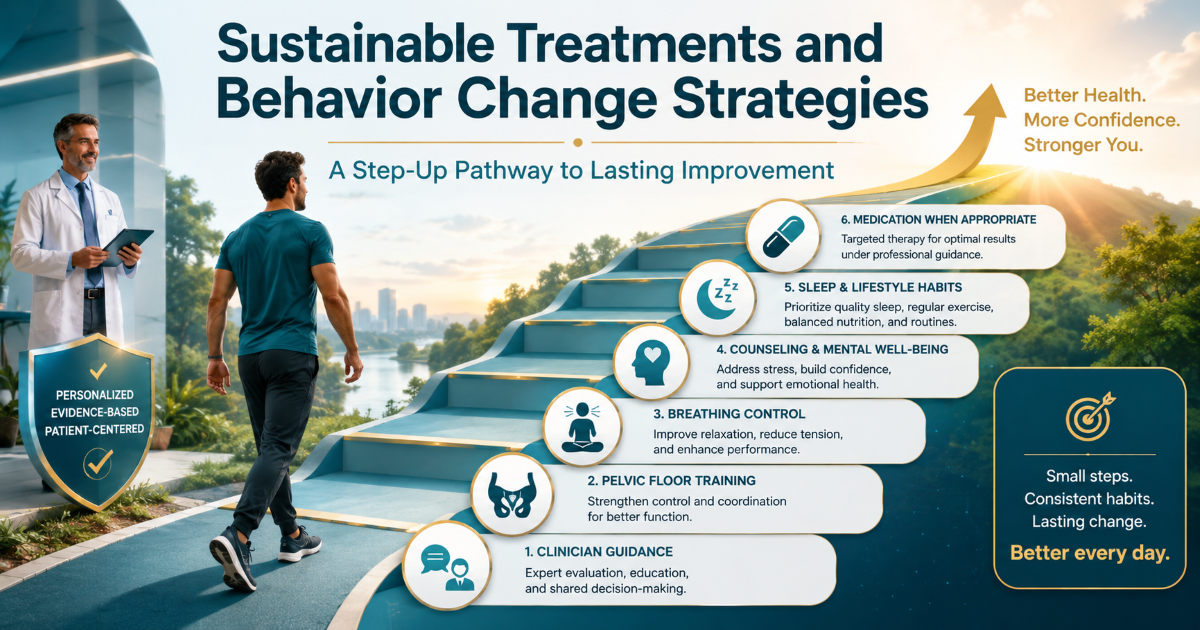
| Treatment option | How it may help | Important caution |
|---|---|---|
| Stop-start and pause-squeeze techniques | May improve arousal awareness and ejaculation control. | Requires practice; painful squeezing or panic-based practice is not recommended. |
| Topical anesthetics | May reduce penile sensitivity and delay ejaculation in some men. | Can reduce pleasure or numb a partner if used incorrectly. |
| Oral medication | SSRIs, dapoxetine where available, or other prescribed options may be discussed. | Side effects and drug interactions require doctor guidance; not all PE medicines are approved in all countries. |
| ED treatment | May help when rushing is linked to unreliable erections. | Cardiovascular risk and medication interactions should be reviewed. |
| Counseling or sex therapy | Useful for anxiety, depression, shame, trauma, or relationship pressure. | Works best when both emotional and practical factors are addressed. |
When Surgery May Be Considered
Dorsal neurotomy, also called dorsal neurectomy, is sometimes discussed for selected men with persistent PE and suspected penile hypersensitivity. It should not be described as a guaranteed permanent cure, and it is not first-line treatment for most patients.
May be considered
- Persistent or lifelong PE with suspected hypersensitivity
- Significant distress despite reasonable non-surgical review
- ED has been assessed or treated if present
- Patient understands sensation-related risks
- Expectations are realistic and not based on guaranteed cure claims
Usually address first
- Untreated ED
- Active infection, prostatitis symptoms, urinary symptoms, or penile pain
- Severe anxiety or relationship conflict without support
- High bleeding, wound-healing, or anesthesia risk
- Expectation of exact minutes, 100% success, or no recurrence
For procedure-specific details, see Dorsal Neurotomy.
Realistic Expectations and Risks
The original version included claims such as 4-5x improvement, 80-85% success, and less than 10% recurrence. These statements should be softened because outcomes vary by diagnosis, patient selection, technique, and follow-up.
| Claim to avoid | Safer wording |
|---|---|
| PE can become a thing of the past | PE can often be managed when the cause is identified and treated appropriately. |
| Surgery preserves pleasure and erection | The procedure targets sensory pathways, but ED and sensation-related risks must be reviewed. |
| High success and low recurrence for everyone | Outcomes vary; no universal success or recurrence rate applies to every patient. |
| Fast recovery for all patients | Recovery varies by procedure, wound healing, and aftercare. |
Treatable, Not Taboo

PE should not be ignored or hidden. It can be addressed through a structured plan that may include education, behavior training, medication, relationship support, ED care, and selected procedures when appropriate.
- How long PE has been present
- Whether it is lifelong or acquired
- Approximate timing and level of control
- Whether erection quality is reliable
- Pain, urinary symptoms, medication, alcohol, stimulant, or supplement use
- Techniques or treatments already tried
Book a Private Premature Ejaculation Consultation
Send your case for doctor review if you have persistent premature ejaculation, reduced control, relationship distress, suspected penile hypersensitivity, erectile dysfunction, anxiety-related PE, or interest in advanced treatment options. The clinic team can explain diagnosis, treatment options, risks, recovery, and realistic expectations.

Doctor Review and Medical Safety
This page is prepared as patient education for premature ejaculation causes, relationship impact, behavioral treatment, medication discussion, ED screening, dorsal neurotomy consideration, and male intimate health. Suitability, method choice, risks, recovery, and expected results must be confirmed during a private doctor consultation.
Reviewed by: Dr. Beer, Eternity Clinic
Last content update: 18 June 2026
Premature Ejaculation FAQ
What causes premature ejaculation?
PE can involve penile hypersensitivity, ED, anxiety, stress, depression, relationship pressure, medication effects, prostatitis symptoms, thyroid factors, or lifelong arousal patterns.
Is premature ejaculation psychological or physical?
It can be either or both. Many patients have overlapping physical, psychological, and relationship contributors.
Can PE affect relationships?
Yes. PE can affect confidence, communication, partner satisfaction, and emotional intimacy, especially when it is not discussed openly.
What is the first step in treatment?
The first step is diagnosis: classify PE type, review distress and control, screen for ED, and check medical, medication, psychological, and relationship factors.
Do start-stop and squeeze techniques work?
They may help selected men improve arousal awareness and control, but they require practice and are not guaranteed for everyone.
Is dorsal neurotomy a cure?
No. Dorsal neurotomy may be considered for selected persistent PE with suspected penile hypersensitivity, but it is not a guaranteed cure and has risks.
Can ED cause premature ejaculation?
Yes. ED can lead to rushing and performance anxiety. ED should be evaluated before PE procedures are considered.
When should I see a doctor?
See a doctor if PE is persistent, distressing, new, associated with ED, pain, urinary symptoms, medication changes, anxiety, or relationship difficulty.
Medical References
The following references were used for general medical context. They do not replace personalized diagnosis or treatment planning.

Latest Articles
Penile Enlargement With “Your Own Tissue” or “Your Own Fat”: Why It May Not Be Worth the Pain
Using your own tissue or your own fat can sound more natural than synthetic material,
Circumcision at a Clinic vs Hospital: How to Choose the Right Medical Setting
Adult circumcision can be planned in different medical settings. The safest choice depends on your
Adult Circumcision Explained: Benefits, Methods, Recovery, and Safety
Adult circumcision is a procedure to remove the foreskin covering the head of the penis.
Where is the Best Place for Vasectomy (Male Sterilization): Hospital or Clinic?
A vasectomy is a permanent male contraception procedure, but choosing where to have it done
What Sexual Positions Are Best for Men with a Short Penis to Maximize Pleasure in the Bedroom?
A shorter penis or concern about penis size does not automatically mean poor intimacy. Comfort,
How many Methods for Increasing Penis Size? This Article Has the Answers.
Many men search for ways to increase penis size, but the safest first step is
Hormone Therapy Without Surgical Gender Transition
Hormone therapy can help some transgender and gender-diverse people align physical characteristics with personal goals
What Are the Symptoms of Cystitis? This Article Has the Answers.
Cystitis is inflammation of the bladder. It is often caused by a bacterial bladder infection,