

Androgens are hormones involved in male sexual development, libido, muscle and bone health, red blood cell production, mood, and reproductive function. Testosterone is the main androgen in men, but low energy, low libido, or erectile dysfunction should not automatically be treated as a testosterone problem without proper testing and medical evaluation.
Androgens are a group of hormones that include testosterone. In men, testosterone is made mainly in the testes and supports sexual development, libido, sperm production, muscle mass, bone density, and overall reproductive function. Low testosterone can be part of an erectile dysfunction or low libido workup, but ED is often multifactorial and may involve blood flow, nerve health, diabetes, cardiovascular risk, sleep, stress, medications, or relationship factors.
What Are Androgens?
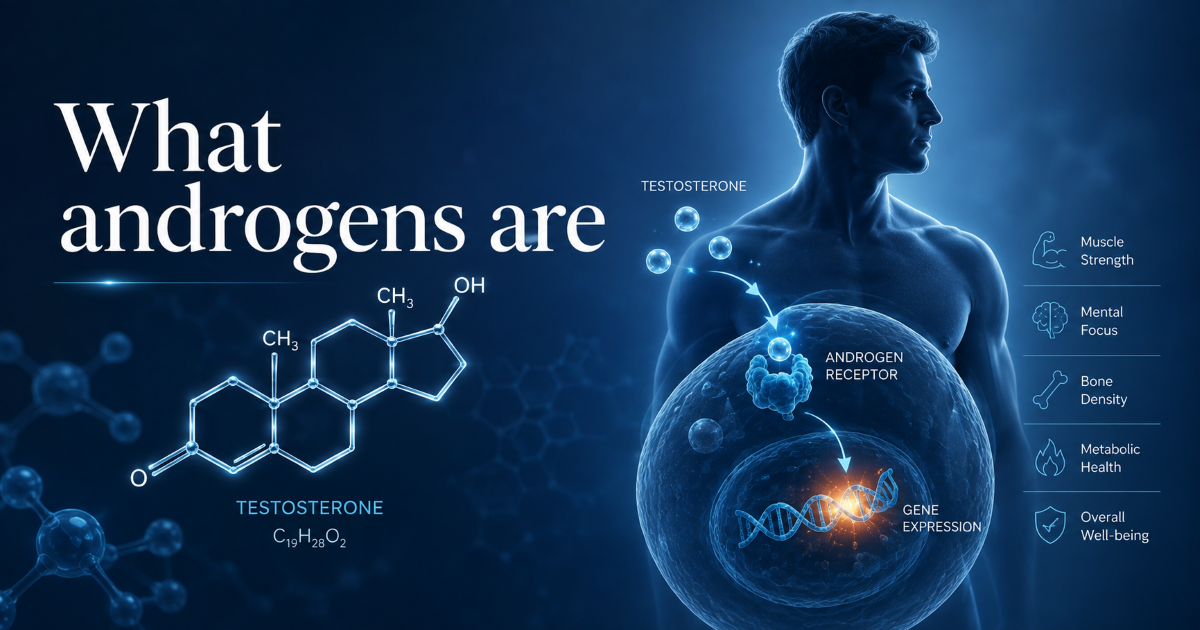
Androgens are steroid hormones involved in male sexual development and several adult body functions. Testosterone is the best-known androgen. Other androgens, such as dihydrotestosterone and adrenal androgen precursors, also contribute to hormone signalling. Although androgens are often called male hormones, they are present in all sexes at different levels.
In adult men, testosterone is produced mainly by Leydig cells in the testes, with a smaller contribution from adrenal-related androgen pathways. Testosterone levels vary by age, time of day, sleep, illness, medications, body weight, and underlying endocrine or testicular conditions.
What Testosterone Does in Men’s Health
Testosterone affects multiple systems. It helps support puberty-related development, libido, erectile physiology, sperm production, muscle mass, bone density, red blood cell production, body hair patterns, and mood-related wellbeing. However, symptoms are not specific. Low energy, low sexual desire, weaker erections, weight gain, poor sleep, and mood changes can also come from other medical or lifestyle factors.
Sexual function
Testosterone contributes to libido and can influence erectile function, but erections also depend strongly on vascular, nerve, psychological, and medication-related factors.
Body composition
Low testosterone may overlap with reduced muscle mass, increased fat mass, low energy, or lower bone density, but these findings require medical context.
Fertility
Normal sperm production requires coordinated hormone signals. External testosterone can suppress sperm production in some men, so fertility goals must be discussed first.

Symptoms That May Suggest Low Testosterone
Symptoms of low testosterone can vary. Some men report reduced sexual desire, fewer morning erections, erectile difficulty, fatigue, reduced muscle mass, increased body fat, depressed mood, irritability, poor concentration, sleep disturbance, hot flashes, infertility, or reduced body hair. These symptoms are not diagnostic by themselves.
| Symptom pattern | Possible androgen-related concern | Other causes to consider |
|---|---|---|
| Low libido | Can be associated with low testosterone in selected patients. | Stress, depression, anxiety, relationship strain, medications, sleep problems, alcohol, chronic illness. |
| Erectile dysfunction | Low testosterone may contribute, especially with low libido. | Diabetes, vascular disease, smoking, blood pressure, medication effects, pelvic surgery, psychological factors. |
| Low energy | May occur with hypogonadism. | Sleep apnea, thyroid disease, anemia, obesity, chronic stress, overtraining, poor sleep. |
| Infertility | Hormonal imbalance may be part of the workup. | Varicocele, sperm production disorders, obstruction, infection, heat exposure, medications, female partner factors. |
Androgens, Erectile Dysfunction, and Sexual Performance
Low testosterone can reduce sexual desire and may make ED treatment less effective in selected men. However, erectile dysfunction is not simply a testosterone problem. Erections require healthy blood flow, nerve signalling, hormone balance, arousal, and psychological comfort. That is why a good ED consultation should not stop at one hormone test.

ED workup may include
- Medical history and medication review
- Blood pressure, diabetes, lipids, weight, sleep, smoking, alcohol
- Morning testosterone when symptoms suggest deficiency
- Assessment of libido, erection quality, and relationship factors
Hormones cannot promise
- Guaranteed erection improvement
- Guaranteed libido recovery
- Guaranteed fertility improvement
- Penis size increase
- Risk-free anti-aging effects
For broader ED planning, see the clinic’s erectile dysfunction treatment guide and men’s health guide.
How Low Testosterone Is Tested and Diagnosed
Guidelines generally recommend diagnosing testosterone deficiency only when symptoms or signs fit the condition and blood tests show consistently low testosterone. Because testosterone levels vary during the day, testing is commonly done in the morning and may need to be repeated before treatment is considered.
Start with symptoms and goals
Discuss libido, erection quality, energy, sleep, mood, fertility goals, medications, exercise, alcohol, smoking, and medical history.
Use reliable morning blood testing
Total testosterone is often measured first. Free testosterone, SHBG, LH, FSH, prolactin, thyroid tests, diabetes markers, lipids, and other tests may be added depending on the case.
Confirm and look for the cause
A single low reading is not enough for every patient. The cause may be testicular, pituitary, medication-related, obesity-related, illness-related, or age-associated.
Discuss fertility before treatment
Men who want children should not start testosterone therapy without a fertility discussion, because external testosterone can suppress sperm production.
Treatment Options: What May Be Discussed
Treatment depends on the confirmed diagnosis, cause, symptoms, fertility goals, baseline blood tests, and risk profile. Lifestyle changes, management of diabetes or sleep apnea, ED-specific treatment, medication review, fertility-preserving options, or testosterone therapy may be discussed in selected patients.
| Option | When it may be considered | Limitations and cautions |
|---|---|---|
| Lifestyle and medical optimization | Weight, sleep, exercise, alcohol, smoking, diabetes, blood pressure, stress, or medication factors are present. | May improve symptoms and health risk, but results vary and medical causes still need evaluation. |
| ED-specific treatment | Erection quality is the main concern or vascular/metabolic risk is likely. | ED medication or devices may be unsuitable for some patients and should be medically reviewed. |
| Fertility-preserving hormone approach | Low testosterone symptoms coexist with desire for future fertility. | Requires specialist evaluation; external testosterone may not be appropriate. |
| Testosterone gel, injection, or other prescription forms | Selected men with symptoms and consistently low testosterone due to an appropriate medical indication. | Requires monitoring. It is not a general booster, bodybuilding shortcut, fertility enhancer, or guaranteed ED treatment. |

Monitoring and Risk-Benefit Discussion
If testosterone treatment is medically appropriate, monitoring should be part of the plan. Depending on the patient, this may include testosterone levels, blood count, prostate-related evaluation, liver or metabolic markers, blood pressure, sleep apnea symptoms, fertility goals, skin reactions, breast tenderness, acne, mood changes, and treatment response.
Before treatment
Confirm symptoms, repeat testing when appropriate, review contraindications, fertility goals, medications, and cardiovascular or prostate-related context.
During treatment
Track symptom response, lab values, adverse effects, application safety for gels, and whether the original treatment goal is being met.
Stop and reassess
Reassess if there is no meaningful benefit, side effects occur, fertility goals change, or a new medical risk appears.
Red Flags: When to Seek Medical Care
Symptoms that appear to be low testosterone can sometimes reflect more serious conditions. Seek medical evaluation if symptoms are persistent, worsening, or combined with other health changes.
| Concern | Why it matters | Suggested action |
|---|---|---|
| New or worsening erectile dysfunction | ED can be an early sign of diabetes, vascular disease, medication effects, or cardiovascular risk. | Get a men’s health assessment rather than starting hormone treatment alone. |
| Infertility or trying to conceive | Testosterone therapy can suppress sperm production in some men. | Discuss semen analysis and fertility-preserving options before treatment. |
| Severe fatigue, weight change, depression, or sleep disturbance | May involve thyroid disease, sleep apnea, anemia, mental health, metabolic disease, or medication effects. | Ask for broader evaluation, not only testosterone testing. |
| Chest pain, shortness of breath, severe headache, leg swelling | These are not routine low testosterone symptoms and may need urgent assessment. | Seek urgent medical care. |
| Gel exposure to partner or child | Secondary testosterone exposure can be harmful. | Wash affected skin, prevent further contact, and contact a doctor if symptoms appear. |
FAQ About Androgens and Testosterone
What are androgens?
Androgens are hormones that support male sexual development and several adult body functions. Testosterone is the main androgen in men, although androgens are also present in women in lower amounts.
Can low androgen or low testosterone cause erectile dysfunction?
Low testosterone can contribute to low libido and may be one factor in erectile dysfunction, but ED often involves blood flow, nerve health, diabetes, cardiovascular risk, medication effects, stress, sleep, and relationship factors. A medical evaluation is needed before choosing treatment.
How is low testosterone diagnosed?
Guidelines recommend diagnosing testosterone deficiency only when compatible symptoms are present and testosterone levels are consistently low on accurate morning blood tests, often repeated before treatment decisions.
Is AndroGel a general testosterone booster?
No. Testosterone gel is a prescription hormone treatment for selected patients with confirmed hypogonadism. It should not be used as a general body-building, anti-aging, fertility, or sexual performance shortcut.
Can testosterone therapy improve fertility?
Testosterone therapy can suppress sperm production in some men and may worsen fertility goals. Men who want children should discuss fertility-preserving options with a doctor before using testosterone.
Medical References
This article is written for patient education and medical SEO clarity. It does not replace diagnosis, individualized hormone assessment, fertility counselling, or prescription guidance from a qualified doctor.
- Cleveland Clinic: Androgens
- Cleveland Clinic: Low testosterone and male hypogonadism
- Endocrine Society: Testosterone therapy for hypogonadism guideline resources
- FDA: Labeling changes for testosterone products
- NCBI Bookshelf: Androgen physiology, pharmacology, use and misuse
- PubMed Central: The roles of androgens in humans

Doctor Review and Medical Safety
Androgen and testosterone concerns should be assessed with symptoms, repeat reliable blood testing, ED risk factors, fertility goals, medication review, and medical history. Testosterone treatment should not be framed as a general performance booster or guaranteed ED solution. The safer plan is individualized diagnosis, counselling, monitoring, and shared decision-making.
Reviewed by: Dr. Beer, Eternity Clinic
Last content update: 30 June 2026

Latest Articles
Penile Enlargement With “Your Own Tissue” or “Your Own Fat”: Why It May Not Be Worth the Pain
Using your own tissue or your own fat can sound more natural than synthetic material,
Circumcision at a Clinic vs Hospital: How to Choose the Right Medical Setting
Adult circumcision can be planned in different medical settings. The safest choice depends on your
Adult Circumcision Explained: Benefits, Methods, Recovery, and Safety
Adult circumcision is a procedure to remove the foreskin covering the head of the penis.
Where is the Best Place for Vasectomy (Male Sterilization): Hospital or Clinic?
A vasectomy is a permanent male contraception procedure, but choosing where to have it done
What Sexual Positions Are Best for Men with a Short Penis to Maximize Pleasure in the Bedroom?
A shorter penis or concern about penis size does not automatically mean poor intimacy. Comfort,
How many Methods for Increasing Penis Size? This Article Has the Answers.
Many men search for ways to increase penis size, but the safest first step is
Hormone Therapy Without Surgical Gender Transition
Hormone therapy can help some transgender and gender-diverse people align physical characteristics with personal goals
What Are the Symptoms of Cystitis? This Article Has the Answers.
Cystitis is inflammation of the bladder. It is often caused by a bacterial bladder infection,