

Phimosis means the foreskin is too tight to retract comfortably over the head of the penis. In children it may be physiological and improve with time, but in teens and adults a tight foreskin can also be linked with scarring, infection, inflammation, lichen sclerosus, painful erections, hygiene problems, or urinary symptoms. This guide explains how to think about treatment without overpromising results.
Phimosis treatment depends on age, severity, symptoms, scarring, infection history, skin disease, and whether urination or sex is affected. Mild cases may be monitored or treated with doctor-directed topical steroid therapy and gentle stretching. Circumcision or another surgical option may be considered when phimosis is severe, recurrent, scarred, painful, or causes hygiene and sexual function problems.
What Is Phimosis?
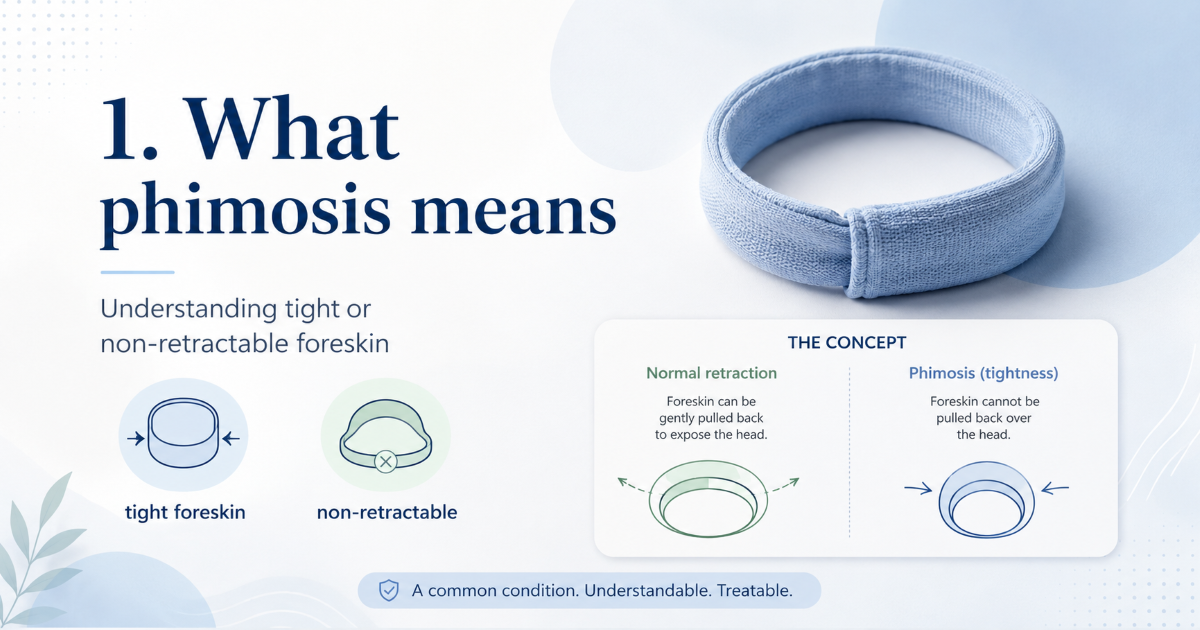
Phimosis is the inability to retract the foreskin fully enough to expose the glans. A non-retractable foreskin can be normal in young children, but persistent tightness, pain, inflammation, ballooning during urination, sexual difficulty, or a newly tight foreskin in adulthood should be assessed medically.
The main distinction is between physiological phimosis, which is common in children and often improves over time, and pathological phimosis, where scarring, infection, chronic inflammation, or a skin condition makes the foreskin tight and less elastic.
What Causes Phimosis?
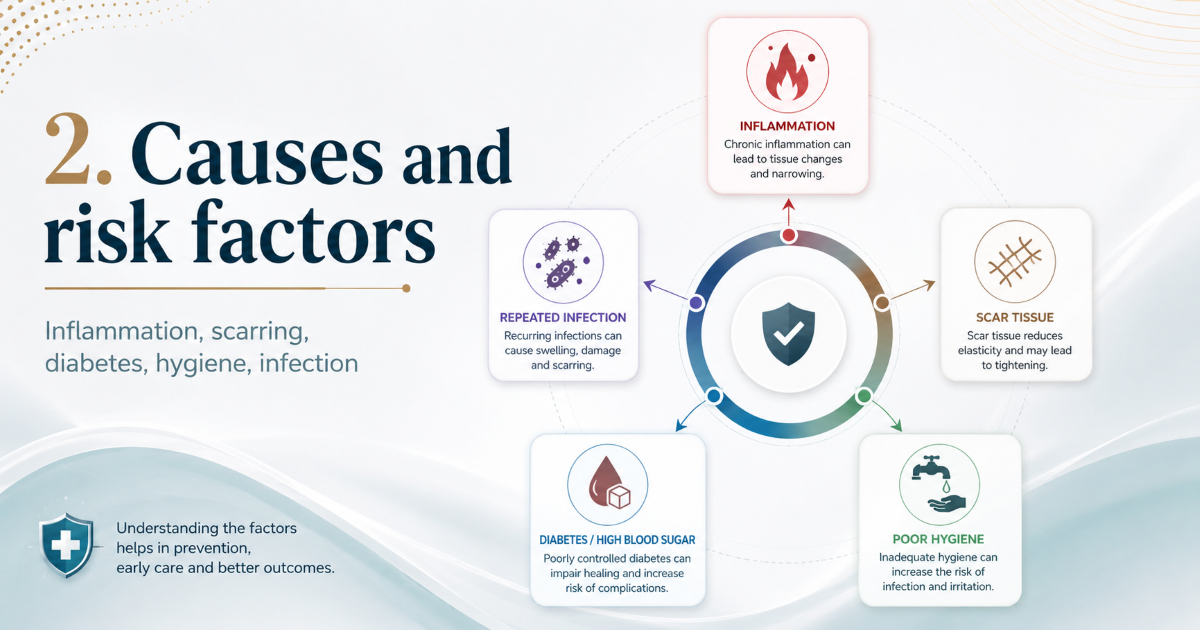
Phimosis can have several causes. In children, the foreskin may simply not be ready to retract. In adults, a newly tight foreskin is more likely to involve inflammation, scarring, repeated infection, diabetes-related irritation, lichen sclerosus, or repeated micro-tears from forceful retraction or sex.
Physiological tightness
Common in younger children and often improves naturally. It should not be forced open.
Inflammation or infection
Recurrent balanitis or poor hygiene can irritate the foreskin and contribute to scarring.
Skin disease or scarring
Lichen sclerosus and other inflammatory skin conditions can narrow the foreskin opening.
Symptoms That Suggest Phimosis Needs Medical Assessment
A tight foreskin can be mild and asymptomatic, but it becomes more clinically important when it causes symptoms or interferes with hygiene, urination, erections, or sex.
| Symptom | What it may suggest | Suggested action |
|---|---|---|
| Unable to retract the foreskin enough to clean | Hygiene difficulty and irritation risk | Book an assessment; do not force retraction. |
| Pain during erection or sex | Tight ring, tearing, inflammation, or scarring | Stop forceful activity and consult a doctor. |
| Ballooning during urination or weak stream | Urinary obstruction pattern in selected cases | Medical evaluation is recommended. |
| Redness, swelling, discharge, odor, or fever | Possible infection or inflammation | Seek medical care promptly. |
| Foreskin stuck behind the glans | Possible paraphimosis | Urgent care is needed. |
How a Doctor Assesses Phimosis
A useful consultation should identify the type and cause of phimosis, not only recommend a procedure. The doctor may review symptoms, hygiene, sexual discomfort, urinary flow, infection history, diabetes risk, previous tearing, skin changes, and whether the patient has tried steroid cream or stretching before.
History and symptom review
When the tightness started, whether it is worsening, pain level, urinary symptoms, sex-related tearing, inflammation, and previous treatment attempts.
Physical examination
The clinician checks the foreskin opening, scarring, redness, cracks, discharge, frenulum tightness, and signs of lichen sclerosus or balanitis.
Cause-based treatment plan
The plan may involve hygiene education, topical treatment, infection treatment, gentle stretching guidance, circumcision, or another surgical option depending on severity.
Phimosis Treatment Options
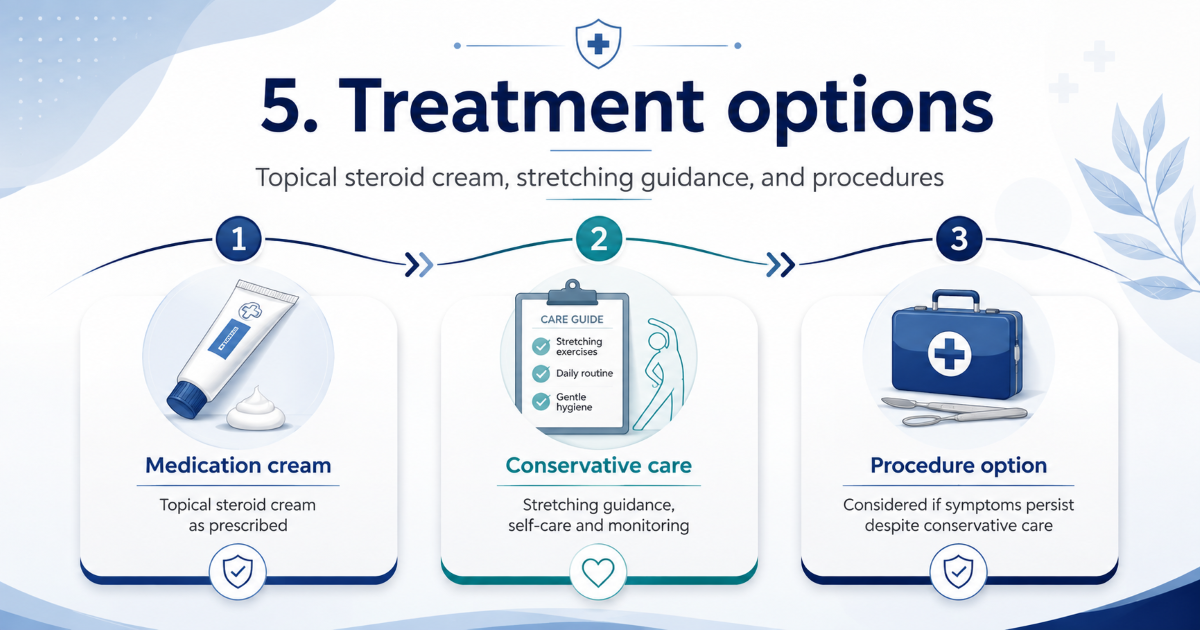
Treatment is selected according to severity, age, symptoms, skin quality, scarring, infection, and patient preference. No option should be presented as risk-free or guaranteed for every patient.
| Option | When it may be discussed | Limitations and cautions |
|---|---|---|
| Observation | Young children or mild cases without pain, infection, urinary problems, or hygiene difficulty. | Needs monitoring. Do not force retraction. |
| Topical steroid cream | Selected non-scarred or mildly tight cases under medical guidance. | Requires correct use and follow-up. Recurrence can occur. |
| Gentle stretching | Selected patients when advised by a clinician. | Stretching should be gentle, not painful. Force can cause tears and scarring. |
| Treat infection or skin disease | When balanitis, fungal infection, dermatitis, or lichen sclerosus is suspected. | Treatment depends on diagnosis. Recurrent cases may still need surgery. |
| Circumcision or surgical correction | Severe, scarred, recurrent, painful, or function-limiting phimosis. | Requires aftercare and has risks such as bleeding, infection, swelling, pain, scarring, and healing issues. |
When Is Circumcision Considered for Phimosis?
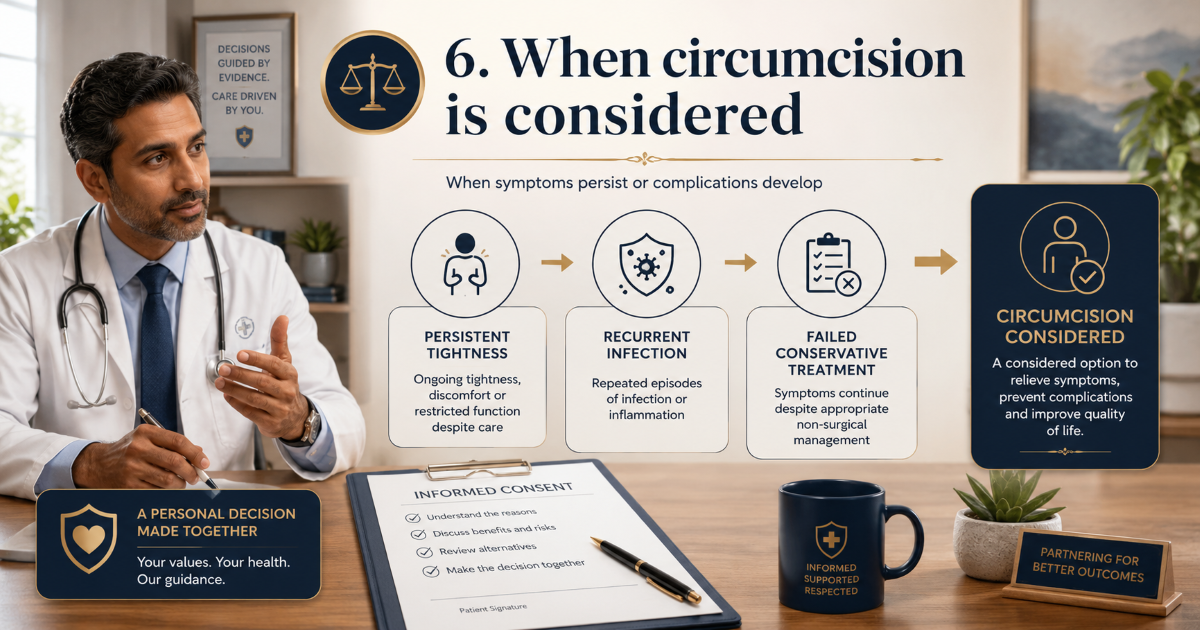
Circumcision may be considered when phimosis is severe, recurrent, scarred, linked with repeated infections, causes pain with erections or sex, prevents hygiene, or does not respond to conservative treatment. It is also discussed when lichen sclerosus or a tight scar ring makes non-surgical improvement less likely.
What it can address
It removes the tight foreskin ring and can make cleaning easier in selected patients.
What it cannot promise
It should not be marketed as painless, bloodless, risk-free, instant recovery, or guaranteed for every symptom.
What to plan
Recovery time, wound care, sexual abstinence period, swelling, bleeding risk, infection signs, and follow-up.
Recovery, Aftercare, and Red Flags
Recovery depends on the method used, wound size, swelling, infection risk, diabetes control, hygiene, and how closely aftercare instructions are followed. Patients should ask when to return to work, exercise, swimming, sex, and masturbation, because timelines vary by case.
| Aftercare area | Why it matters | What to clarify |
|---|---|---|
| Wound hygiene | Genital wounds are exposed to moisture and bacteria. | How to clean, dry, dress, and protect the wound. |
| Bleeding and swelling | Mild swelling can occur, but worsening symptoms need review. | What amount is expected and when to contact the clinic. |
| Sexual activity | Early friction can disrupt healing. | When sex and masturbation can safely resume. |
| Follow-up | Healing problems may be easier to manage when caught early. | When to return for wound review, especially if traveling. |
FAQ About Phimosis Treatment
What is phimosis?
Phimosis is when the foreskin is too tight to retract fully over the glans. In young children it may be physiological and improve with time, but in adults it can be caused by scarring, infection, inflammation, or skin disease.
Can phimosis be treated without circumcision?
Some selected cases may improve with doctor-directed topical steroid cream, gentle stretching, hygiene changes, or treatment of infection or skin disease. Severe, scarred, recurrent, or painful phimosis may need surgical treatment.
Is it safe to pull the foreskin back forcefully?
No. Forceful retraction can cause tears, bleeding, pain, scarring, and paraphimosis. Stretching, when appropriate, should be gentle and clinician-guided.
When is circumcision considered for phimosis?
Circumcision may be considered when phimosis is severe, scarred, recurrent, painful, linked with repeated infection, causes hygiene or sexual problems, or does not respond to conservative treatment.
What warning signs need urgent medical care?
Urgent assessment is needed for inability to urinate, severe swelling, fever, spreading redness, pus, uncontrolled bleeding, dark skin color change, or a foreskin that is stuck behind the glans and cannot be moved forward.
Medical References
This page is written for patient education and medical SEO clarity. It does not replace diagnosis, individualized treatment planning, or consultation with a qualified urologic doctor.
- Cleveland Clinic: Phimosis causes, symptoms, diagnosis, and treatment
- NHS: Tight foreskin and when to get medical help
- NCBI Bookshelf: Treatment options for phimosis
- BAUS: Tight foreskin and urgent warning signs
- PubMed Central: Adult phimosis treatment options review

Doctor Review and Medical Safety
Phimosis treatment should start with diagnosis: physiological tightness, scarring, inflammation, infection, lichen sclerosus, frenulum tightness, and sexual or urinary symptoms are managed differently. Conservative options may be suitable for selected cases, while circumcision may be appropriate for severe or recurrent phimosis after counselling about risks, healing, and aftercare.
Reviewed by: Dr. Beer, Eternity Clinic
Last content update: 28 June 2026

Latest Articles
What Sexual Positions Are Best for Men with a Short Penis to Maximize Pleasure in the Bedroom?
A shorter penis or concern about penis size does not automatically mean poor intimacy. Comfort,
How many Methods for Increasing Penis Size? This Article Has the Answers.
Many men search for ways to increase penis size, but the safest first step is
Hormone Therapy Without Surgical Gender Transition
Hormone therapy can help some transgender and gender-diverse people align physical characteristics with personal goals
What Are the Symptoms of Cystitis? This Article Has the Answers.
Cystitis is inflammation of the bladder. It is often caused by a bacterial bladder infection,
How to Care for Your Manhood to Keep It Strong and Disease-Free
Penis health is not only about sexual performance. It includes daily hygiene, foreskin care, safer
Permanent Solution for Premature Ejaculation with Surgery
Premature ejaculation can be distressing, but it should not be reduced to a single promise
Delayed Ejaculation: Is It Really Good? What to Do If You’re Facing This Issue
Delayed ejaculation may sound positive to some men, but when climax takes much longer than
How to Measure Condom Size Properly: Understanding Sizes 49, 52, 54, and 56
Condom size is not judged by length alone. For most men, the most useful measurement