
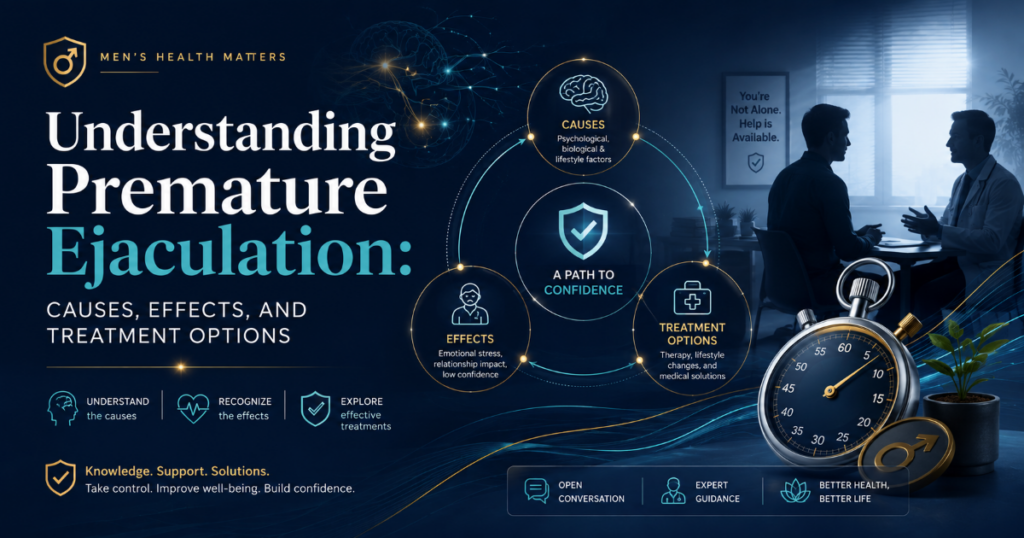
Premature ejaculation is common, treatable, and often more complex than simply wanting sex to last longer. This guide explains how PE is identified, the difference between lifelong and acquired PE, common cause categories, how PE affects relationships, and the treatment ladder from behavioral strategies and counseling to medication and selected procedural options such as dorsal neurotomy.
Premature ejaculation treatment should start with diagnosis, not surgery. PE is usually identified by ejaculation that happens sooner than desired, difficulty delaying ejaculation, and distress for the patient or partner. It may be lifelong or acquired. Causes can include neurobiological sensitivity, performance anxiety, relationship stress, prostatitis, thyroid problems, erectile dysfunction, medication effects, or other health factors. Treatment may include education, behavioral exercises, counseling, topical anesthetics, oral medication, ED treatment when present, and selected specialist procedures only after careful assessment.
PE is treatable
Many men delay care because of embarrassment, but PE can often improve with medical evaluation and structured treatment.
Not always age-related
PE can affect younger and older men. The clinical pattern matters more than age alone.
Surgery is not first-line
Dorsal neurotomy or procedural options should be considered only in selected cases after conservative treatment discussion.
Table of Contents
1. What is premature ejaculation?
2. Lifelong PE vs acquired PE
3. What causes premature ejaculation?
4. Normal ejaculation vs PE
5. Effects on confidence and relationships
6. Diagnosis pathway
7. Treatment ladder
8. When dorsal neurotomy may be discussed
9. FAQ
What Is Premature Ejaculation?
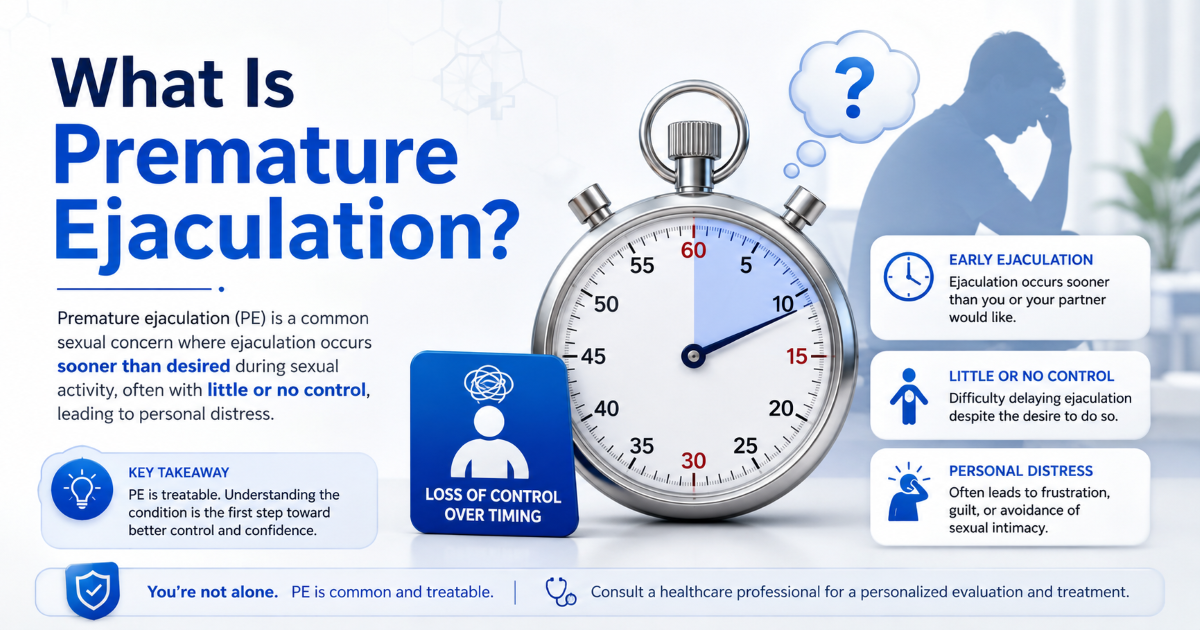
Premature ejaculation is an ejaculatory disorder where ejaculation happens earlier than desired and causes distress, reduced control, or relationship difficulty. It is not simply a sign of poor willpower, weak masculinity, or lack of experience.
Many definitions consider three practical features: short time to ejaculation, reduced control, and negative emotional or relationship impact. Some men ejaculate shortly after penetration. Others ejaculate before penetration or during early sexual stimulation. The key clinical question is whether the pattern is persistent, distressing, and affecting sexual satisfaction.
Lifelong PE vs Acquired PE
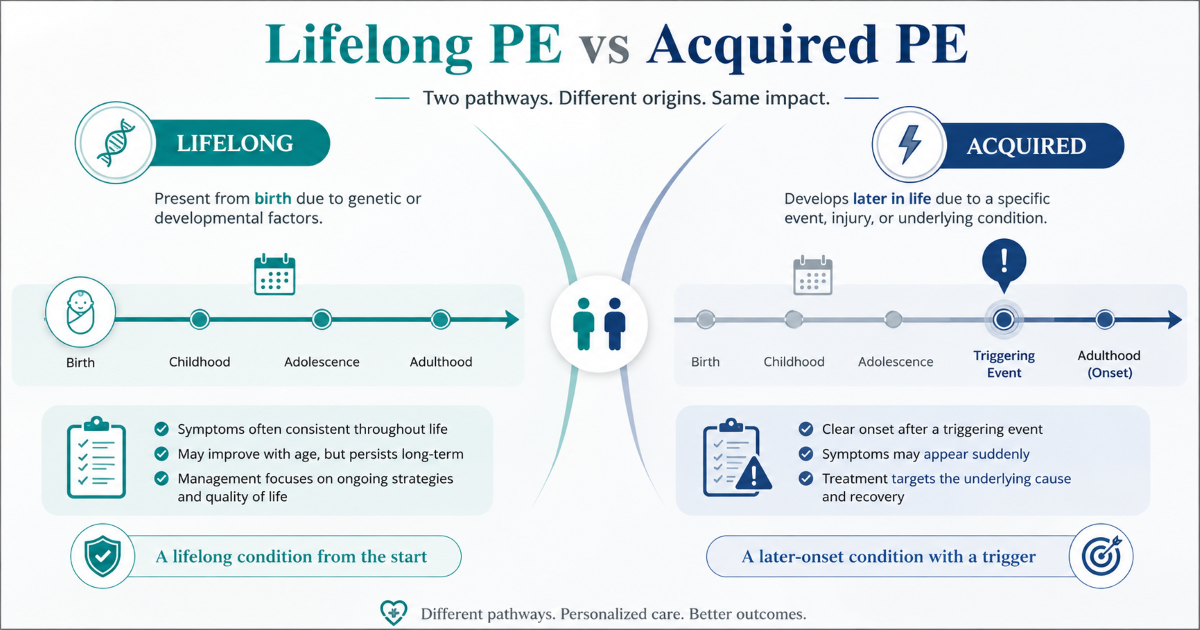
Understanding the type of PE helps guide treatment. Lifelong and acquired PE may have different contributing factors and treatment priorities.
| Type | Typical pattern | Clinical meaning |
|---|---|---|
| Lifelong PE | Present from first sexual experiences or nearly always since sexual debut. | May involve lifelong ejaculatory reflex sensitivity, anxiety reinforcement, or neurobiological factors. |
| Acquired PE | Develops after a period of previously normal ejaculation control. | May be linked with erectile dysfunction, prostatitis, thyroid issues, stress, relationship changes, medication, or other health factors. |
| Situational PE | Occurs with certain partners, settings, or stress contexts. | May involve performance anxiety, relationship concerns, arousal pattern, or situational triggers. |
| Subjective distress without clinical PE | Timing is within a typical range, but the patient wants longer duration. | Education, expectation setting, sexual counseling, or performance strategies may be more appropriate than medication or surgery. |
What Causes Premature Ejaculation?
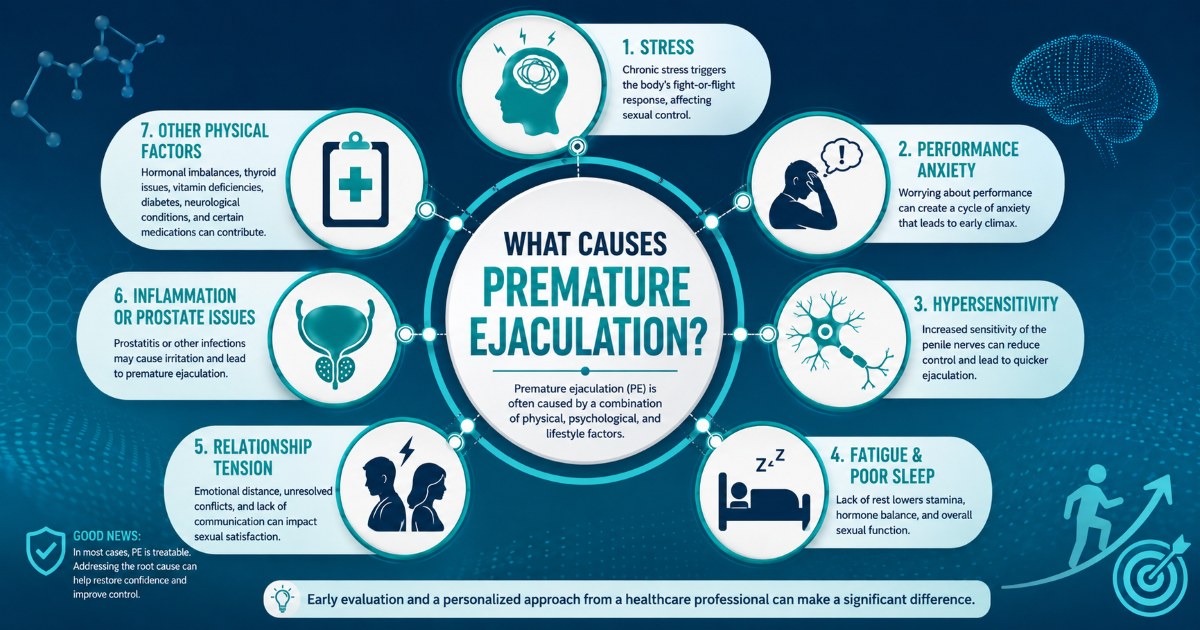
PE can involve both biological and psychological factors. It is usually too simple to say it is only mental or only physical.
Biological or medical factors
- High penile sensitivity or fast ejaculation reflex
- Erectile dysfunction or fear of losing erection
- Prostatitis or genital inflammation
- Thyroid or hormonal factors in selected cases
- Medication, substance use, or withdrawal effects
- Nerve-related conditions in uncommon cases
Psychological and relationship factors
- Performance anxiety
- Stress, depression, or general anxiety
- New relationship pressure
- Guilt, shame, or negative sexual experiences
- Communication problems with a partner
- Over-focus on timing during sex
Normal Ejaculation vs Premature Ejaculation
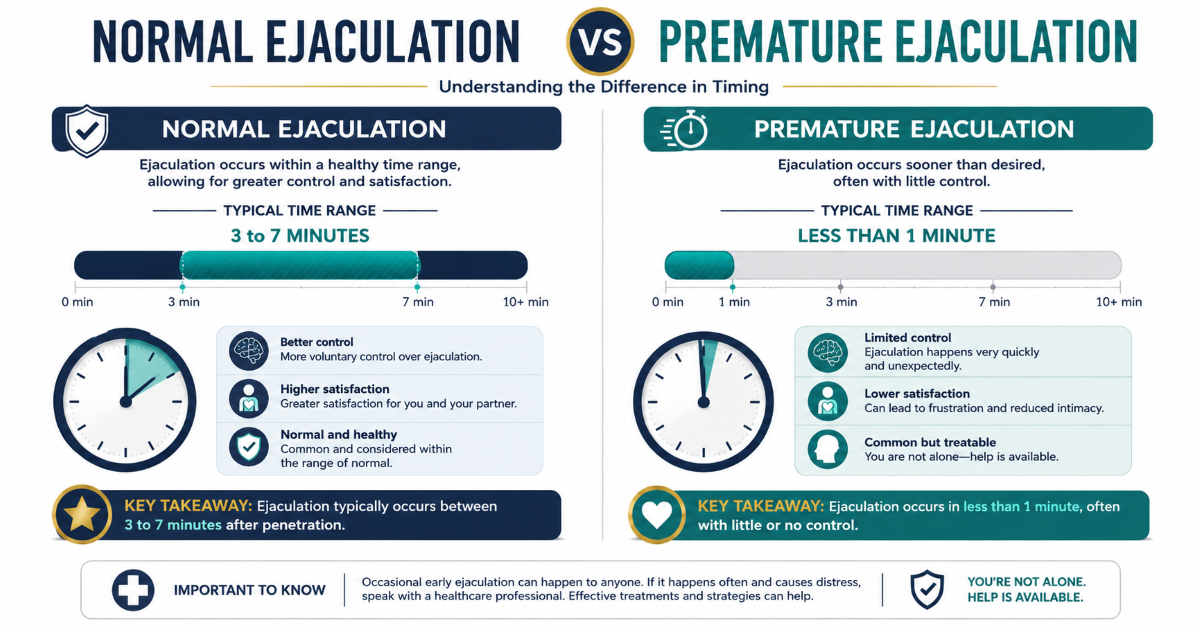
Ejaculation is a reflex controlled by the brain, spinal cord, nerves, pelvic muscles, and sexual arousal. Once the reflex reaches a certain point, it may be difficult to stop. In PE, the reflex may be triggered faster or with less control.
| Feature | Normal variation | Premature ejaculation pattern |
|---|---|---|
| Timing | Varies by arousal, partner, fatigue, stress, and situation. | Often earlier than desired and repeatedly difficult to delay. |
| Control | Some ability to slow down, pause, or change stimulation. | Reduced control even when the man senses ejaculation approaching. |
| Distress | May be occasional and not distressing. | Often causes frustration, avoidance, shame, or relationship tension. |
| Treatment need | Usually no treatment if occasional and not distressing. | Treatment can be helpful when persistent and bothersome. |
Effects on Confidence, Sex, and Relationships
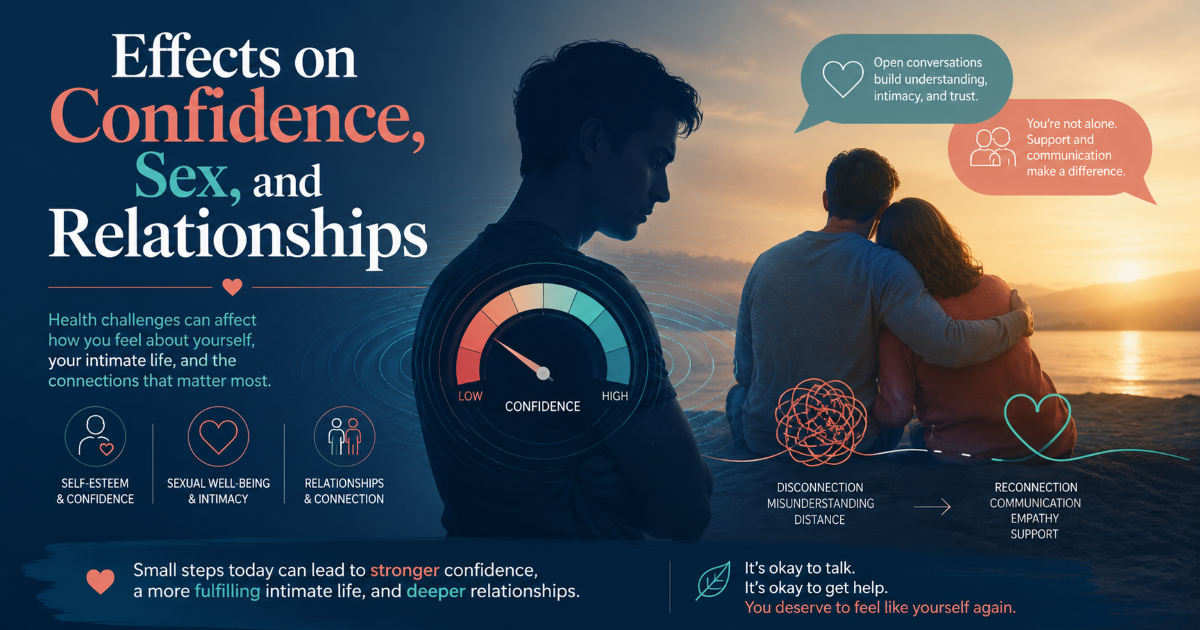
PE can affect more than sexual timing. It may affect self-confidence, relationship satisfaction, sexual avoidance, and communication between partners. Some men feel embarrassed and avoid intimacy. Some partners feel rejected, confused, or worried that they are doing something wrong.
Common effects for men
- Loss of confidence
- Performance anxiety before sex
- Avoidance of intimacy
- Frustration or shame
- Secondary erection difficulty due to anxiety
Common effects for partners
- Reduced sexual satisfaction
- Worry about causing the problem
- Less initiation of sex
- Emotional distance
- Misunderstanding if the issue is not discussed
Diagnosis Pathway
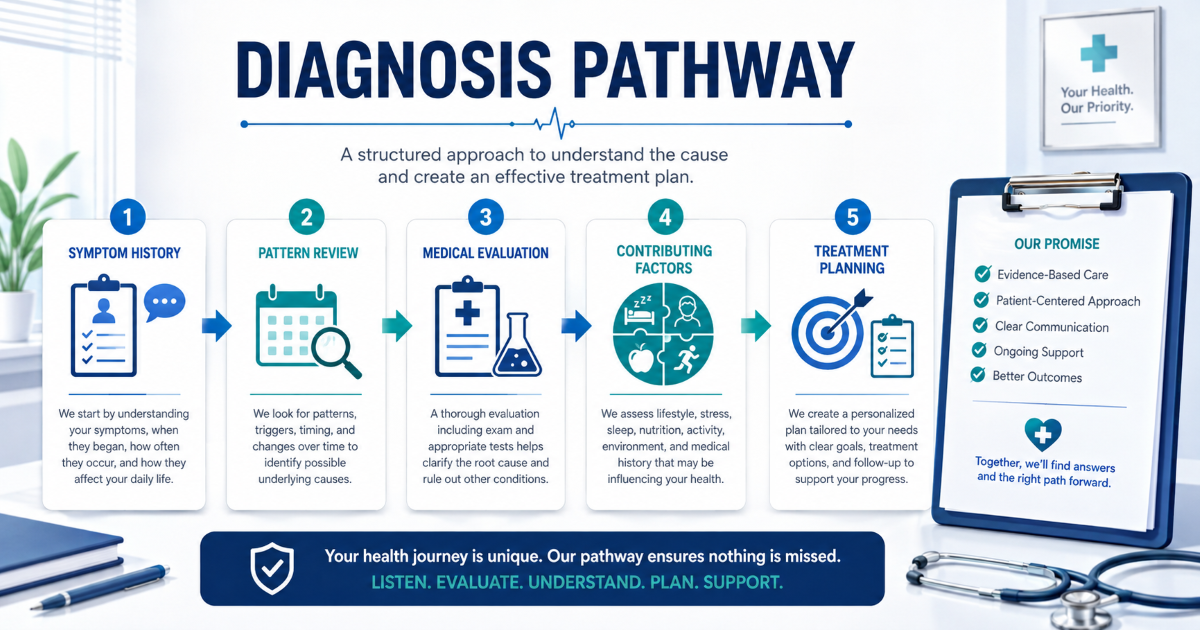
A PE consultation is usually private and structured. The doctor may not need complex testing for every patient, but the history should be detailed enough to identify cause categories and safe treatment options.
Define the pattern
When did PE start? Is it lifelong, acquired, situational, or partner-specific? Does it occur with masturbation, oral sex, or penetration?
Assess timing, control, and distress
The doctor reviews ejaculation timing, ability to delay, anxiety level, relationship impact, and sexual satisfaction.
Screen for ED and pain
Erectile dysfunction, fear of losing erection, prostatitis symptoms, pelvic pain, urinary symptoms, or penile pain may change the treatment plan.
Review health factors
Medication, thyroid symptoms, mental health, stress, sleep, alcohol, drugs, and chronic disease can be relevant.
Build a treatment ladder
Treatment should usually start with lower-risk options before considering procedures.
Premature Ejaculation Treatment Options
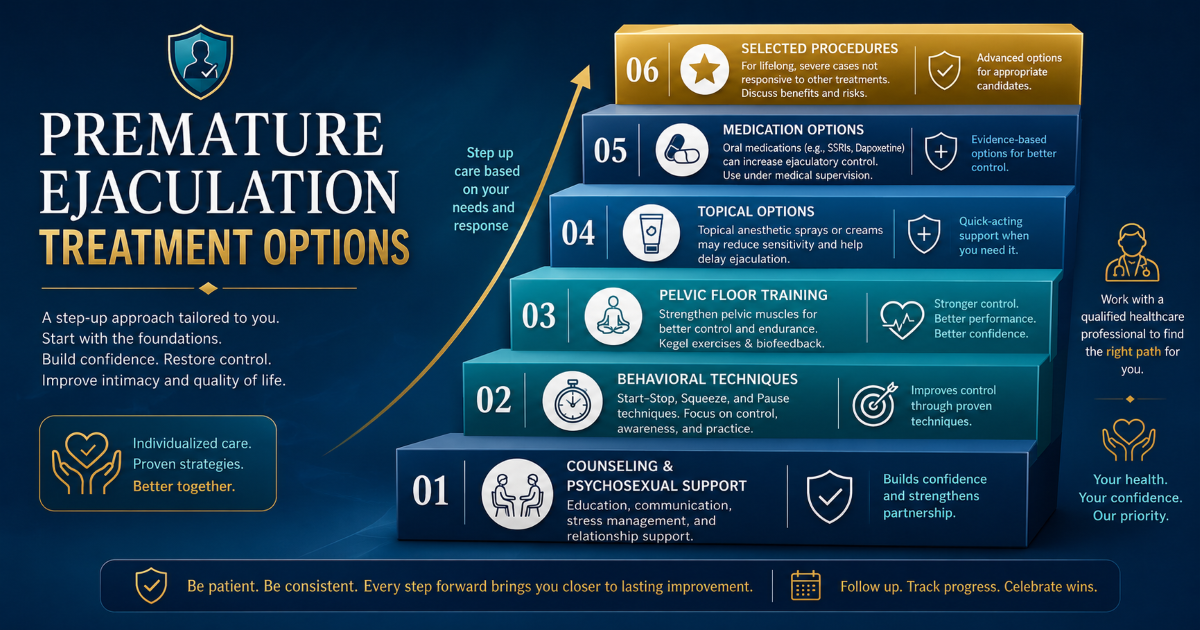
There is no single PE treatment that works for every man. A treatment plan may combine behavioral, psychological, medication, and medical options depending on the diagnosis.
| Treatment option | How it may help | Important caution |
|---|---|---|
| Education and expectation setting | Helps distinguish normal variation from PE and reduces pressure. | May be enough for occasional or subjective timing concerns. |
| Behavioral strategies | Stop-start, pause-squeeze, pacing, arousal control, and communication can improve control. | Requires practice and partner cooperation. |
| Pelvic floor training | May help selected men improve awareness and control. | Over-tensing can worsen pelvic floor symptoms in some men. |
| Counseling or sex therapy | Useful when anxiety, relationship stress, trauma, or performance pressure contributes. | Best when the patient and partner can participate openly. |
| Topical anesthetic | Can reduce penile sensitivity and delay ejaculation in selected patients. | May reduce sensation for the patient or partner if used incorrectly. |
| Oral medication | Some medicines are used on-demand or daily to delay ejaculation. | Requires doctor guidance because side effects and interactions can occur. |
| ED treatment when present | Treating erection anxiety or ED may improve acquired PE in some cases. | PE and ED may need combined treatment rather than one approach alone. |
| Dorsal neurotomy or procedural options | May be discussed for selected men with sensitivity-dominant PE after assessment. | Not first-line and not a guaranteed cure; risks and suitability must be reviewed carefully. |
For treatment service information, see Premature Ejaculation Treatment. For selected procedural discussion, see Dorsal Neurotomy.
When Dorsal Neurotomy May Be Discussed
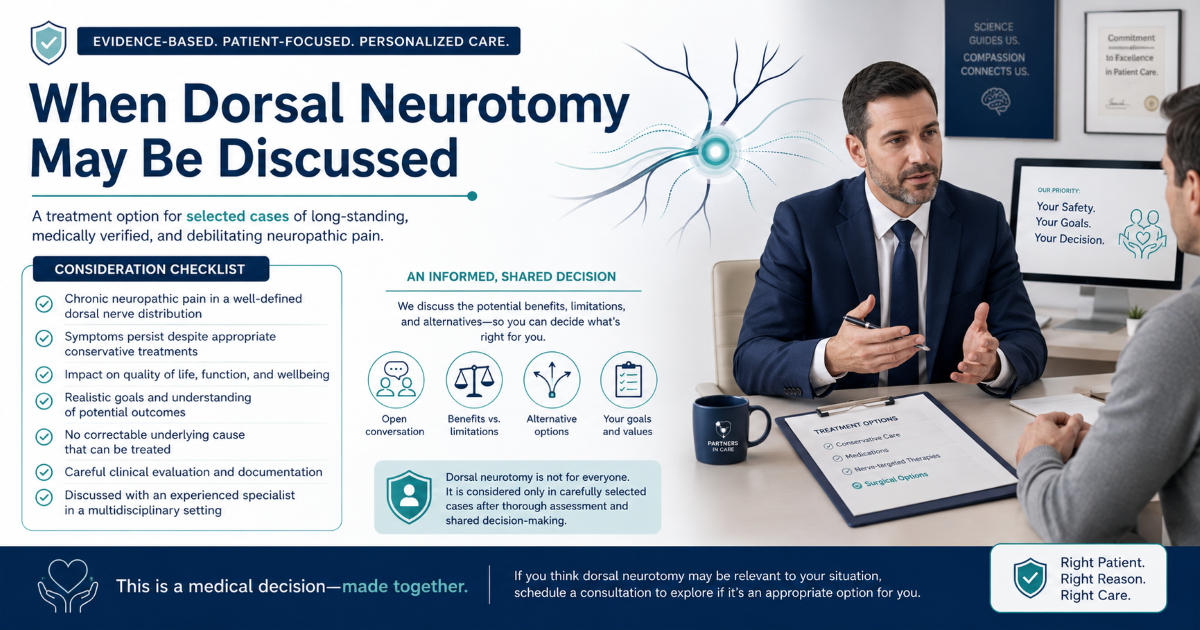
Dorsal neurotomy is a procedural option sometimes discussed for selected premature ejaculation cases where penile hypersensitivity is suspected and conservative options are insufficient. It should not be described as a universal cure for PE.
May be considered when
- PE is persistent and distressing
- Sensitivity appears to be a major contributor
- Behavioral and medication options have been discussed
- The patient understands risks and limits
- A doctor confirms suitability after exam and history
May not be appropriate when
- PE is mainly due to ED, anxiety, prostatitis, or relationship stress
- The patient expects guaranteed control or permanent cure
- There is active infection, wound, or uncontrolled disease
- There is penile pain or unclear neurological symptoms
- Conservative options have not been evaluated
Book a Private Premature Ejaculation Consultation
Send your case for doctor review if you have lifelong PE, acquired PE, erection concerns, penile sensitivity, anxiety around sex, relationship distress, or questions about dorsal neurotomy. The clinic team can help explain diagnosis, treatment options, risks, recovery, and realistic expectations.

Doctor Review and Medical Safety
This page is prepared as patient education for premature ejaculation, PE diagnosis, behavioral treatment, medication discussion, erectile dysfunction screening, dorsal neurotomy, and male intimate health. Suitability, method choice, risks, recovery, and expected results must be confirmed during a private doctor consultation.
Reviewed by: Dr. Beer, Eternity Clinic
Last content update: 18 June 2026
Premature Ejaculation FAQ
What is premature ejaculation?
Premature ejaculation is ejaculation that happens earlier than desired, with difficulty delaying it and distress for the patient or partner. It can be lifelong, acquired, or situational.
Is premature ejaculation treatable?
Yes. Treatment may include education, behavioral techniques, counseling, topical anesthetics, oral medication, ED treatment when present, and selected specialist procedures after assessment.
Is PE caused by age?
Not necessarily. PE can affect men at different ages. The pattern, onset, distress, and associated symptoms are more important than age alone.
How is PE different from normal ejaculation?
Normal ejaculation timing varies. PE is more likely when ejaculation repeatedly occurs earlier than desired, is difficult to control, and causes distress or relationship impact.
Can erectile dysfunction cause premature ejaculation?
ED can contribute to acquired PE when a man rushes ejaculation because he fears losing the erection. ED and PE may need combined treatment.
Do topical numbing creams help PE?
Topical anesthetics may help selected men by reducing sensitivity. They should be used correctly because they can reduce sensation for the patient or partner.
Is dorsal neurotomy a cure for PE?
Dorsal neurotomy should not be described as a guaranteed cure. It may be discussed only in selected cases after medical evaluation and risk counseling.
When should I see a doctor?
See a doctor if PE is persistent, distressing, new after normal control, associated with ED, pain, urinary symptoms, pelvic symptoms, or relationship difficulty.
Medical References
The following references were used for general medical context. They do not replace personalized diagnosis or treatment planning.

Latest Articles
Hormone Therapy Without Surgical Gender Transition
Hormone therapy can help some transgender and gender-diverse people align physical characteristics with personal goals
What Are the Symptoms of Cystitis? This Article Has the Answers.
Cystitis is inflammation of the bladder. It is often caused by a bacterial bladder infection,
How to Care for Your Manhood to Keep It Strong and Disease-Free
Penis health is not only about sexual performance. It includes daily hygiene, foreskin care, safer
Permanent Solution for Premature Ejaculation with Surgery
Premature ejaculation can be distressing, but it should not be reduced to a single promise
Delayed Ejaculation: Is It Really Good? What to Do If You’re Facing This Issue
Delayed ejaculation may sound positive to some men, but when climax takes much longer than
How to Measure Condom Size Properly: Understanding Sizes 49, 52, 54, and 56
Condom size is not judged by length alone. For most men, the most useful measurement
Penile Enlargement With “Your Own Tissue” or “Your Own Fat”: Why It May Not Be Worth the Pain
Using your own tissue or your own fat can sound more natural than synthetic material,
Circumcision at a Clinic vs Hospital: How to Choose the Right Medical Setting
Adult circumcision can be planned in different medical settings. The safest choice depends on your