
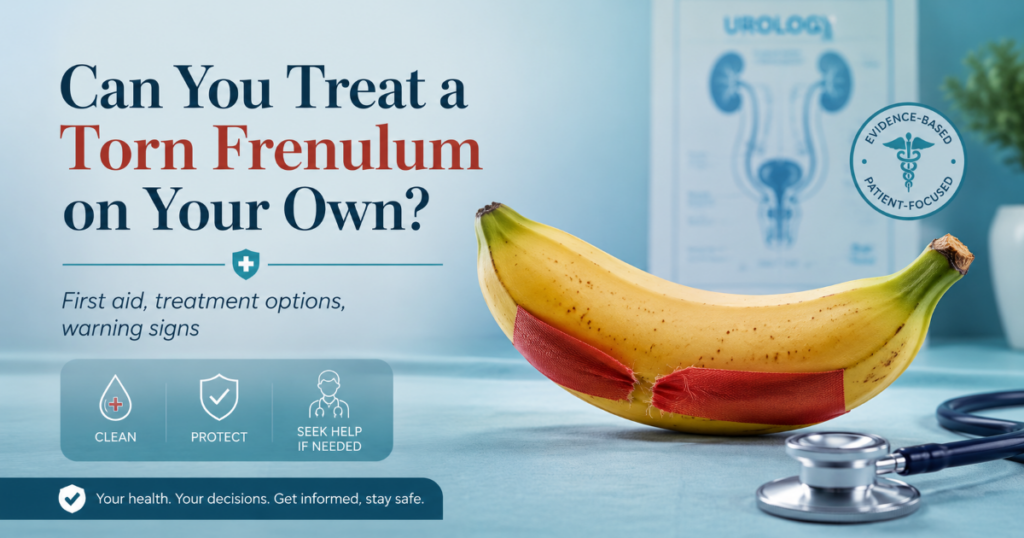
A torn penile frenulum can be frightening because it may bleed, sting, or reopen during sex. Some small tears may settle with basic first aid, but repeated tearing, heavy bleeding, infection signs, tight foreskin, or painful erections should be assessed by a doctor. This guide explains what you can do immediately, what not to do, and when frenulum treatment may be needed.
A small superficial frenulum tear may improve with clean pressure for bleeding, gentle rinsing, keeping the area dry, breathable underwear, and avoiding sex or masturbation until healed. However, you should not cut, cauterize, glue, stretch aggressively, apply powders, or use unverified antiseptics on the tear. If bleeding does not stop, the tear is deep, pain is severe, there is pus or fever, urination is difficult, or the frenulum tears repeatedly, medical assessment is recommended.
What Is the Penile Frenulum?
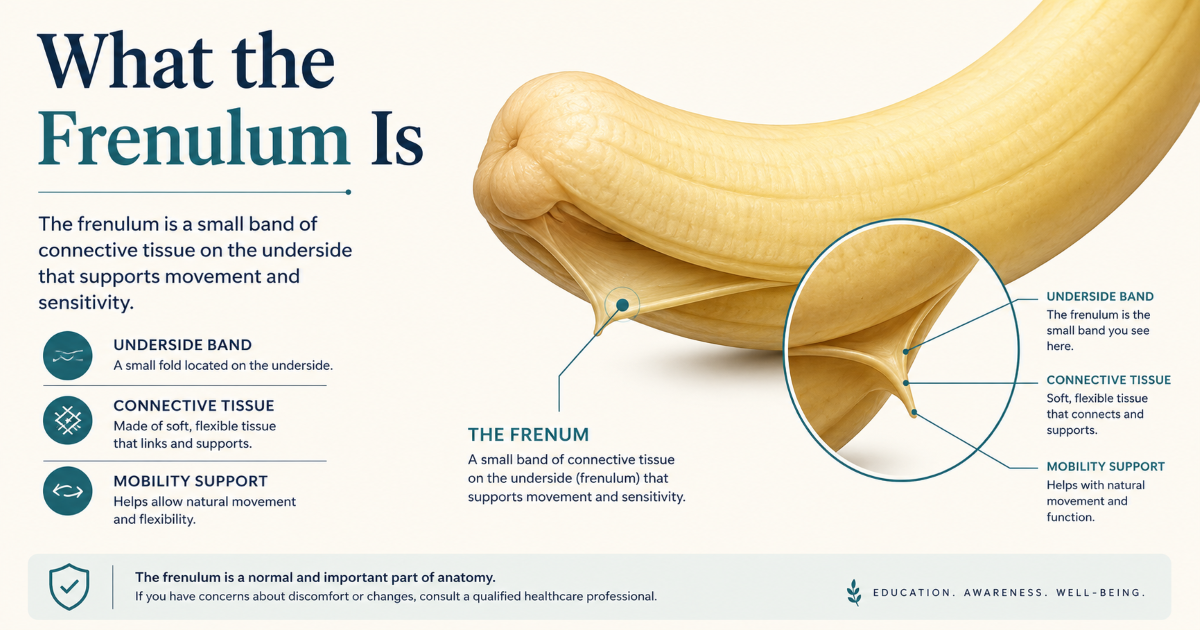
The penile frenulum is the small band of tissue on the underside of the glans that connects toward the foreskin. It helps guide foreskin movement and is often sensitive during sexual activity. In some men, the frenulum is short or tight, a condition often called frenulum breve. A short frenulum can pull during erection or penetration and may tear with friction.
First Aid: What You Can Do Immediately After a Frenulum Tear
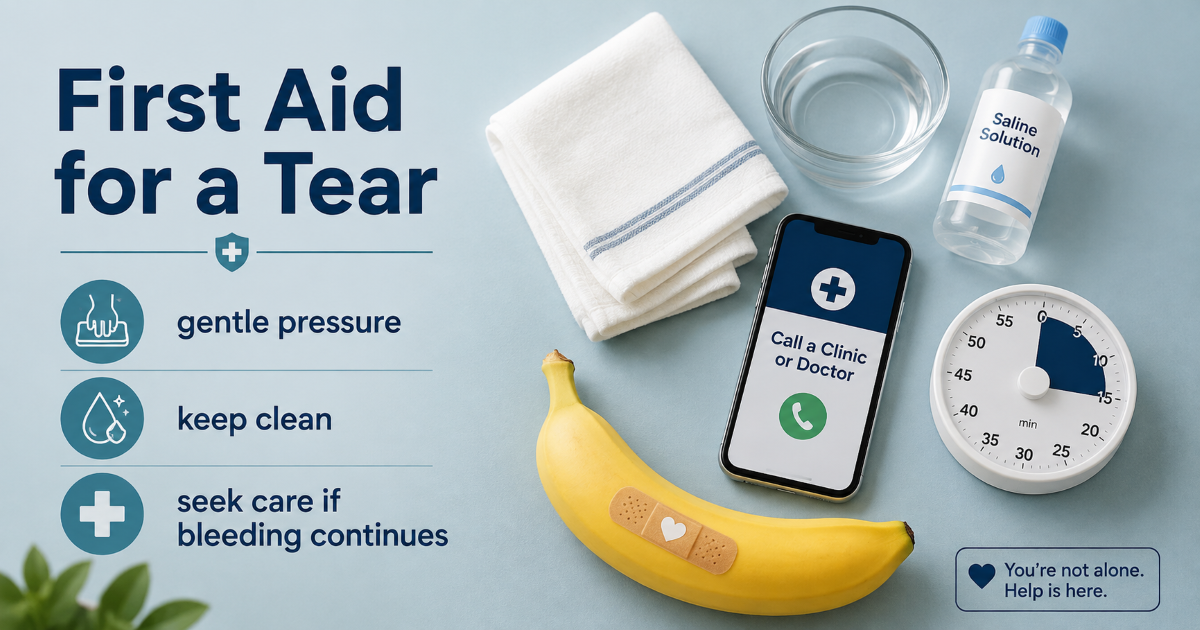
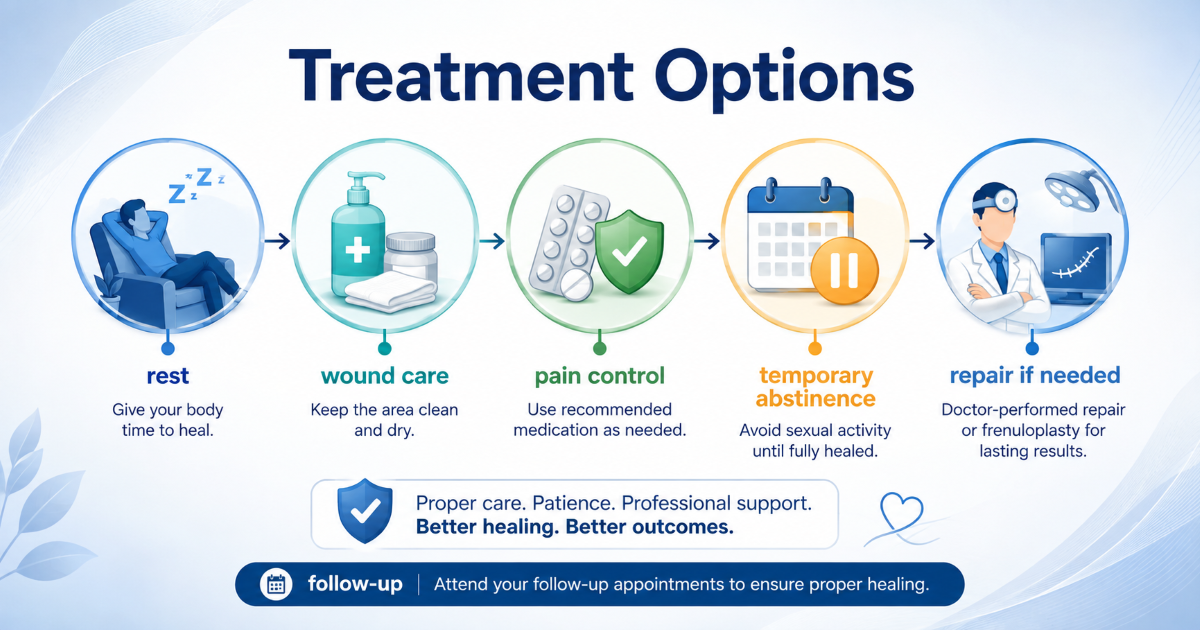
Initial care is mainly about stopping bleeding, reducing contamination, and avoiding further friction. These steps are for minor tears only. They do not replace medical care when symptoms are severe or recurrent.
Stop sex or masturbation
Do not continue through pain or bleeding. More friction can widen the tear or restart bleeding.
Apply gentle clean pressure
Use clean gauze or a clean cloth and apply gentle pressure. If bleeding continues despite pressure, seek medical care.
Rinse gently with clean water
Avoid harsh scrubbing. Mild soap may be used around the area, but avoid getting strong chemicals into the tear.
Keep the area dry and protected
Wear breathable underwear and avoid tight clothing that rubs the wound. Do not apply powder, toothpaste, alcohol, or unknown creams.
Avoid sex until healed
Restarting too early can reopen the tear. If pain or bleeding returns when you try sex again, arrange a doctor assessment.
What You Should Not Do at Home
Most complications come from trying to solve the problem too aggressively. A torn frenulum can look small, but it is still genital tissue with bleeding and infection risk.
Do not cut it yourself
Self-cutting can cause uncontrolled bleeding, uneven scarring, infection, and altered sensation.
Do not force stretching
Aggressive pulling can reopen the tear and worsen inflammation, especially if the foreskin is tight.
Do not use harsh products
Alcohol, powders, strong antiseptics, toothpaste, herbal pastes, or unknown creams may irritate the wound.
Why Does the Frenulum Tear?
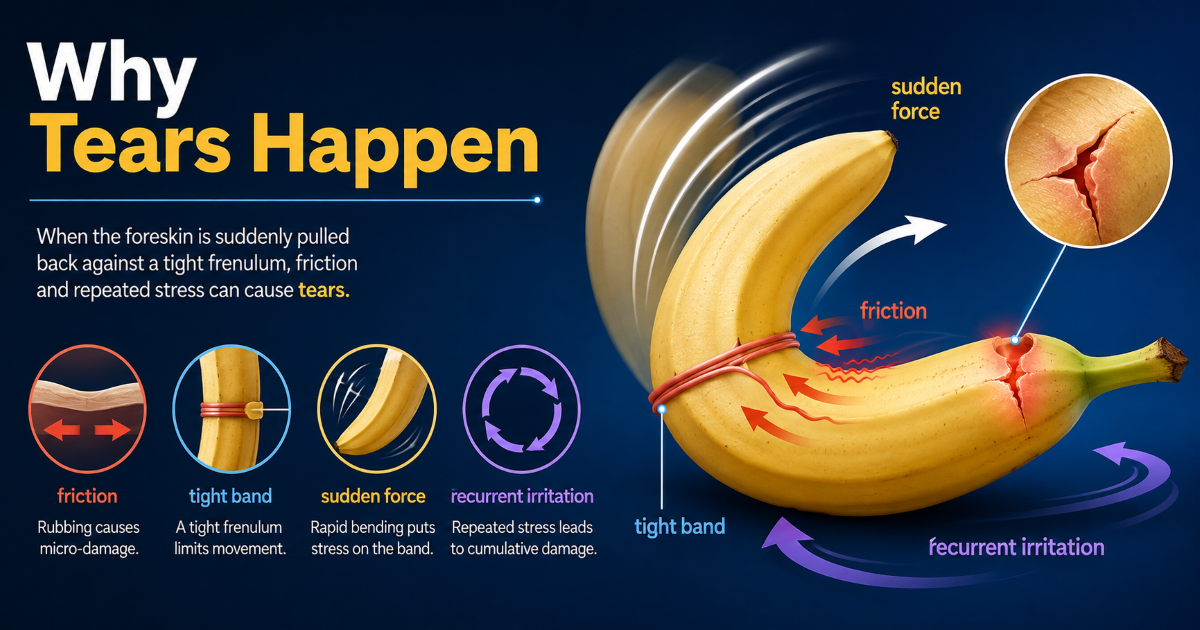
A frenulum tear usually happens when the tissue is stretched beyond what it can comfortably tolerate. The common pattern is friction plus tightness. If the frenulum is naturally short, scarred, inflamed, or linked with tight foreskin, tearing can recur.
| Possible cause | What it means | What to discuss with a doctor |
|---|---|---|
| Frenulum breve | The frenulum is short or tight and pulls during erection or penetration. | Whether stretching, topical treatment, frenuloplasty, frenulectomy, or circumcision is more appropriate. |
| Tight foreskin or phimosis | The foreskin does not retract comfortably, increasing tension and friction. | Foreskin assessment, inflammation control, and whether phimosis treatment is needed. |
| Dryness or friction | Insufficient lubrication can increase tearing risk. | Lubrication, condom fit, and safe return to sex after healing. |
| Repeated reopening | The wound may not be healing fully or the underlying tightness remains. | Examination for scarring, infection, frenulum breve, and treatment options. |
How a Doctor Assesses a Torn Frenulum
A doctor should look beyond the tear itself. The assessment should identify whether the problem is a one-time injury, a short frenulum, tight foreskin, recurrent inflammation, scar tissue, infection, or a sexual friction issue.
History
When it happened, bleeding amount, whether it has happened before, pain level, and whether sex or erections trigger symptoms.
Examination
Frenulum length, wound depth, foreskin retraction, inflammation, scarring, discharge, and signs of infection.
Treatment planning
Whether conservative care is enough or whether a procedure is reasonable after shared decision-making.
Treatment Options for Recurrent Frenulum Tears
Treatment depends on symptoms, anatomy, and how often the tear happens. A one-time minor tear may only need wound care and avoidance of friction. Recurrent tears often need evaluation for frenulum breve or tight foreskin.
| Option | When it may be considered | Limitations and cautions |
|---|---|---|
| Observation and wound care | Small superficial tear, bleeding stops, no infection signs, first episode. | Does not correct a short frenulum if tightness remains. |
| Lubrication and sex modification | Tears linked with dryness, friction, or early return to sex. | Helpful only if anatomy is otherwise suitable. |
| Topical treatment or stretching | Selected mild tightness under doctor guidance. | Should not be forced; not suitable for open bleeding wounds. |
| Frenuloplasty | Short frenulum causing painful erections, pulling, or repeated tearing. | Involves wound healing, swelling risk, infection risk, and temporary activity restrictions. |
| Frenulectomy or frenulum removal | Selected cases where the frenulum causes repeated symptoms and removal is appropriate. | Can alter sensation and should not be promoted as a guaranteed ejaculation treatment. |
| Circumcision | When significant phimosis, foreskin scarring, recurrent inflammation, or combined foreskin problems are present. | Not necessary for every frenulum tear; candidacy should be assessed individually. |
Warning Signs: When to Seek Medical Care
Do not wait if symptoms suggest significant bleeding, infection, urinary problems, or paraphimosis. Early assessment can prevent worse swelling, scarring, or wound complications.
| Warning sign | Why it matters | Suggested action |
|---|---|---|
| Bleeding that does not stop | The frenulum can bleed more than expected because it is vascular. | Apply clean pressure and seek urgent care if bleeding continues. |
| Increasing redness, swelling, pus, odor, or fever | Possible infection or wound complication. | Arrange medical assessment promptly. |
| Severe pain or tear reopening repeatedly | May suggest deep injury, short frenulum, or unresolved tightness. | Stop sex and book doctor assessment. |
| Foreskin stuck behind the glans | Could be paraphimosis, which can affect blood flow. | Seek urgent medical care. |
| Difficulty urinating | Swelling or foreskin problems may be obstructing normal function. | Seek same-day medical assessment. |
FAQ About Torn Frenulum and Frenulum Treatment
Can a torn frenulum heal on its own?
A small superficial tear may settle with basic first aid, hygiene, avoiding friction, and time. Medical assessment is recommended if bleeding is heavy, pain is severe, the tear reopens, there is discharge or fever, or the frenulum keeps tearing.
What should I do immediately after a frenulum tear?
Stop sexual activity, apply gentle clean pressure for bleeding, rinse gently with clean water, keep the area dry, and avoid sex or masturbation until healed. Seek urgent care for uncontrolled bleeding, severe swelling, spreading redness, pus, fever, or urination problems.
Is a torn frenulum a sign of virginity?
No. A torn frenulum is not a reliable sign of virginity. It can happen from sex, masturbation, friction, tight foreskin, frenulum breve, or accidental trauma.
When is frenulum surgery considered?
Frenuloplasty, frenulum lengthening, frenulectomy, or circumcision may be discussed when a short or tight frenulum causes repeated tearing, painful erections, difficult foreskin retraction, or recurrent bleeding. The right option depends on anatomy and symptoms.
Can I cut the frenulum at home to stop the problem?
No. Self-cutting can cause bleeding, infection, scarring, altered sensation, and poor wound healing. Recurrent tearing should be assessed by a qualified doctor.
Medical References
This page is written for patient education and medical SEO clarity. It does not replace diagnosis, wound assessment, or individualized treatment planning by a qualified doctor.
- Cleveland Clinic: Penis frenulum: location, function, and conditions
- Cleveland Clinic: Frenulum breve diagnosis and treatment
- BAUS: Frenuloplasty patient information
- NHS: Tight foreskin and when to get medical help
- Leeds Teaching Hospitals NHS Trust: Tight foreskin, adult symptoms, and urgent care context

Doctor Review and Medical Safety
A torn frenulum should be assessed by bleeding severity, wound depth, infection signs, foreskin tightness, frenulum length, recurrent tearing, pain during erection, and patient goals. Removal or frenuloplasty may help selected patients, but it should not be marketed as a guaranteed solution for ejaculation control, sexual performance, or sensitivity concerns.
Reviewed by: Dr. Beer, Eternity Clinic
Last content update: 30 June 2026

Latest Articles
What Are the Symptoms of Cystitis? This Article Has the Answers.
Cystitis is inflammation of the bladder. It is often caused by a bacterial bladder infection,
How to Care for Your Manhood to Keep It Strong and Disease-Free
Penis health is not only about sexual performance. It includes daily hygiene, foreskin care, safer
Permanent Solution for Premature Ejaculation with Surgery
Premature ejaculation can be distressing, but it should not be reduced to a single promise
Delayed Ejaculation: Is It Really Good? What to Do If You’re Facing This Issue
Delayed ejaculation may sound positive to some men, but when climax takes much longer than
How to Measure Condom Size Properly: Understanding Sizes 49, 52, 54, and 56
Condom size is not judged by length alone. For most men, the most useful measurement
Penile Enlargement With “Your Own Tissue” or “Your Own Fat”: Why It May Not Be Worth the Pain
Using your own tissue or your own fat can sound more natural than synthetic material,
Circumcision at a Clinic vs Hospital: How to Choose the Right Medical Setting
Adult circumcision can be planned in different medical settings. The safest choice depends on your
Adult Circumcision Explained: Benefits, Methods, Recovery, and Safety
Adult circumcision is a procedure to remove the foreskin covering the head of the penis.