

Penis health is not only about sexual performance. It includes daily hygiene, foreskin care, safer sex, erection health, skin changes, urinary symptoms, and knowing when a symptom needs medical evaluation.
The best way to care for your manhood is to keep the penis and foreskin clean, dry the area after washing, use condoms correctly, avoid smoking and heavy alcohol, stay physically active, manage blood pressure, diabetes, weight, and cholesterol, and get medical help for pain, sores, discharge, swelling, urinary difficulty, or erection changes.
Penis Health Is More Than Hygiene

The penis is involved in urination, sexual function, reproduction, body confidence, and relationship wellbeing. Because symptoms can feel embarrassing, many men delay care until itching, odor, pain, erection problems, or urinary symptoms become harder to ignore.
A practical care plan should cover three areas: daily hygiene, whole-body health, and early medical evaluation when something changes. This is especially important for men with diabetes, smoking history, high blood pressure, obesity, recurrent foreskin irritation, or anxiety about sexual performance.
Daily Habits That Support Male Sexual Health

Strong sexual health depends on circulation, nerves, hormones, mental wellbeing, and relationship context. It is not controlled by one supplement or one hygiene trick.
Exercise and weight
Regular movement supports blood flow, weight control, metabolic health, and cardiovascular risk reduction.
Sleep and stress
Poor sleep and chronic stress can affect libido, erection confidence, and relationship satisfaction.
Smoking and alcohol
Smoking and heavy alcohol use can contribute to blood vessel problems and sexual performance concerns.
| Habit | Why it matters | Safer action |
|---|---|---|
| Smoking | Can affect blood vessels and is linked with erectile dysfunction risk. | Ask a clinician about smoking cessation support. |
| Heavy alcohol | May affect erections, judgement, sleep, and mental health. | Reduce intake and avoid using alcohol as a performance aid. |
| Online enhancement products | May be unverified or interact with medication. | Discuss concerns with a qualified doctor before use. |
Cleaning Your Manhood and Understanding Smegma
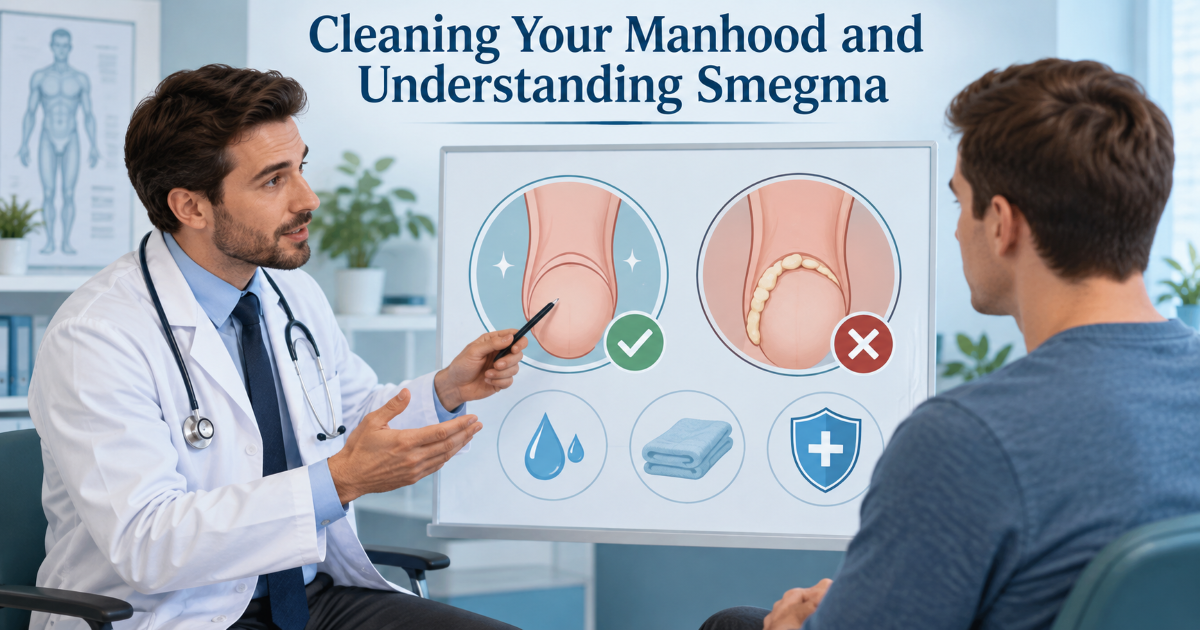
Smegma is a build-up of natural oils and dead skin cells. It is commonly found under the foreskin and around the head of the penis. Smegma itself is not automatically an STI, but leaving it uncleaned can contribute to odor, irritation, redness, and inflammation.
Men with a foreskin should gently clean underneath it if it retracts comfortably. Men who are circumcised still need regular washing and drying because sweat, friction, and skin irritation can still occur.
How to Clean Your Manhood Safely

Retract only if comfortable
If you have a foreskin, gently retract it only as far as it moves comfortably. Do not force it, because tearing can lead to pain, bleeding, scarring, and infection risk.
Use water and mild soap
Clean the glans and foreskin area with water and a mild soap if tolerated. Rinse away soap fully because residue can irritate sensitive skin.
Dry and return the foreskin
Pat dry with a clean towel and return the foreskin to its normal position. Leaving the foreskin retracted can cause swelling and pain.
Safer Sex, Condoms, and STI Prevention

Good hygiene cannot prevent all sexually transmitted infections. Condoms can reduce STI and pregnancy risk when used correctly and consistently, but they do not eliminate every risk, especially infections spread through skin-to-skin contact outside the covered area.
Use condoms correctly
Use a new condom for each act of vaginal, anal, or oral sex and check expiry, packaging, fit, and lubricant compatibility.
Test after risk
Consider STI testing after a new partner, condom break, partner diagnosis, symptoms, or exposure that causes concern.
Do not guess from symptoms
Some STIs can be silent. Burning, discharge, sores, rash, or genital pain should be tested rather than guessed.
For condom fit and measurement guidance, read the related penis size and condom fit guide.
Warning Signs That Should Not Be Ignored

Many penis problems are treatable, but delayed care can make diagnosis and recovery harder. Seek medical advice when symptoms are new, severe, persistent, recurrent, or linked with sexual exposure.
| Warning sign | Possible concern | Suggested action |
|---|---|---|
| Pain, swelling, or redness | Irritation, infection, injury, balanitis, or foreskin problem. | Book medical evaluation, especially if worsening. |
| Discharge or burning urination | Possible STI or urinary infection. | Get testing and avoid self-medicating. |
| Sores, blisters, or rash | Possible STI, skin condition, allergy, or irritation. | Seek assessment before applying strong creams. |
| Erection change | ED, stress, medication effect, diabetes, vascular risk, or hormone issue. | Discuss with a men’s health clinician. |
| Tight foreskin or repeated smegma build-up | Phimosis, balanitis, hygiene difficulty, or diabetes-related irritation. | Do not force retraction; seek evaluation. |
Bangkok Men’s Health Consultation Checklist

A consultation is more useful when you bring clear details. This helps the doctor decide whether the issue is hygiene-related, skin-related, STI-related, urinary, hormonal, vascular, or psychological.
Symptoms
Write down pain, odor, discharge, rash, sores, itching, swelling, urinary changes, erection changes, or foreskin tightness.
Timing and exposure
Note when symptoms started, recent sexual exposure, condom break, new partner, and any self-treatment.
Medical background
Bring medication list and history of diabetes, blood pressure, cholesterol, smoking, alcohol, surgery, or hormone treatment.
FAQ About Caring for Your Manhood
How often should men clean the penis and foreskin?
Most men should clean the penis daily with water, and those with a foreskin should gently retract it if it moves comfortably, wash underneath, dry the area, and return the foreskin to its normal position. Do not force a tight foreskin.
Is smegma always a sign of infection?
No. Smegma is a build-up of natural oils and dead skin cells, especially under the foreskin. It can cause odor or irritation if not cleaned, but it is not automatically an STI. Redness, pain, discharge, sores, fever, or persistent odor should be assessed by a clinician.
Can lifestyle habits affect erection quality?
Yes. Smoking, heavy alcohol use, poor sleep, low physical activity, diabetes, high blood pressure, obesity, and some medications can affect erection quality. A medical evaluation is safer than self-treating with online products.
When should I see a doctor for penis health concerns?
Seek medical advice for pain, swelling, sores, discharge, bleeding, a new lump, difficulty urinating, erection changes, a tight foreskin that cannot retract comfortably, or symptoms after possible STI exposure.
Does circumcision automatically make hygiene problems disappear?
Circumcision may make cleaning easier for some men or be recommended for selected foreskin problems, but it is still a medical procedure with risks and limitations. It should be discussed with a qualified doctor rather than chosen from hygiene claims alone.
Medical References
This page is written for patient education and medical SEO clarity. It does not replace individualized diagnosis, STI testing, emergency care, or treatment by a qualified healthcare professional.
- Mayo Clinic: Penis health: Identify and prevent problems
- Healthdirect Australia: Penis care
- CDC: Condom use
- NIDDK: Treatment for erectile dysfunction
- CDC: Preventing HIV with condoms

Doctor Review and Medical Safety
Penis care should be practical, gentle, and medically realistic. Daily washing and safer sex habits help, but symptoms such as discharge, sores, pain, tight foreskin, urinary difficulty, or erection changes should be evaluated rather than hidden or self-treated.
Reviewed by: Dr. Beer, Eternity Clinic
Last content update: 8 September 2026

Latest Articles
How to Care for Your Manhood to Keep It Strong and Disease-Free
Penis health is not only about sexual performance. It includes daily hygiene, foreskin care, safer
Permanent Solution for Premature Ejaculation with Surgery
Premature ejaculation can be distressing, but it should not be reduced to a single promise
Delayed Ejaculation: Is It Really Good? What to Do If You’re Facing This Issue
Delayed ejaculation may sound positive to some men, but when climax takes much longer than
How to Measure Condom Size Properly: Understanding Sizes 49, 52, 54, and 56
Condom size is not judged by length alone. For most men, the most useful measurement
Penile Enlargement With “Your Own Tissue” or “Your Own Fat”: Why It May Not Be Worth the Pain
Using your own tissue or your own fat can sound more natural than synthetic material,
Circumcision at a Clinic vs Hospital: How to Choose the Right Medical Setting
Adult circumcision can be planned in different medical settings. The safest choice depends on your
Adult Circumcision Explained: Benefits, Methods, Recovery, and Safety
Adult circumcision is a procedure to remove the foreskin covering the head of the penis.
Where is the Best Place for Vasectomy (Male Sterilization): Hospital or Clinic?
A vasectomy is a permanent male contraception procedure, but choosing where to have it done