

A vasectomy is a permanent male contraception procedure, but choosing where to have it done should be based on doctor experience, procedure setting, safety protocols, follow-up semen testing, aftercare access, and whether the clinic or hospital can manage complications if they occur.
The best place for a vasectomy is not automatically a hospital or automatically a clinic. A hospital may be better if you have complex medical history, bleeding risk, severe anxiety, previous scrotal surgery, or need broader medical backup. A specialized clinic may be suitable when the doctor is experienced, the setting is properly equipped, aftercare is clear, and post-vasectomy semen analysis is explained before the procedure.
What Is a Vasectomy?

A vasectomy is a procedure that blocks or cuts the vas deferens, the tubes that carry sperm from the testicles. After the procedure, semen can still be ejaculated, but sperm should no longer be present once the stored sperm have cleared and semen testing confirms success.
For patients comparing hospital and clinic options, the key question is whether the provider can offer clear counselling, safe procedure technique, sterile practice, pain control, post-procedure guidance, and a defined plan for semen analysis.
Choosing the Right Vasectomy Method

Vasectomy techniques vary by how the vas deferens is accessed and sealed. Some providers use a small incision, while others use a no-scalpel or puncture-style access. The practical differences may involve wound size, stitches, bruising, aftercare, and recovery instructions.
| Method | What it means | Decision point |
|---|---|---|
| Conventional incision | A small incision is made to access the vas deferens before it is divided, sealed, or blocked. | Ask how the wound is closed, what aftercare is needed, and when normal activities can resume. |
| No-scalpel or puncture access | A small opening is made with specialized instruments to access the vas deferens. | Ask whether the doctor routinely performs this technique and how complications are handled. |
| Occlusion technique | The vas deferens may be cut, sealed, tied, cauterized, clipped, or combined with fascial interposition depending on the technique. | Ask what method is used and how success is confirmed by semen analysis. |
Choosing a Urology Specialist for Vasectomy

A vasectomy is usually a short procedure, but it is still surgery in a sensitive anatomical area. The doctor should understand scrotal anatomy, vas isolation, bleeding control, infection prevention, and how to counsel patients on realistic recovery.
Experience
Ask how often the doctor performs vasectomy and which technique is used most often.
Safety protocol
Confirm sterile practice, local anesthesia plan, emergency pathway, and wound-care instructions.
Follow-up
Ask exactly when semen analysis is done and when contraception can be stopped.
Hospital or Clinic: Which Is Better for Vasectomy?
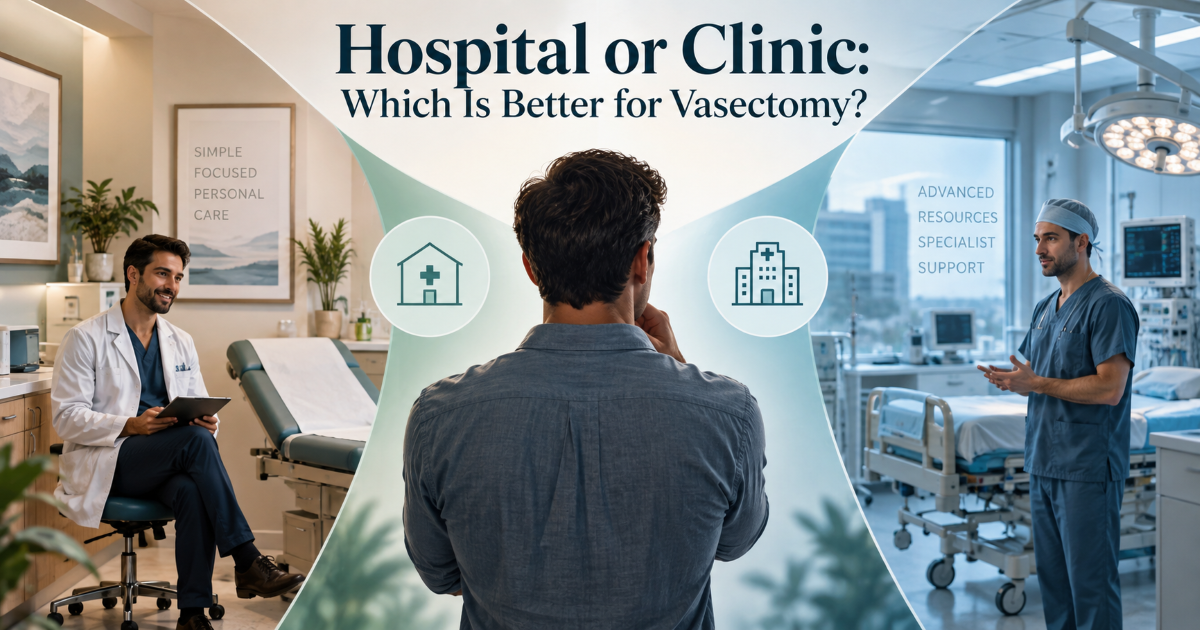
There is no single answer for every patient. A hospital may be preferred for patients who need broader medical backup or have complicated health factors. A specialized clinic may be appropriate when the doctor is experienced, the procedure room is properly equipped, aftercare is structured, and the patient can access follow-up easily.
| Setting | May be suitable when | Questions to ask |
|---|---|---|
| Hospital | You have complex health history, bleeding concerns, prior scrotal surgery, severe anxiety, or may need specialist backup. | Who performs the procedure, what technique is used, and how follow-up semen testing is arranged? |
| Specialized clinic | You want privacy, appointment flexibility, direct doctor discussion, and a clear pathway for standard vasectomy care. | What sterile setup is used, what complications can be managed onsite, and where are urgent cases referred? |
| General clinic without specialist focus | This may be less suitable if the team cannot clearly explain technique, follow-up, or complication protocols. | Ask whether the provider routinely performs vasectomy and has a written post-care plan. |
Aftercare and Post-Vasectomy Semen Testing

Post-vasectomy semen analysis is essential because sperm can remain in the reproductive tract after the procedure. Until the clinician confirms that the semen sample meets clearance criteria, pregnancy is still possible.
Use backup contraception
Continue condoms or another contraception method until your doctor confirms that the vasectomy has worked.
Follow wound-care instructions
Keep the area clean and dry as instructed, avoid unnecessary friction, and follow activity limits for lifting, exercise, and sex.
Complete semen analysis
Ask when the sample should be submitted, how results will be reported, and what happens if sperm are still detected.
Risks, Warning Signs, and When to Seek Care

Most patients recover without serious problems, but vasectomy is not risk-free. Possible issues include bruising, swelling, bleeding, infection, sperm granuloma, persistent pain, and rare failure or recanalization. A good provider should explain these risks before the procedure.
| Warning sign | Why it matters | Suggested action |
|---|---|---|
| Increasing scrotal pain or swelling | May suggest bleeding, inflammation, infection, or another complication. | Contact the clinic or seek medical care promptly. |
| Fever, chills, pus, or spreading redness | May suggest infection. | Do not self-treat with leftover antibiotics. |
| Heavy bleeding or rapidly expanding bruising | May require urgent assessment. | Seek urgent medical evaluation. |
| Persistent pain affecting daily life | Longer-term pain is uncommon but should be assessed. | Arrange follow-up with a qualified clinician. |
Bangkok Vasectomy Consultation Checklist

Before booking
Ask who performs the procedure, whether consultation is with the operating doctor, and what medical history is reviewed.
Before procedure
Confirm anesthesia, technique, wound-care plan, activity limits, sexual activity timeline, and warning signs.
After procedure
Confirm semen test timing, result interpretation, backup contraception, and what to do if sperm are still present.
Summary: Where Is the Best Place for Male Sterilization?

For most patients, the best vasectomy setting is determined by quality of care rather than the label hospital or clinic. A hospital can be appropriate for complex cases or patients who want wider medical backup. A specialized clinic can also be appropriate when it has the right doctor, sterile setup, counselling, aftercare, and referral pathway.
Before making a decision, confirm that the provider explains permanence, risks, backup contraception, and post-vasectomy semen analysis. These details matter more than convenience alone.
FAQ About Choosing Where to Have a Vasectomy
Is a hospital always safer than a clinic for vasectomy?
Not always. A hospital may be better for complex cases, but a specialized clinic can be appropriate if the doctor is experienced, the procedure room is properly equipped, aftercare is clear, and there is a plan for urgent referral if needed.
Does vasectomy work immediately?
No. Sperm can remain after the procedure. Another contraception method is needed until post-vasectomy semen analysis confirms that the vasectomy has been successful.
Will vasectomy affect erection or ejaculation?
Vasectomy is designed to block sperm transport, not to remove the testicles or stop semen fluid. It should not be expected to treat erectile dysfunction or sexual performance concerns. If erection problems are present, they should be assessed separately.
Is vasectomy reversible?
Reversal may be possible in selected cases, but it is not guaranteed and may not restore fertility. Vasectomy should be chosen only by patients who understand it as permanent contraception.
What should I ask before choosing a vasectomy provider?
Ask who performs the procedure, how often they perform vasectomy, what technique is used, how pain is controlled, what complications are possible, how aftercare works, and when semen analysis is required.
Medical References
This page is written for patient education and medical SEO clarity. It does not replace diagnosis, individualized contraception counselling, emergency care, or treatment by a qualified healthcare professional.
- Mayo Clinic: Vasectomy overview
- American Urological Association: Vasectomy guideline
- NHS: Vasectomy
- NHS: Recovering after vasectomy
- Mayo Clinic Laboratories: Post vasectomy semen check

Doctor Review and Medical Safety
Vasectomy should be discussed as permanent contraception. The decision should include procedure method, pain control, medical history, complications, aftercare, and post-vasectomy semen analysis. A clinic or hospital can be appropriate when these safety steps are handled clearly and professionally.
Reviewed by: Dr. Beer, Eternity Clinic
Last content update: 8 September 2026

Latest Articles
How to Measure Condom Size Properly: Understanding Sizes 49, 52, 54, and 56
Condom size is not judged by length alone. For most men, the most useful measurement
Penile Enlargement With “Your Own Tissue” or “Your Own Fat”: Why It May Not Be Worth the Pain
Using your own tissue or your own fat can sound more natural than synthetic material,
Circumcision at a Clinic vs Hospital: How to Choose the Right Medical Setting
Adult circumcision can be planned in different medical settings. The safest choice depends on your
Adult Circumcision Explained: Benefits, Methods, Recovery, and Safety
Adult circumcision is a procedure to remove the foreskin covering the head of the penis.
Where is the Best Place for Vasectomy (Male Sterilization): Hospital or Clinic?
A vasectomy is a permanent male contraception procedure, but choosing where to have it done
What Sexual Positions Are Best for Men with a Short Penis to Maximize Pleasure in the Bedroom?
A shorter penis or concern about penis size does not automatically mean poor intimacy. Comfort,
How many Methods for Increasing Penis Size? This Article Has the Answers.
Many men search for ways to increase penis size, but the safest first step is
Hormone Therapy Without Surgical Gender Transition
Hormone therapy can help some transgender and gender-diverse people align physical characteristics with personal goals