
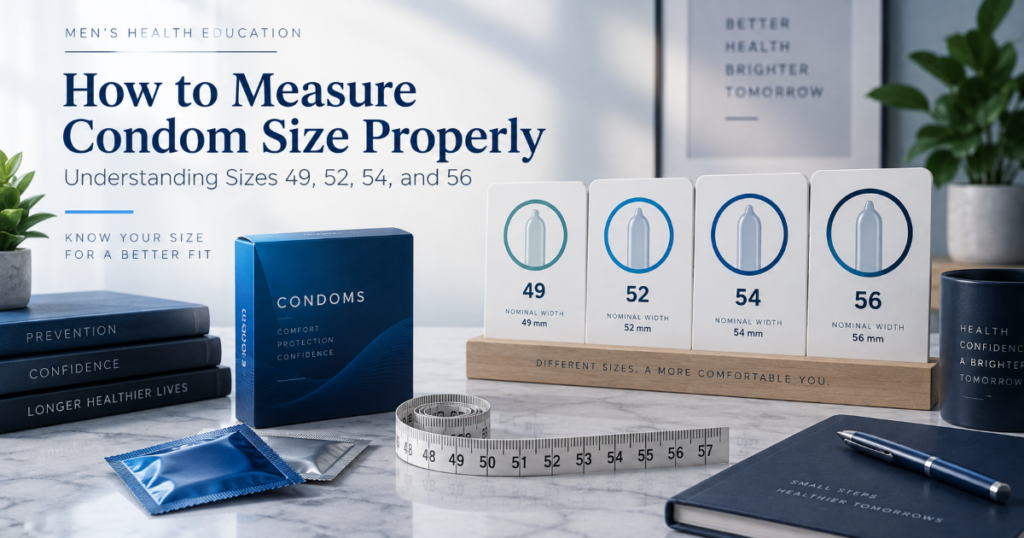
Condom size is not judged by length alone. For most men, the most useful measurement is erect circumference, then comparing that number with each brand’s nominal width, fit, material, and real comfort during use.
To choose condom size, measure erect circumference around the thickest part of the shaft. Numbers such as 49, 52, 54, and 56 usually refer to nominal width in millimeters, not penis length. A good starting size should roll down smoothly, feel secure, avoid pain, and not slip during use.
Why Choosing the Right Condom Size Matters
A properly fitted condom is not only about comfort. Fit affects whether the condom rolls down correctly, stays in place, and avoids unnecessary pressure during sex.
A condom that is too tight may be painful, difficult to roll down, or more likely to tear. A condom that is too loose may slide, shift, or slip off. Either problem can reduce confidence and may reduce protection in real-life use.
How to Measure for Condom Size
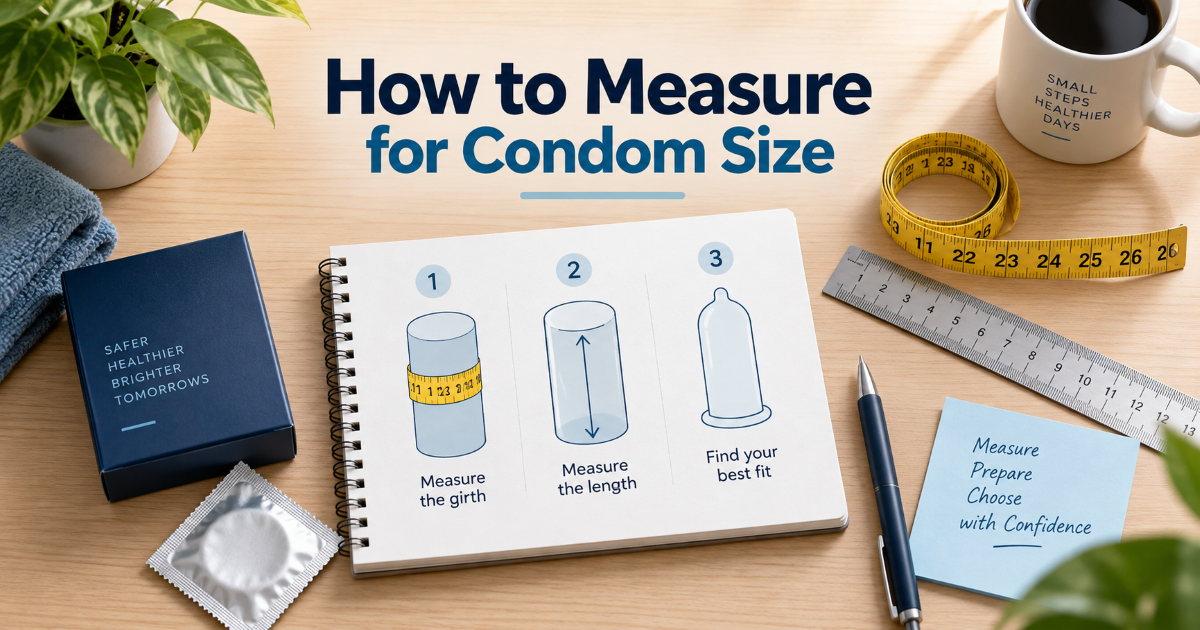
For condom size, circumference is usually more important than length. Circumference tells you how snug or loose the condom is likely to feel, while most condoms have enough length for typical use.
What you need
- A soft measuring tape
- Or a clean string plus ruler
- A calm setting where you can measure consistently
How to measure
- Measure when fully erect.
- Wrap the tape around the thickest part of the shaft.
- Keep it snug, not tight.
- Repeat 2-3 times and use the consistent value.
What Does Nominal Width Mean?
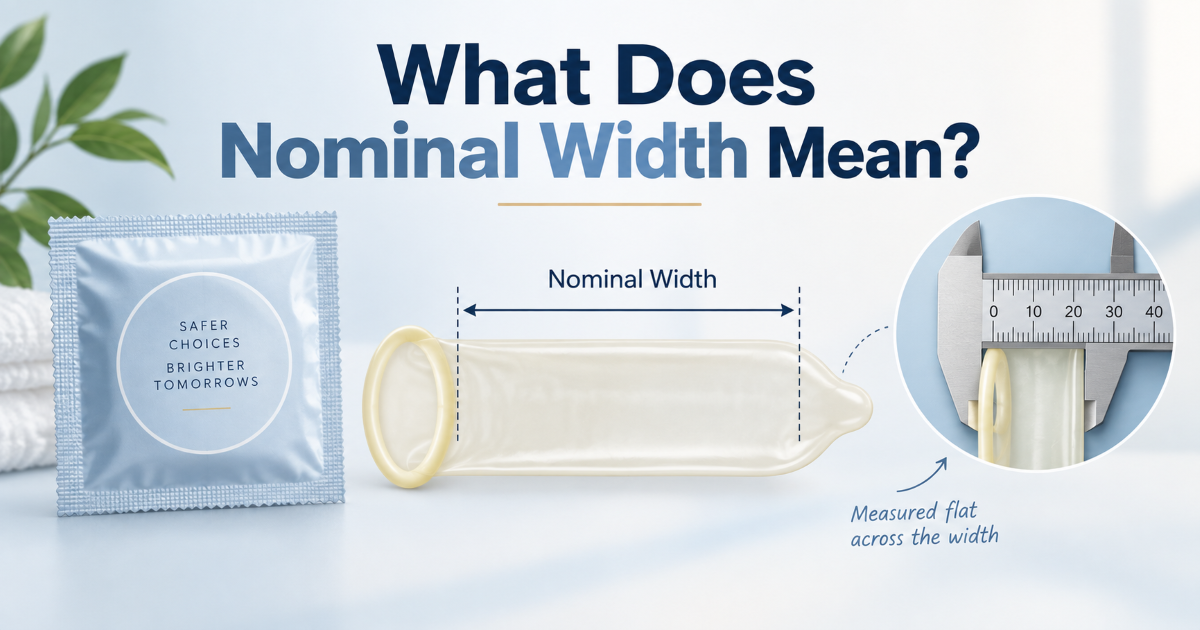
Nominal width is the standard flat width of a condom, often shown as a millimeter number on packaging. Common examples include 49 mm, 52 mm, 54 mm, and 56 mm.
The number is a useful guide, but it does not describe everything about fit. Shape, thickness, material, lubrication, elasticity, and brand design can make two condoms with the same nominal width feel different.
What Do Condom Sizes 49, 52, 54, and 56 Mean?
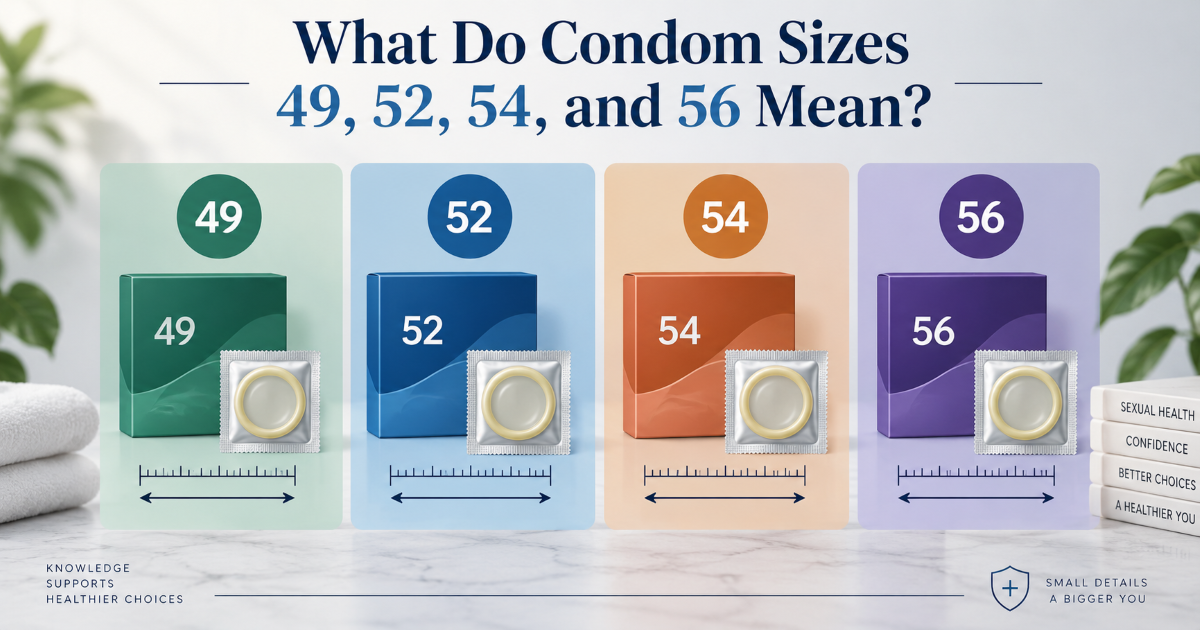
In Thailand and many condom size charts, 49, 52, 54, and 56 are common nominal width options. These numbers can help you choose a starting size after measuring circumference.
| Nominal width | General meaning | When it may be considered |
|---|---|---|
| 49 mm | Narrower option | May suit users who find standard condoms loose or prone to slipping. |
| 52 mm | Common standard size | Often a starting point, but still check brand chart and fit. |
| 54 mm | Slightly wider option | May suit users who feel pressure or tightness with 52 mm. |
| 56 mm | Wider option | May suit users who find standard sizes too tight or hard to roll down. |
How to Choose After Measuring
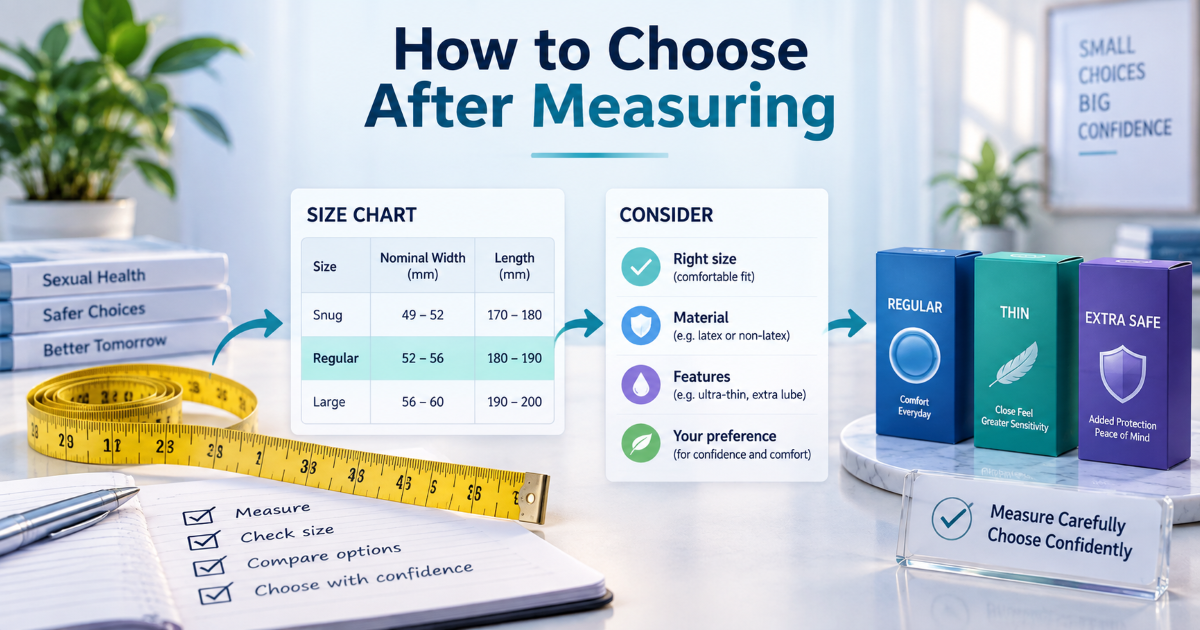
After measuring, compare your circumference with the brand chart. If your measurement falls between two sizes, do not choose only by ego or label. Choose the size that feels secure, comfortable, and practical during use.
| Situation | Suggested next step | Why it matters |
|---|---|---|
| Clearly within one range | Start with the matching brand size. | This is the most straightforward route. |
| Between two sizes | Compare both sizes and assess real comfort. | Material and shape may change the feel. |
| Feels tight or painful | Try a wider size or different model. | Pain or pressure can reduce use and increase errors. |
| Slides or slips | Try a narrower size or different shape. | Slippage can reduce protection. |
| Breakage continues | Review size, storage, expiry, lubricant, and technique. | Breakage is often related to several factors, not size alone. |
Condom Too Tight vs Too Loose
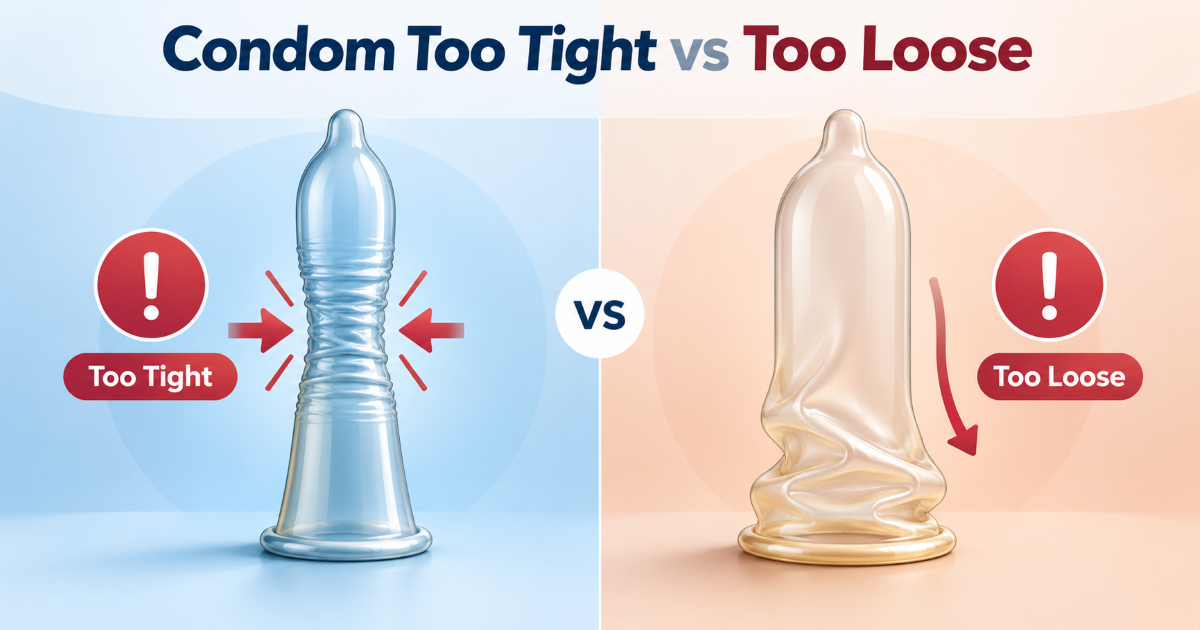
Fit problems are common and do not automatically mean something is wrong with your body. It may simply mean the width, shape, material, or brand is not suitable.
Too tight
- Difficult to roll down
- Pain, pressure, or numbness
- Visible pressure marks
- Higher chance of tearing if stretched too much
Too loose
- Feels insecure
- Slides during movement
- Slips at withdrawal
- May reduce confidence and protection
Important Condom Use Tips
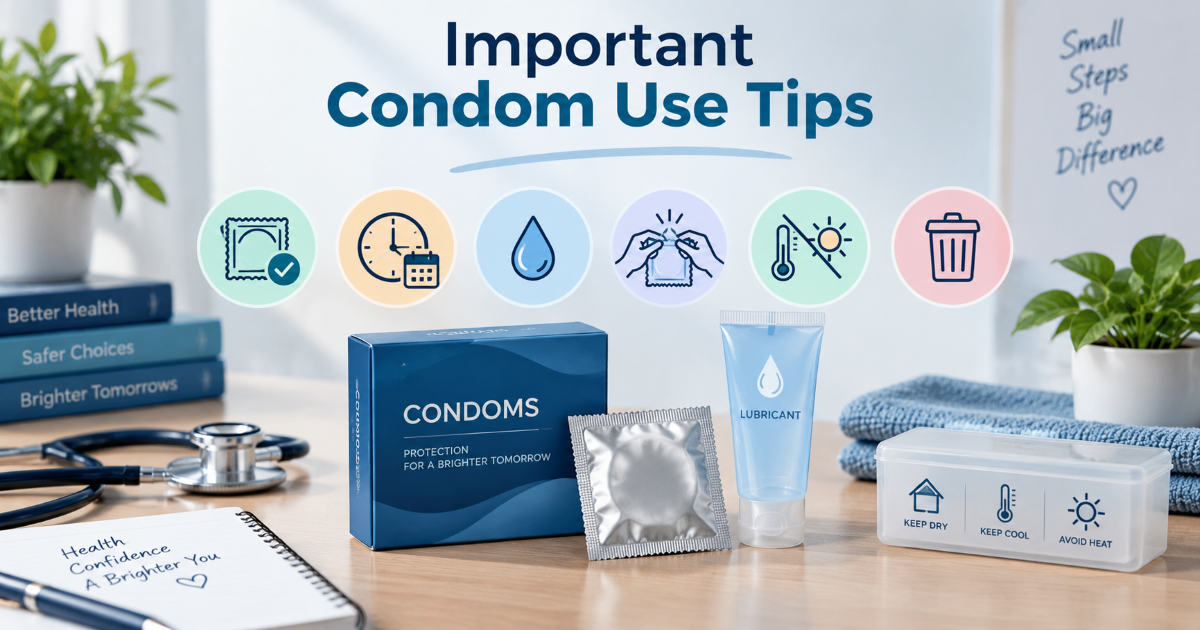
Size is only one part of protection. Condoms work best when used correctly and consistently from the start to the end of sex. Check the package before use and avoid products that are expired, damaged, dried out, sticky, brittle, or stored in heat.
Check before use
Check the expiration date, wrapper condition, seal, and product instructions before opening.
Use compatible lubricant
With latex condoms, avoid oil-based lubricants because they can weaken latex. Water-based or silicone-based lubricant is usually more suitable.
Use from start to finish
Put the condom on before genital contact, leave space at the tip, roll it down fully, and hold the base during withdrawal.
FAQ About Condom Size
What measurement matters most for condom size?
For condom fit, erect circumference is usually more useful than length because it is more closely related to how tight or loose the condom feels. Length can be recorded as supporting information, but width and fit usually affect comfort and slippage more directly.
What do condom sizes 49, 52, 54, and 56 mean?
These numbers usually refer to nominal width in millimeters. A 52 mm condom is commonly treated as a standard width by many brands, while 49 mm is narrower and 54 or 56 mm are wider options. Brand charts still matter because shape, material, and elasticity vary.
Can the wrong condom size increase problems?
A condom that is too tight may feel painful, roll down poorly, or tear more easily. A condom that is too loose may slide or slip off. Correct use, compatible lubricant, and checking expiration date are also important.
Should I use oil-based lubricant with latex condoms?
Oil-based lubricants can weaken latex condoms. Water-based or silicone-based lubricants are generally the safer choices with latex condoms. Always check the package instructions for the condom material you use.
When should I talk to a doctor about condom fit?
Consider medical advice if condoms repeatedly break or slip despite trying the correct size, if there is pain, swelling, skin injury, allergic reaction, discharge, sores, or concern about STI exposure, or if erection quality makes condom use difficult.
Medical References
This page is written for patient education and safer sexual health decision-making. It does not replace individualized medical advice, STI testing, or emergency care.
- CDC: Condom use overview
- CDC: Primary prevention methods
- NHS: Condoms
- FDA: Latex condom labeling guidance
- Eternity Clinic: Doctor profile

Doctor Review and Medical Safety
Condom size should be chosen for fit, comfort, and safer use, not for comparison or anxiety. If condom fit remains difficult despite trying different widths, or if there is pain, skin irritation, STI exposure concern, or erection difficulty, a medical consultation can help identify the safer next step.
Reviewed by: Dr. Beer, Eternity Clinic
Last content update: 7 September 2026

Latest Articles
Circumcision at a Clinic vs Hospital: How to Choose the Right Medical Setting
Adult circumcision can be planned in different medical settings. The safest choice depends on your
Adult Circumcision Explained: Benefits, Methods, Recovery, and Safety
Adult circumcision is a procedure to remove the foreskin covering the head of the penis.
Where is the Best Place for Vasectomy (Male Sterilization): Hospital or Clinic?
A vasectomy is a permanent male contraception procedure, but choosing where to have it done
What Sexual Positions Are Best for Men with a Short Penis to Maximize Pleasure in the Bedroom?
A shorter penis or concern about penis size does not automatically mean poor intimacy. Comfort,
How many Methods for Increasing Penis Size? This Article Has the Answers.
Many men search for ways to increase penis size, but the safest first step is
Hormone Therapy Without Surgical Gender Transition
Hormone therapy can help some transgender and gender-diverse people align physical characteristics with personal goals
What Are the Symptoms of Cystitis? This Article Has the Answers.
Cystitis is inflammation of the bladder. It is often caused by a bacterial bladder infection,
How to Care for Your Manhood to Keep It Strong and Disease-Free
Penis health is not only about sexual performance. It includes daily hygiene, foreskin care, safer