
Penis length is a common private concern, but unsafe shortcuts can create long-term problems. The safest approach is to separate myths from medical options, understand what lengthening can and cannot change, and get assessed before choosing any treatment.
It may be possible to improve visible penis length in selected patients, but no method should be sold as a guaranteed true erect-length increase. Pills, creams, gels, oils, and unverified devices do not have strong evidence for reliable length gain and can be harmful. Surgery may help certain men by improving visible length, but results vary and require careful assessment, recovery planning, and realistic expectations.
Article Guide
What Is Considered an Average Penis Length?
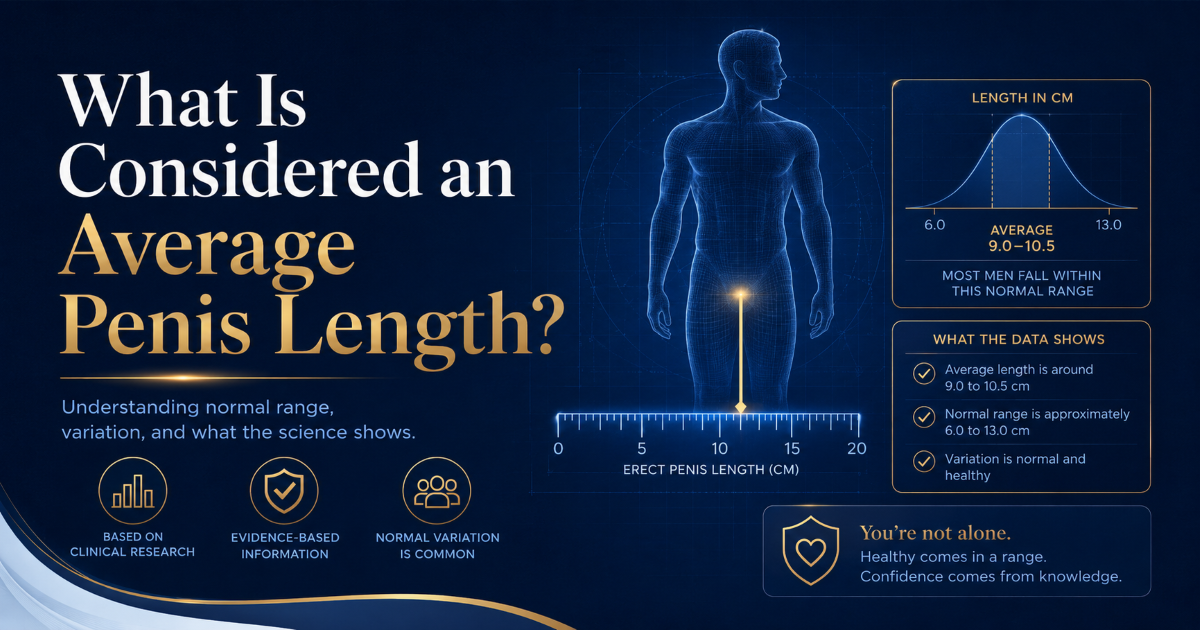
Many men overestimate what is medically average because they compare themselves with pornography, advertising, locker-room claims, or edited social media. Most men fall within a normal size range, and length alone is rarely the main determinant of sexual satisfaction.
When a man is worried about size, a consultation should include standardized measurement, review of body fat distribution around the pubic area, erection quality, curvature, buried or concealed penis components, and the emotional impact of the concern. This prevents an aesthetic concern from being treated with the wrong procedure.
Can vary with temperature, stress, and body composition.
Often used clinically to estimate erectile length and assess anatomy.
Depends on erectile tissue capacity and does not reliably increase from every procedure.
Misconceptions About Size

Penis-size anxiety is often driven by unrealistic standards rather than a medical abnormality. A man may have normal anatomy and still feel inadequate because of comparison, previous comments, anxiety, or relationship pressure.
Sexual confidence is broader than length. Erection firmness, arousal, stamina, comfort, communication, and partner trust often matter more in real sexual function. A medical plan should improve safety and clarity, not intensify pressure.
Safe Methods and Their Limits

| Method | What it may do | Main safety point |
|---|---|---|
| Weight and pubic-fat reduction | May reveal more visible shaft in men with buried or concealed length from suprapubic fat. | Does not create new length, but may improve visibility and comfort. |
| Traction devices | May produce modest change in selected cases when used consistently and correctly. | Requires correct device selection, patience, and monitoring to avoid pain or injury. |
| Vacuum devices | Used medically for erection support in ED; may create temporary swelling. | Overuse can bruise tissue and should not be treated as a true lengthening method. |
| Filler | Mainly improves girth or shaft fullness. | Not a true lengthening treatment; injection technique and material choice matter. |
| Penile lengthening surgery | May improve visible length in selected patients by changing support or exposure. | Requires anatomy review, expectation-setting, traction/recovery planning, and risk discussion. |
For men interested in both length and girth, the safest plan is usually staged. Length, girth, circumcision status, erectile function, and skin mobility are separate variables. Trying to change everything at once can increase swelling, asymmetry, wound tension, and disappointment if expectations are not aligned.
What Penile Lengthening Surgery May Actually Change
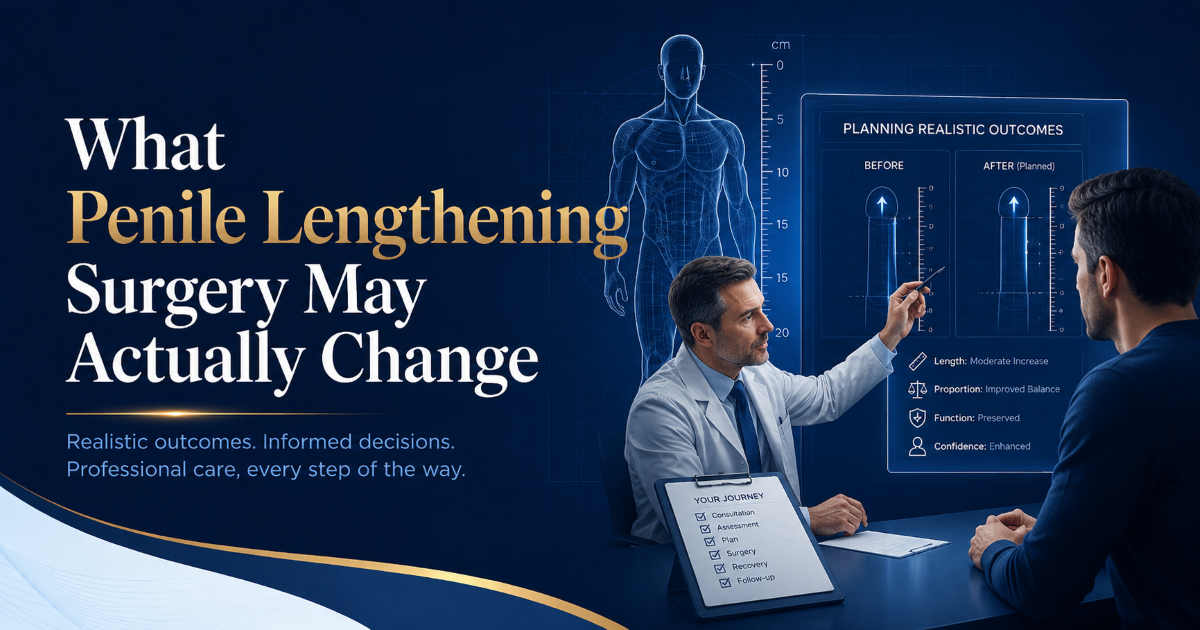
Penile lengthening surgery usually focuses on visible length, not creating new erectile tissue. In many techniques, the goal is to release or reposition supporting tissue around the base so more of the internal shaft becomes visible externally. This distinction is important because visible flaccid length and erect functional length are not the same.
Assessment
The doctor reviews current length, stretched length, pubic fat pad, skin mobility, erection quality, curvature, scarring, and prior procedures.
Expectation Mapping
The consultation clarifies whether the goal is visible flaccid length, perceived proportion, girth, or sexual function. These goals require different strategies.
Procedure Planning
If surgery is appropriate, the plan should include incision placement, scar care, swelling expectations, erection restrictions, and whether staged filler or circumcision is safer later.
What to Avoid When Trying to Increase Penis Length
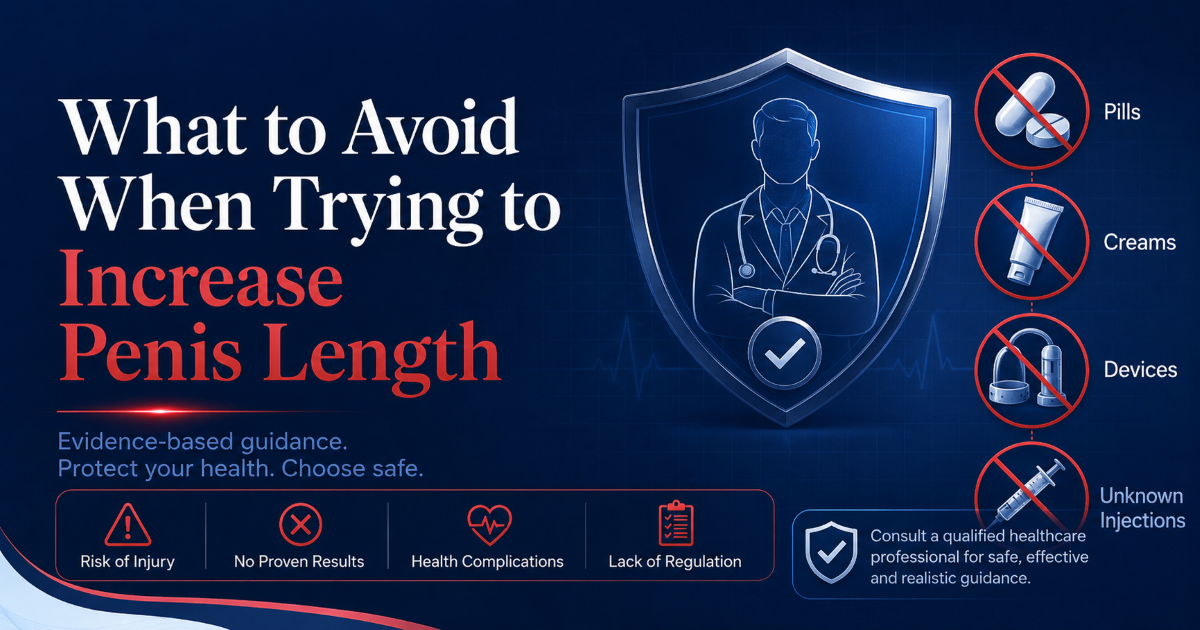
Unregulated pills and creams
Products that promise several centimeters in days or weeks should be treated as high-risk advertising. Some may contain hidden drugs, irritants, or hormone-like ingredients.
Aggressive jelqing
Forceful manual stretching may injure blood vessels, nerves, and erectile tissue. Pain, bruising, numbness, or persistent swelling is not normal training soreness.
Unsafe pumps or extenders
Devices bought online without medical guidance can cause bruising, numbness, skin breakdown, and erectile problems if pressure or duration is excessive.
Unknown injections
Liquid silicone, oils, unknown gels, and non-medical fillers can cause infection, deformity, tissue loss, scarring, and difficult corrective surgery.
How Eternity Clinic Builds a Safer Plan

A safer plan starts with diagnosis, not a package. At Eternity Clinic International, the consultation separates visible length concerns, girth goals, erectile dysfunction, premature ejaculation, foreskin issues, and body-image expectations before recommending a treatment pathway.
- Penile lengthening for selected visible-length concerns.
- Length vs girth education for realistic decision-making.
- Penile enlargement overview when men want both length and girth planning.
- Penile filler when the goal is mainly girth, not true length.
- Circumcision assessment if tight foreskin, hygiene, skin mobility, or filler planning is relevant.
Decision Checklist Before You Choose Any Method

| Question | Why it matters |
|---|---|
| Is the concern length, girth, erection quality, or confidence? | Each problem has a different treatment pathway. |
| Has the penis been measured correctly? | Standardized measurement reduces anxiety and prevents over-treatment. |
| Are there ED, curvature, pain, or foreskin problems? | These may need treatment before cosmetic planning. |
| Does the method have medical evidence and clear risks? | Marketing language is not the same as evidence. |
| What recovery and follow-up are required? | Surgery and filler both require aftercare and realistic downtime. |

Doctor Review and Medical Safety
This article was structured to reduce unsafe penis enlargement claims and to clarify that length, girth, erection quality, and confidence are separate clinical issues. Treatment should be selected only after assessment by a qualified clinician.
Reviewed by: Dr. Beer, Eternity Clinic
Last content update: 24 June 2026
Medical References
- Mayo Clinic. Penis-enlargement products: Do they work?
- Cleveland Clinic. Penis Enlargement Surgery.
- Sexual Medicine Society of North America. Cosmetic Penile Enhancement Procedures position statement.
- Journal of Sexual Medicine and peer-reviewed reviews on penile augmentation surgery and patient selection.
FAQ
Can you really increase penis length safely?
Some men may increase visible flaccid length with carefully selected medical procedures or structured traction in specific situations, but true erect-length gain is not guaranteed. A safe plan starts with medical assessment, realistic measurements, and risk review.
Do pills, creams, or gels increase penis length?
There is no strong clinical evidence that over-the-counter pills, herbs, creams, or gels reliably increase penis length. Some products may contain hidden ingredients or irritants, so they should not be used as a medical substitute.
Does filler increase penis length?
Penile filler is primarily a girth-focused option. It may make the penis look fuller, but it should not be presented as a true lengthening treatment.
What does penis lengthening surgery actually change?
Lengthening surgery often aims to improve visible length by releasing tissue support around the base of the penis. It does not create new erectile tissue, and outcomes depend on anatomy, healing, traction compliance, and surgical planning.
Who is a candidate for medical penis lengthening?
Potential candidates are men with persistent size distress, buried or concealed penis components, post-surgical shortening, or carefully evaluated cosmetic goals. Men with active infection, uncontrolled medical problems, unrealistic expectations, or untreated body-image distress may need a different plan first.
Can unsafe injections permanently damage the penis?
Yes. Liquid silicone, oils, unknown gels, and non-medical injections can cause infection, deformity, tissue loss, scarring, and erectile problems. They should be avoided.
Plan penis lengthening safely before choosing a method
Send your question to Eternity Clinic International for a private assessment of length, girth, erection quality, foreskin status, and realistic treatment options.

Latest Articles
How to Measure Condom Size Properly: Understanding Sizes 49, 52, 54, and 56
Condom size is not judged by length alone. For most men, the most useful measurement
Penile Enlargement With “Your Own Tissue” or “Your Own Fat”: Why It May Not Be Worth the Pain
Using your own tissue or your own fat can sound more natural than synthetic material,
Circumcision at a Clinic vs Hospital: How to Choose the Right Medical Setting
Adult circumcision can be planned in different medical settings. The safest choice depends on your
Adult Circumcision Explained: Benefits, Methods, Recovery, and Safety
Adult circumcision is a procedure to remove the foreskin covering the head of the penis.
Where is the Best Place for Vasectomy (Male Sterilization): Hospital or Clinic?
A vasectomy is a permanent male contraception procedure, but choosing where to have it done
What Sexual Positions Are Best for Men with a Short Penis to Maximize Pleasure in the Bedroom?
A shorter penis or concern about penis size does not automatically mean poor intimacy. Comfort,
How many Methods for Increasing Penis Size? This Article Has the Answers.
Many men search for ways to increase penis size, but the safest first step is
Hormone Therapy Without Surgical Gender Transition
Hormone therapy can help some transgender and gender-diverse people align physical characteristics with personal goals